The call usually comes when facts are still messy. A customer posts a video. A regulator asks questions. Your CEO wants a statement in twenty minutes, legal wants to wait, and your support inbox is already filling up. In that moment, communication departments don't need theory. They need examples of crisis communications that show what to say first, what to avoid, and how to keep a bad day from becoming a defining one.
That's why the best crisis communications examples still matter. They show the practical gap between a statement that lowers the temperature and one that makes people angrier. They also show a hard truth many teams learn too late. Stakeholders rarely judge you only on the incident. They judge you on your tone, your speed, and whether your next step sounds credible.
From Tylenol to Twitter-era blowups, the patterns are consistent. Strong responses protect people first, speak plainly, and give the public something useful to do next. Weak responses hide behind process, sound defensive, or wait for perfect information that never arrives. If you're working on protecting your brand online, crisis prep belongs in that work, not beside it.
This guide breaks down 10 crisis communications examples with a practitioner's lens. For each one, I'm focusing on the communication choices that shaped the outcome, the trade-offs behind those choices, and short message templates you can adapt for recalls, service failures, misconduct allegations, and data-related incidents. If your phone starts ringing today, you should already know what your first paragraph sounds like.
1. Johnson & Johnson's Tylenol Crisis Response (1982)
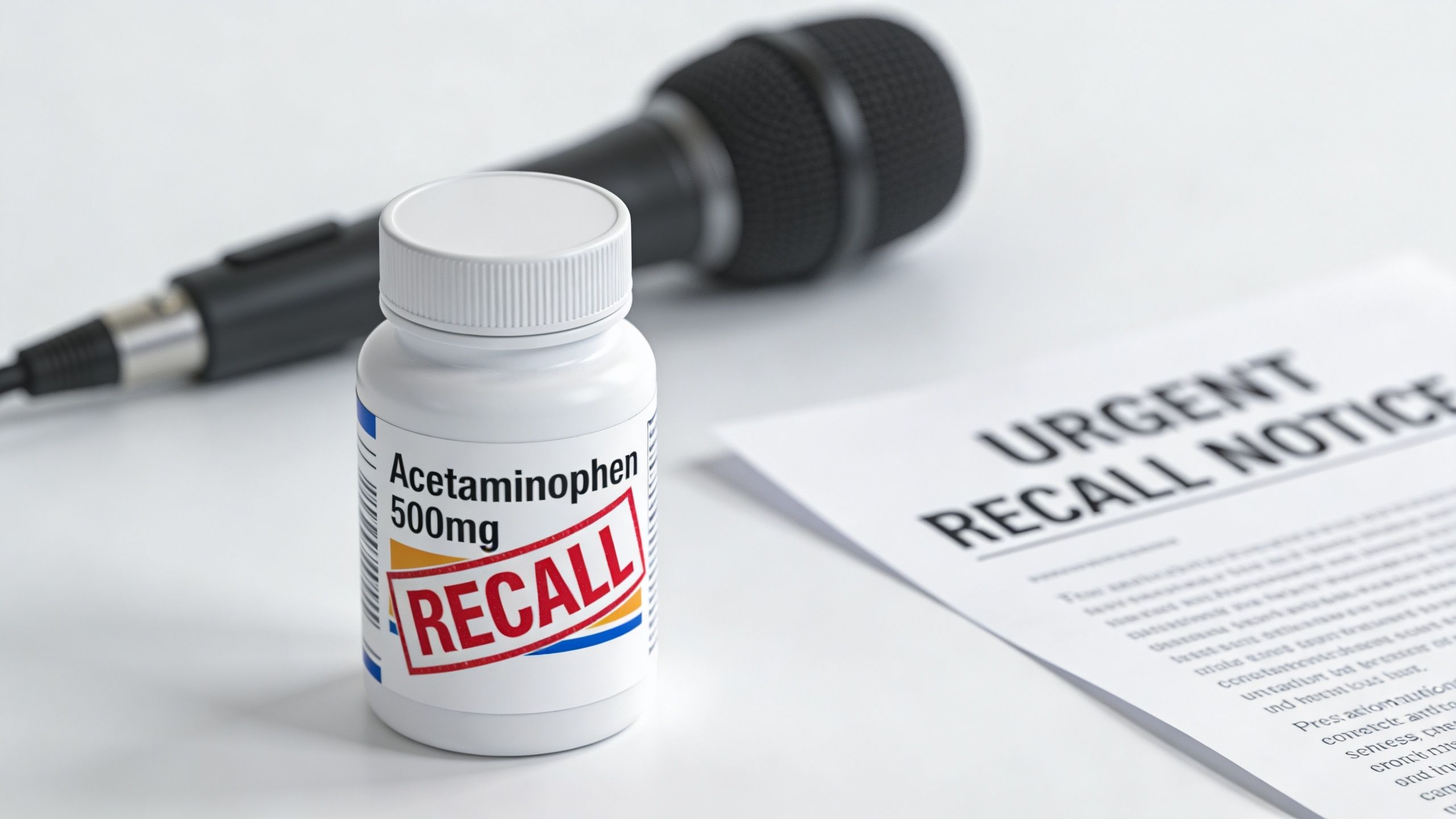
If you study only one case, study Tylenol. It remains the clearest example of a company acting as if public safety mattered more than brand self-protection. In the 1982 poisoning crisis, Johnson & Johnson recalled over 31 million bottles and worked closely with law enforcement while maintaining transparent communication throughout the event, a response widely cited as the benchmark for modern crisis handling in this review of the Tylenol case.
What made the response effective wasn't only the recall. The company didn't hide behind the fact that the tampering happened outside its direct control. It treated stakeholder fear as the central problem to solve. That distinction matters. People don't want a debate about fault in the first wave. They want to know whether they're safe.
For teams building a repeatable process, this is the baseline definition of crisis communications. Say what happened, say what people should do, and say what you're doing next.
What worked
A strong recall message does three things in order:
- Lead with safety: Tell customers to stop using the product before you explain the investigation.
- Give clear instructions: Explain returns, refunds, replacements, or disposal in plain language.
- Show visible action: Name the operational step already underway, such as a recall, shutdown, or review.
Practical rule: In a product crisis, your first statement is customer service with legal consequences. Write it that way.
A short recall template:
We're urgently recalling [product] after learning of a potential safety issue. Customers should stop using the product immediately and follow the return instructions at [owned channel]. We're working with the appropriate authorities and will share confirmed updates as they become available.
2. United Airlines Passenger Removal Crisis (2017)

United's problem wasn't only the incident. It was that the public saw the event before the company framed it, and then the company responded as if wording could override what people watched with their own eyes. That's a common failure pattern in modern crisis communications examples. Viral evidence collapses the room for spin.
The initial language around “re-accommodation” became a lesson in what not to do. It sounded procedural, bloodless, and detached from the obvious human harm in the video. Once a company chooses that tone, every follow-up statement has to work harder.
This is why many of the best crisis communication best practices sound simple. Acknowledge what people are upset about in plain English. Don't translate a human event into corporate euphemism.
The trade-off United mishandled
Legal teams often want neutral wording early. Communications teams want empathy. The answer is not to pick one. It's to sequence them properly.
Start with human acknowledgment. Save process language for the second or third paragraph.
- Bad opening: Focuses on policy, compliance, or crew procedure.
- Better opening: Acknowledges what happened, recognizes the visible harm, and commits to review.
- Best follow-up: Announces concrete policy changes once facts stabilize.
When video is everywhere, denial-by-terminology won't work. Audiences compare your sentence to what they just watched.
A better first statement for a similar event:
We're disturbed by what occurred on Flight [number]. No customer should experience this. We're reviewing the incident urgently, reaching out to the affected passenger, and will provide an update once we've confirmed the facts and immediate actions.
3. Domino's Pizza Food Safety Crisis and Recovery (2009)
Domino's faced the kind of crisis that hits fast because it's visual, emotional, and easy to share. A viral food tampering video doesn't just raise questions about one store. It makes every customer wonder whether the same thing could happen to their order. That means your response has to shrink fear quickly.
What Domino's got right was the move toward direct, visible leadership communication and operational follow-through. In food-related incidents, audiences don't trust abstract assurances. They trust specifics. What happened, what location was involved, what controls are changing, and how customers are being protected now.
A lot of teams underestimate how much a plainspoken executive message can help when paired with real operational fixes. Not a polished brand video. A direct acknowledgment with obvious ownership.
If you need a structure for that kind of statement, this guide to how to write a crisis communication press release is useful because it forces the message into a practical order.
What recovery messaging should sound like
In a food safety crisis, your message should move from incident to control.
- Name the incident: Don't hide behind broad references to “recent events.”
- Separate the specific from the systemic: Explain what was isolated, then explain what company-wide safeguards you're applying.
- Tie words to action: Suspensions, inspections, retraining, and store-level reviews matter more than brand language.
A practical template:
We've seen the video involving food handling at one of our locations, and we understand why customers are concerned. We've taken immediate action at the store level and are reviewing our food safety procedures across the business. We'll keep sharing updates as those steps are completed.
4. Wells Fargo Fake Accounts Scandal Press Response (2016)
Wells Fargo is a strong example of how minimization can deepen a trust crisis. In financial services, customers assume the company controls its systems, incentives, and oversight. So when early messaging frames a systemic issue as isolated employee misconduct, people hear evasion.
That's the core lesson here. If the public suspects the problem is cultural or structural, narrow framing will backfire. It often creates a second scandal around honesty. The communications failure becomes as damaging as the underlying conduct.
What didn't work
Early responses to scandals like this often fail in predictable ways:
- Shifting blame downward: Customers don't believe frontline employees acted in a vacuum.
- Releasing scope in fragments: Each new disclosure makes the company look less candid.
- Separating apology from accountability: If no leader owns the problem, the apology feels rented.
For banks, insurers, and other trust-based businesses, the first statement should acknowledge customer impact and the seriousness of the breach of trust. It shouldn't open by defending the institution.
A better template for a similar case:
We've identified conduct that violated our standards and harmed customer trust. We're contacting affected customers, reviewing how this happened, and making leadership-level changes to address the issue. We'll continue providing updates as that work progresses.
5. Southwest Airlines Engine Failure Crisis Communication (2018)
Some crises test whether a company can stay human under pressure. Southwest's response to a fatal engine incident is often cited positively because the communication centered on passengers, families, and cooperation with investigators rather than self-defense.
That sounds obvious, but many companies in transportation and industrial sectors drift toward technical framing too early. They start explaining machinery before acknowledging loss. In fatal incidents, that order feels cold.
The right sequence in a fatal-event response
You do not need complete technical certainty to say the first three things that matter:
- Acknowledge the people affected
- Confirm immediate support actions
- State cooperation with investigators
Only after that should you move into operational detail, and even then with restraint. Technical facts matter, but not before people hear that you understand the human gravity of the event.
The first statement after a fatal event isn't the place to sound smart. It's the place to sound responsible.
A usable template:
We're heartbroken by today's incident and focused on supporting the passengers, crew, and families affected. We're cooperating fully with investigators and are working to confirm the facts. We'll share additional information through our official channels as soon as we can do so responsibly.
6. Uber's Series of Crisis Communications and Rebranding (2017-2019)
Uber's challenge was different from a single-event crisis. It faced overlapping issues involving culture, leadership, safety, and trust. When a company is dealing with multiple controversies at once, one-off statements won't solve the problem. The public starts looking for a pattern, and then it looks for whether leadership understands that pattern.
That changes the communications job. Instead of defending each incident separately, the company has to show that it recognizes the broader failure and is making structural changes. Many brands stumble at this stage. They announce a new feature or a new policy, but they never connect it clearly to the deeper criticism.
What multi-crisis messaging requires
A scattered response creates fatigue. A unified response builds a recovery narrative.
- One central frame: Acknowledge that the issues point to broader change needed.
- Repeated proof points: Leadership changes, policy updates, safety measures, and governance reforms should sound connected.
- Long-horizon language: Don't promise fast trust recovery. Promise visible work.
For founders and startup teams, this case matters because growing quickly often produces the same temptation. Treat each issue as isolated and hope the cycle moves on. It rarely works when the complaints rhyme.
A better message framework:
We haven't faced one isolated issue. We've faced a series of concerns that require broader change in how we lead, operate, and earn trust. We're making changes in leadership, policy, and accountability, and we'll continue reporting on that work over time.
7. Facebook Cambridge Analytica Data Privacy Crisis (2018)
Facebook's Cambridge Analytica response is one of the clearest crisis communications examples of what happens when a company moves too slowly in a data trust crisis. The issue affected 87 million users, according to the background facts for this case, and the delay in clear, forceful communication made the company look reactive rather than accountable.
The phrase “breach of trust” became part of the criticism because it softened what users wanted named directly. In privacy incidents, wording matters more than many executives think. If users believe their data was exposed or misused, they expect direct language about impact, not a carefully polished substitute.
Why data crises need early ownership
Customers can forgive a lot. They rarely forgive feeling informed last.
Data and privacy incidents need a first response that answers four basic questions:
- What happened
- Who may be affected
- What the company is doing now
- What users should do next
This is one place where the speed-versus-accuracy trade-off gets tricky. Some of the best guidance on crisis timing notes that there are situations where teams should share only confirmed information and avoid speculation, especially when facts are still developing, as discussed in this analysis of the speed versus accuracy trade-off in crisis communication. That doesn't mean silence. It means a disciplined holding statement.
A practical breach template:
We identified unauthorized access involving user data and are reviewing the scope urgently. We're notifying affected users, securing the relevant systems, and providing guidance on protective steps. We'll share confirmed updates as our investigation continues.
8. Toyota Vehicle Recall Communication Strategy (2009-2010)
Toyota's recall communication stands out because automotive crises demand a difficult balance. Customers need technical clarity, but they also need simple instructions. If you overexplain engineering issues, people tune out. If you underexplain them, they think you're hiding something.
The better approach is layered communication. One message for the general public. Another for owners trying to check whether they're affected. Another for dealers, regulators, and media who need more detail.
What recall communications should include
A strong automotive recall response makes logistics easy.
- State the affected product clearly: Model names and identification guidance should be easy to find.
- Explain the risk plainly: Don't make customers decode engineering language.
- Make the remedy obvious: Where to go, what to do, what to expect, and when.
Many brands bury useful information beneath reputation management language. That's a mistake. In a recall, the message is partly operational support. If owners can't quickly figure out whether they're affected, your press release has failed.
A practical vehicle recall template:
We're recalling certain [model names] due to a potential safety issue involving [plain-language description]. Owners can check whether their vehicle is affected through [official channel] and schedule service through authorized dealers. We'll continue updating customers as additional guidance becomes available.
9. Starbucks Racial Discrimination Crisis Communication (2018)
Starbucks responded to a discrimination incident with immediate acknowledgment, leadership apology, and visible action. That sequence matters in values-based crises. When the issue involves dignity, bias, or unequal treatment, the public doesn't want a generic “we take this seriously” statement. They want to know whether leadership understands the social meaning of what happened.
This is one reason visible action matters so much. Announcing changes to training, policy, or store operations signals that the company sees the incident as more than a one-day PR problem.
What values-based apologies need
These situations require specificity without overcomplication.
- Acknowledge the harm clearly: Avoid generic wording like “an unfortunate situation.”
- Apologize at the leadership level: Don't outsource moral accountability to a spokesperson.
- Announce a visible first step: Action reduces the perception that the apology is performative.
A practical template for a discrimination-related incident:
What happened in our location was unacceptable, and we apologize to the people affected and to the broader community. We're reviewing the incident, speaking directly with those involved, and taking immediate steps to address our policies and training. We'll share those actions publicly.
10. Boeing 737 MAX Crisis Communication Challenges (2018-2020)
Boeing is the cautionary ending on this list because it shows how damaging delayed, technical, and defensive messaging can be in a safety-critical industry. After two fatal 737 MAX crashes, the communications challenge was not to explain software or certification alone. It was to address grief, responsibility, and public confidence all at once.
That requires a leadership voice early. It also requires language that doesn't sound like the company is negotiating with reality. In aviation, healthcare, energy, and other high-risk sectors, a defensive first response can harden distrust for years.
The lesson every high-risk industry should take
Initial statements in safety crises often fail because they lean on engineering before empathy.
A better order is simple:
- Recognize the victims and families
- Acknowledge the seriousness of the event
- Commit to full cooperation and transparency
- Then discuss the technical review
Compare that with the opposite order, which many organizations instinctively choose. They start with process, then mention people, then promise review. Audiences hear that as institutional self-protection.
A usable fatal-safety-incident template:
We extend our deepest sympathies to the families and loved ones affected by this tragedy. We're working with investigators to understand exactly what happened and will support that process fully. As facts are confirmed, we'll share them openly and explain the actions we're taking.
10-Case Crisis Communications Comparison
| Example | 🔄 Implementation Complexity | ⚡ Speed & Resource Requirements | ⭐ Expected Outcome / Effectiveness | 💡 Ideal Use Cases | 📊 Key Advantages / Impact |
|---|---|---|---|---|---|
| Johnson & Johnson, Tylenol (1982) | High, large-scale recall logistics & coordinated stakeholder messaging | Immediate activation; high logistical and communication resources required | ⭐⭐⭐⭐⭐, restored trust quickly | Product tampering / safety recalls where public safety is paramount | Clear safety-first stance; template for best-practice crisis response |
| United Airlines, Passenger Removal (2017) | Medium, simple operational issue but rapid social amplification | Needed ultra-fast social monitoring and rapid CEO response; moderate resources | ⭐⭐, initial mishandling worsened reputation before recovery actions | Incidents captured on social media with high viral risk | Demonstrates risks of defensive messaging; later policy changes restored some accountability |
| Domino's, Food Safety (2009) | Medium, operational changes + multi-channel outreach | Rapid multimedia response (video + PR); moderate resources for fixes | ⭐⭐⭐⭐, effective recovery through visible leadership & fixes | User-generated content exposing employee misconduct | Strong example of CEO visibility and measurable safety improvements |
| Wells Fargo, Fake Accounts (2016) | Very high, regulatory complexity & prolonged disclosure needs | High legal, compliance and communication resources; long-term engagement | ⭐, inadequate early disclosure severely damaged trust | Financial institutions facing systemic misconduct | Highlights necessity of full disclosure and regulatory-aligned messaging |
| Southwest, Engine Failure (2018) | Medium, urgent empathy-first communications with ongoing updates | Rapid, frequent updates; moderate resources for passenger support | ⭐⭐⭐⭐, maintained stakeholder trust through transparency | Safety incidents with casualties where empathy is critical | Effective empathy-led messaging and visible leadership engagement |
| Uber, Multi-crisis Rebuilding (2017–2019) | Very high, simultaneous cultural, legal, and operational issues | Sustained resources over years; coordinated cross-functional strategy | ⭐⭐⭐, partial recovery with ongoing skepticism | Organizations facing multiple overlapping reputational crises | Shows value of leadership change, sustained transparency, long-term messaging |
| Facebook, Cambridge Analytica (2018) | High, data/privacy complexity and regulatory scrutiny | Requires immediate legal & technical resources plus founder-level communication | ⭐⭐, delayed response prolonged damage | Major data breaches / privacy violations | Underscores need for immediate founder/CEO accountability and full-scope disclosure |
| Toyota, Vehicle Recall (2009–2010) | Very high, global scale + technical explanations across markets | High resources for technical briefs, market localization, customer remedies | ⭐⭐⭐⭐, systematic approach limited panic and preserved credibility | Large-scale product recalls across multiple regions | Detailed technical communications and customer remedy focus reduce escalation |
| Starbucks, Racial Bias Incidents (2018) | Medium, internal policy change and company-wide training rollout | Fast CEO apology + substantial training/resources for implementation | ⭐⭐⭐⭐, effective short-term recovery with ongoing work | Social justice / discrimination crises requiring cultural response | Values-aligned commitments and measurable training programs promote recovery |
| Boeing, 737 MAX (2018–2020) | Very high, safety-critical technical investigations & regulatory coordination | Extensive technical, legal, and regulatory resources over years; slow to mobilize | ⭐, technical-first messaging and delays eroded trust | Fatal safety incidents with regulatory consequences | Illustrates danger of delayed empathy and overemphasis on technical detail in early communications |
Your Crisis Communications Playbook
The strongest crisis communications examples don't all look alike. A product tampering case, a viral customer incident, a data privacy failure, and a discrimination complaint each demand different facts and different operational responses. But the communication mechanics are remarkably consistent. The teams that recover fastest usually do three things well. They acknowledge reality early, they communicate like humans, and they give people a clear next step.
Tylenol remains the gold standard because Johnson & Johnson backed its words with action at unusual scale. One detailed review notes that the company halted production of 31 million capsules across the U.S., recalled 1 million bottles from stores, and stopped advertising while warning consumers through hundreds of thousands of direct notifications and a hotline that received thousands of calls in the first days, all described in this breakdown of the Tylenol benchmark in crisis management. Whether you need every one of those tactics is beside the point. The point is alignment. The message matched the action.
The same principle shows up in technical incidents too. A review of the AWS us-east-1 outage described timestamped public updates every 15 to 30 minutes and a post-mortem within 48 hours, showing how a company can use real-time communication to reduce confusion during a service crisis, as covered in this analysis of real-time outage communication practices. You may not run cloud infrastructure, but the lesson transfers. One source of truth beats scattered updates every time.
If I had to reduce this article to a working playbook, it would look like this:
- Prepare holding statements now: Draft first-response language for recalls, safety incidents, misconduct claims, service outages, and data events before you need them.
- Decide your approval path in advance: If legal, leadership, and communications argue over every sentence during a live crisis, you've already lost time.
- Build one update hub: Your newsroom, status page, or crisis landing page should become the place every statement points back to.
- Match tone to harm: Human impact first. Procedure second.
- Promise only what you can sustain: If you say the next update is coming this afternoon, deliver it even if the update is short.
- Separate first statement from full explanation: The first job is stabilization, not completeness.
A simple holding statement is still the most underused tool in crisis response. It buys time without sounding absent. It also helps solve the speed-versus-accuracy problem that trips up smaller teams. You don't need every answer in the first hour. You do need acknowledgment, ownership of the communication process, and a time for the next update.
That's why templates matter. So does distribution. You can write the right statement and still fail if customers, journalists, employees, and partners can't find it quickly. Tools and resources built around structured press release writing and distribution can make a real difference when the pressure is high. If you're serious about managing business crises strategically, don't wait until the incident starts to decide how your first message will work.
The best time to build your crisis communications system is before anyone needs it. The second-best time is today.
Press Release Zen helps teams prepare before the crisis hits, with practical guides, templates, and press release strategy built for real-world communications pressure. If you want faster first drafts, cleaner approval workflows, and better structured statements for high-stakes situations, explore Press Release Zen.