You send a release on Tuesday morning, follow up on Thursday, and hear nothing. No replies, no pickup, no sign that anyone even opened it. In practice, that usually points to a list and angle problem before it points to a writing problem.
Early PR traction comes from outlets that can publish fast, need usable story material, and already care about your category, geography, or audience. A small win in the right place often does more for momentum than a long-shot pitch to a national reporter. Once you have a few placements, later outreach gets easier because you can show proof that the story has already attracted interest.
Journalists still use PR pitches as a real reporting input, so your approach matters. Tight outreach, clear relevance, and a clean subject line give you a real shot. A generic blast to the wrong list does the opposite.
Delivery matters too. Even a strong pitch can fail before a reporter sees it if your domain setup is weak or your list is stale. Before sending at scale, make sure your team understands what email deliverability is, because inbox placement and list quality are tied together.
This guide is built for the kind of PR work that gets results quickly. Not theory. Not vanity placements. You need easy PR lists to get on, plus the angle, outreach approach, timing, and measurement method for each one.
If your company works in AI or adjacent B2B categories, start by reviewing top AI publications and journalists in 2024 to see how niche media targets break down before you build your list.
These are the channels I’d start with when I need coverage fast and need a process I can repeat next month too.
1. Industry-Specific Trade Publications and Niche Journals
Trade publications are where practical PR usually starts. They care less about broad fame and more about whether your announcement matters to a defined audience. If you work in real estate, retail, automotive, nonprofit, healthcare, or B2B software, that’s good news. Relevance beats prestige here.
A store opening that feels too small for a national business desk may fit perfectly in a vertical outlet. The same goes for executive hires, product updates, partnership news, certifications, expansion plans, and trend commentary tied to a specific sector.

Examples are straightforward. A proptech update might suit Real Estate Tech Times. A nonprofit leadership appointment may fit Chronicle of Philanthropy. An auto service milestone could land with Modern Tire Dealer. A retail expansion story may interest Retail Dive.
How to make trade outlets say yes
Read several recent stories before pitching. You’re looking for recurring patterns, not just topic fit. Does the outlet prefer data-heavy trend stories, executive commentary, local expansion news, or product launches with customer impact?
Then tune your release to their language. Sector terms matter. Pain points matter more.
- Match the beat exactly: If the editor covers retail operations, don’t send a general brand-awareness announcement.
- Lead with the industry consequence: “Opens second location” is weak. “Adds same-day pickup capacity for regional customers” is stronger.
- Borrow the outlet’s framing: If they write about margins, occupancy, donor retention, compliance, or fleet uptime, reflect that in the pitch.
Practical rule: Trade editors respond faster when your story already sounds like it belongs in their publication.
A simple pitch template works well:
Subject: Retail expansion story for [publication name]
Hi [name],
We’re announcing [news] and thought it may fit your coverage of [specific beat]. The local angle is [one sentence]. The industry angle is [one sentence]. Happy to send the full release or a short summary.
If your niche overlaps with AI, this roundup of AI publications and journalists can help expand your vertical list.
Timing matters too. Mid-week usually works better than Monday chaos or Friday drift. Avoid holiday weeks unless your story is tied to a seasonal trend.
2. Local Business Journals and Regional Media Outlets
Local business outlets are one of the most reliable easy pr lists to get on because they need a steady supply of credible company news. They cover hiring, openings, funding, contracts, awards, relocations, community partnerships, and executive changes. That’s exactly the kind of news many organizations already have.
A regional editor often wants one thing a national reporter doesn’t. Local relevance. If your announcement affects jobs, tax base, business activity, downtown traffic, neighborhood redevelopment, or local investment, you’ve got a real hook.
Think in terms of publications like Silicon Valley Business Journal, Boston Business Journal, Crain’s Chicago Business, or the business desk at a regional paper such as the San Diego Union-Tribune. These outlets help you build your first layer of credibility.
The local angle that actually works
Weak local pitches sound like company updates. Strong local pitches sound like community news.
Here’s the difference:
- Weak: “We’re proud to announce a new office.”
- Better: “The new office expands service capacity in the region and supports local hiring.”
- Best: “The office gives local clients direct access to on-site support and anchors the company’s next phase of regional growth.”
Use names local readers recognize. That could be a city district, chamber, development corridor, hospital network, university, or business park. Include a quote from someone local if you can, especially a founder, executive, site leader, or partner.
Local editors don’t need your whole corporate story. They need to know why people in their coverage area should care this week.
A short follow-up rhythm works best here. Send the pitch. Wait several business days. Then reply to your original message with a clean bump that adds one useful detail, such as a photo option, interview availability, or the local impact angle.
I also recommend subscribing to your target local journal before pitching it. You’ll quickly see whether they favor short news briefs, executive moves, funding summaries, or longer profile pieces. If they mostly publish brief items, don’t send a long, essay-style pitch. Send a concise note with a release and a suggested blurb.
3. Online Business and News Aggregator Sites
You send a solid release at 9:00 a.m. No reporter replies. By lunch, the story is already live on business news feeds, niche finance pages, and syndicated publisher sites. That kind of pickup will not replace earned coverage, but it does create searchable proof that your news exists and gives prospects, partners, and later media targets something real to find.
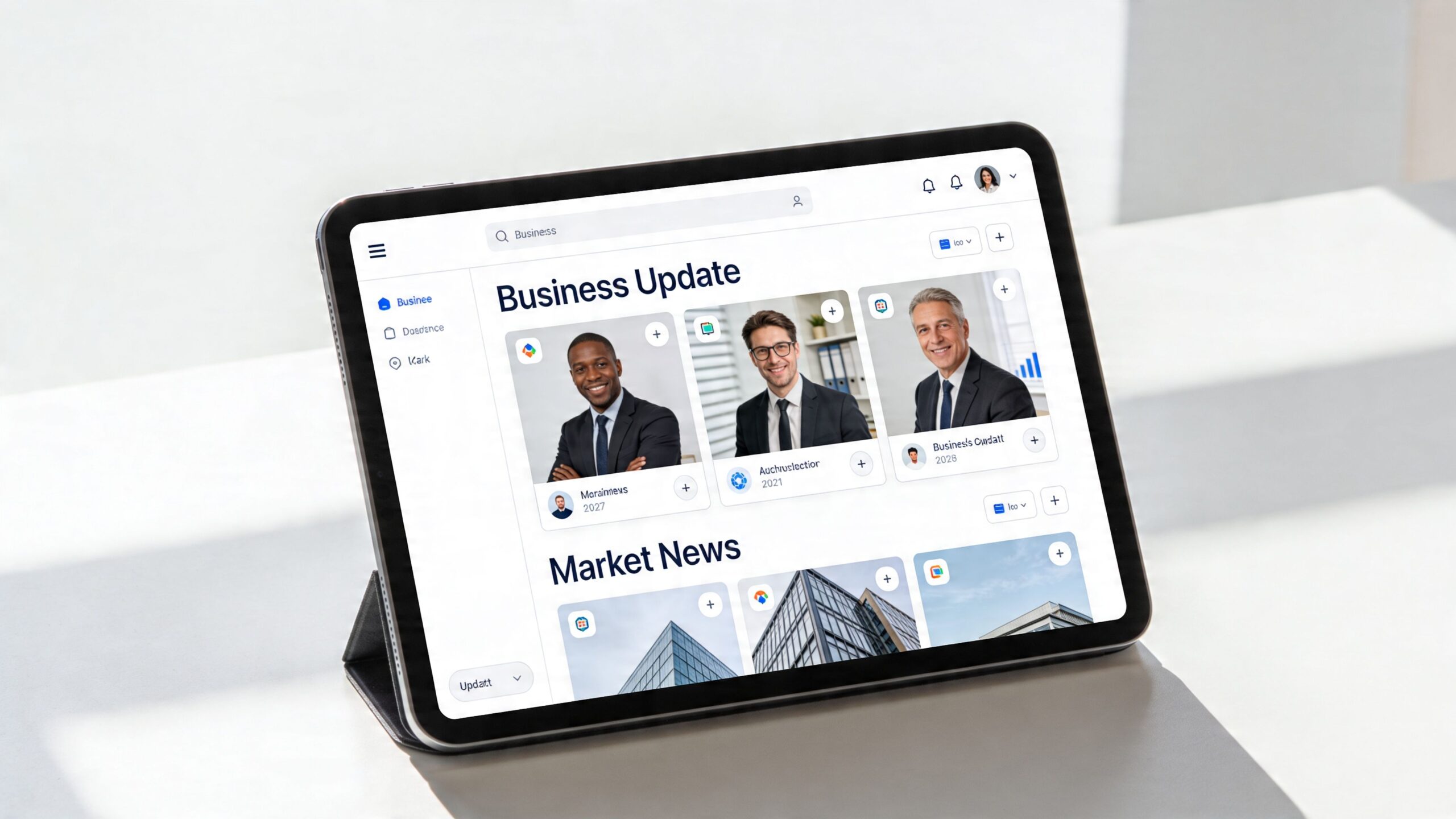
This category works best for announcements that are factual, time-stamped, and easy to summarize. Funding rounds, product launches, executive hires, partnerships, market expansions, reports, and event announcements tend to travel well. Opinion-heavy stories usually do not. Aggregators want structured news they can ingest fast, display cleanly, and classify correctly.
That trade-off matters. Aggregator placement is usually easier to get than staff-written coverage, but the payoff is different. You are aiming for reach, indexing, brand validation, and occasional secondary discovery by journalists, investors, or customers who search your company later.
How to format a release for pickup
Write for both editors and machines. Aggregator pages often pull only the headline, subhead, first paragraph, image, and metadata. If those elements are vague, the release loses value before anyone clicks.
Use this checklist:
- Lead with the announcement: State the actual news in the first sentence.
- Use plain search terms: Include your company name, product category, sector, and geography naturally.
- Keep the first paragraph self-contained: Many syndication pages show only that excerpt.
- Add one strong visual: A logo, product image, or executive headshot helps the page look complete.
- Strip out filler: Long quotes, scene-setting intros, and brand slogans reduce pickup quality.
- Include clean contact details: Some pickups surface your media contact directly.
A simple headline formula works well here: Company + action + what changed + who it affects.
Examples:
- Acme Analytics Launches AI Reporting Tool for Mid-Market Finance Teams
- Denver SaaS Firm Northlane Opens Phoenix Office to Support Southwest Clients
- HealthTech Startup Wellmint Names Former Teladoc Executive as COO
Outreach playbook for aggregator-style wins
This is one of the few PR categories where process beats creativity.
Start by choosing the distribution path that matches the goal. If you need broad visibility, use a wire or release distribution service with known syndication relationships. If you care more about industry relevance, submit directly to business news portals or vertical sites that accept company announcements. If pickup quality matters more than volume, send the release to a smaller list of aggregator-friendly editors and platform submission forms.
Then tighten the release before distribution:
- Cut the intro throat-clearing.
- Move the core fact into the first line.
- Add a plain-English subhead.
- Attach a correctly sized image.
- Test every link.
If you want a stronger foundation before sending anything out, this guide on how to get a press release picked up with better distribution and formatting strategy covers the mechanics in more detail.
Timing and follow-up
Timing is less about newsroom habit here and more about indexing speed, market context, and business relevance.
For B2B company news, weekday mornings usually give the release the cleanest runway. For investor-sensitive or partnership news, publish while your audience is active and your leadership team is available for fast follow-up. Avoid sending late on Friday unless the announcement cannot wait. A release that lands outside business attention hours often gets buried under the next cycle.
Follow-up is lighter than with traditional media. Check where the release appeared, confirm the headline rendered correctly, and log which sites picked it up within the first 24 to 72 hours. If a high-value site posted a broken image, bad excerpt, or missing company description, fix it where you can and update your source release immediately.
How to measure whether it worked
Do not judge this category by vanity counts alone.
Track:
- branded search lift after publication
- referral traffic from pickup pages
- backlinks from syndication or republishing sites
- sales or partner conversations where someone mentions “seeing the announcement”
- whether later reporters reference the release in their research
Value is cumulative. A clean trail of published announcements makes your company easier to verify, easier to research, and easier to pitch later. That is why I treat aggregator wins as infrastructure, not as the final outcome.
4. Journalist and Blogger Databases with Low-Barrier Access
If you want direct outreach without buying a massive enterprise tool on day one, start with low-barrier databases and public journalist discovery methods. Here, many teams waste time by collecting names instead of building a usable list.
A useful media list isn’t “all tech reporters” or “all startup bloggers.” It’s a short set of people who cover your exact kind of news and have shown that recently. Public social feeds, beat pages, LinkedIn searches, and lightweight databases are enough to build that list if you’re disciplined.
Some teams graduate into full PR tools quickly. That can be worth it. Prowly-focused coverage from PRPackage highlights that Prowly’s database includes over 1 million journalist contacts, and notes targeted pitches can generate 20-30% higher response rates than generic blasts. That’s the key takeaway. Better targeting beats bigger volume.
How to build a small list that works
Start with twenty names, not two hundred. Pull recent bylines from your sector, then verify each person still covers that topic. Add notes on beat, tone, and preferred angle.
Good low-barrier sources include:
- LinkedIn searches: Find reporters by publication and beat.
- Journalist request feeds: Watch for active requests tied to your industry.
- Author archive pages: These show exactly what someone has covered lately.
- Public social profiles: Many reporters signal what they do and don’t want.
Keep outreach short. Meltwater’s data on pitch length, cited earlier, supports what practitioners already know. Brevity helps.
Field note: The best first email often looks too short to the sender and exactly right to the journalist.
Use a template like this:
Subject: Possible fit for your [beat] coverage
Hi [name],
Saw your recent piece on [topic]. We’ve got a new announcement on [news] that connects to [specific angle]. If helpful, I can send a two-sentence summary or the full release.
For a broader workflow on outreach and pickup, see how to get a press release picked up.
What doesn’t work is obvious once you’ve done this a while. Mass CC sends. Generic “Dear Editor” intros. Pitching reporters who only write features when you have a routine company announcement. Those mistakes make every future pitch harder.
5. Company Listing and Directory Sites with PR Sections
A reporter searches your brand after seeing your pitch. Before your press release shows up, they hit your LinkedIn page, Crunchbase profile, association listing, and a few directory entries. If those pages contradict each other or haven’t been touched in a year, your story loses force before anyone replies.
That is why directory sites deserve a place in an easy PR list. They rarely feel glamorous, but they create fast wins. Many of these profiles accept updates with little or no gatekeeping, and they often rank for branded searches that matter during vetting.

Use LinkedIn Company Pages, Crunchbase, startup databases, trade association directories, local business directories, software marketplaces, and employer review profiles as supporting PR assets. Each one plays a different role. LinkedIn helps with current company news. Crunchbase works well for funding, hiring, and product milestones. Directory listings help confirm location, category, service line, and legitimacy.
Build each profile like a proof point
Do not paste the same release into every platform. Edit for the format and for the reader who lands there.
A simple working setup looks like this:
- LinkedIn: Post a short news update with a plain-language headline, one quote, and a link.
- Crunchbase or startup profiles: Add factual milestones such as launch dates, funding updates, leadership hires, expansion, or product releases.
- Industry directories: Tighten your company description to one clear positioning statement and keep contact details exact.
- Association listings: Add certifications, awards, and member status that strengthen trust.
- Review or hiring platforms: Make sure the overview, logo, team size, and location match your other profiles.
The trade-off is speed versus control. These pages are easy to update, but many have formatting limits, weak analytics, or approval delays. That is fine. The job of these placements is not to carry the full story. The job is to back up the story wherever people check your brand.
What to publish, when to publish it
Use this category for news that confirms momentum. Good fits include a new office, founder appointment, product release, funding milestone, award, certification, notable customer win, or partnership.
Timing matters more than PR teams usually expect. Update the profile on the same day you send outreach, or within 24 hours. That way, anyone who checks your company after seeing your pitch finds current information instead of a stale page.
I also recommend keeping a short reuse pack for this category:
- 50-word company summary
- 100-word company summary
- one approved boilerplate
- square logo
- founder headshot
- one current link for the announcement
That pack saves time and keeps messaging consistent.
Outreach playbook for directory PR sections
Some directories and listing sites have editorial add-ons, news tabs, or announcement forms. Those are easy opportunities if you treat them like structured submissions instead of full media pitches.
Use a short note like this:
Subject: Company update for your news/profile section
Hi [site/editor name],
We’ve got a timely company update that fits your [directory/news section]. It covers [announcement] and includes [one specific proof point]. I can send a 75-word summary, logo, and link if you’d like to add it to our profile or news page.
Keep the angle factual. These platforms usually want clean business information, not a dramatic story arc.
Your destination page matters too. If a directory sends visitors to a weak or outdated site, the placement does not convert. Clean that up first with stronger small business website design.
How to measure whether these placements helped
Do not judge this category by vanity metrics alone. Track three things. First, whether branded search results show fresh, consistent profiles. Second, whether referral traffic from those listings reaches the right landing page. Third, whether journalists, prospects, or partners start seeing the same company story everywhere they check.
That consistency is the win. Directory PR sections will not replace earned media, but they make earned media easier to secure because your background information is already in order.
6. Community News Sites and Local Digital Outlets
Hyperlocal outlets often outperform bigger names when your story touches a specific place. Patch editions, neighborhood blogs, city newsletters, chamber sites, and local digital publishers are usually hungry for usable business news, especially if it affects residents directly.
A second location, charity partnership, renovation, franchise opening, workshop series, seasonal event, or scholarship initiative can all work here. The key is to strip away the corporate language and make the story feel close to home.
Write for neighbors, not industry peers
Community editors care about effect, not spin. If the release sounds like a board memo, it won’t travel. If it sounds like something residents would discuss, it has a chance.
Use location in the headline and opening paragraph. Mention the neighborhood, not just the metro area. Include a quote that sounds human. “We’re excited for strategic growth” is forgettable. “We wanted to open where our customers already live and work” feels local.
A practical pitch could look like this:
Hi [editor name],
We’re opening a new location in [area] and thought it might fit your local business coverage. The announcement includes [community detail], [local partner], and [public-facing impact]. I can send photos, hours, and a short release if useful.
Hyperlocal outlets usually want one simple thing. A story their readers will recognize without needing background.
Don’t overcomplicate follow-up. Community editors often wear multiple hats. One respectful follow-up is enough. If there’s no answer, move on and keep the contact warm for your next local announcement.
This category also works well in clusters. If one story fits a chamber newsletter, a neighborhood blog, and a local digital paper, pitch all three with slightly different angles. The cumulative effect is often stronger than one mid-tier hit.
7. Startup and Entrepreneurship-Focused Platforms
Startup platforms are easy to get wrong because founders treat them like press release dumpsters. They’re not. Communities like Product Hunt, Hacker News, Indie Hackers, startup directories, and founder newsletters reward substance, timing, and participation.
If you’re launching a product, shipping a meaningful update, opening access, announcing a niche tool, or sharing a build story with a clear lesson, these channels can work extremely well. If you’re posting a bland company milestone with no user value, they won’t.
Before launch day, watch what gets traction in your category. Product Hunt pages with clean visuals, sharp copy, and active founder responses usually outperform pages that rely on hype. Hacker News rewards technical relevance and honest framing. Indie Hackers responds better to transparent stories than polished PR language.
A lot of teams make the same mistake. They publish and disappear. On these platforms, the comment thread is part of the launch.
A simple launch rhythm
- Prime the audience: Warm up your network before launch day so the first traffic isn’t cold.
- Lead with usefulness: Show what the product does and who it’s for.
- Answer fast: Reply to questions while momentum is building.
- Capture the proof: Strong engagement can become social proof for later pitches.
The creator economy side of PR also matters here. impact.com’s guide to micro-influencer PR packages says brands increasingly value niche relevance over sheer size, and notes micro-influencers often drive stronger engagement than larger creators. For startup launches, that’s useful. A handful of relevant creators or founder-operators can create more believable momentum than a broad push to disconnected audiences.
Here’s the launch asset to place near your internal planning docs:
Use startup platforms for feedback and credibility, not just clicks. The best outcome isn’t vanity traffic. It’s validation you can quote in later outreach.
8. Email Newsletters and Content Platforms
A founder has news to share on Tuesday morning. By Friday, a niche Substack writer has turned it into a short recommendation, a LinkedIn newsletter has added a quote, and a curator in the space has linked to it in a weekend roundup. That kind of coverage happens faster than traditional media, and for many teams, it is one of the easiest PR wins available.
The catch is simple. Newsletter editors and solo creators publish in their own voice. They are not filling preset news slots. They are choosing what will make their audience open, read, and click. A press release pasted into an email rarely makes that cut.
The right approach starts with format fit. Substack writers often want a strong opinion, a lesson, or a contrarian point. LinkedIn newsletter authors may want a practical takeaway with a professional angle. Medium publications usually need a fuller story or a contributed article that already matches the publication’s tone. Curated niche emails want a clean summary they can drop straight into a roundup.
Build a pitch around the format they already publish
Read at least three recent issues before reaching out. Look for what the writer repeatedly includes: quick links, short commentary, founder interviews, charts, product picks, or tactical lessons. Then send something built for that exact slot.
Use this checklist:
- Match the content shape: Offer a two sentence blurb for roundup newsletters, a quote plus context for analyst emails, or a drafted contributed piece for Medium-style platforms.
- Lead with the reader benefit: Explain what the audience learns, saves, avoids, or gets earlier by hearing this now.
- Give them a usable asset: Include a short summary, founder quote, image, or data point they can paste in without extra work.
- Offer timing options: Some writers want a same-day note. Others prefer an embargoed preview 3 to 7 days early.
- Ask for the smallest yes: A mention, a link inclusion, or a short feature is often easier to secure than a full write-up.
Timing matters more here than teams expect. Weekly newsletters usually lock content one to three days before send. Daily curators decide much closer to publication. If you pitch after the issue is already assembled, even a good story often slips a week.
Here is a simple outreach template that works well for newsletter placements:
Hi [name],
I read your recent issue on [topic], especially the section on [specific item]. We have a timely update that fits your readers because [clear reason].Short version: [1 to 2 sentence summary]
Why it may fit: [lesson, trend, tool, or contrarian point]
Timing: [date, embargo option, or immediate availability]If helpful, I can send a ready-to-use blurb, quote, and image.
Measure these placements differently from standard press hits. Do not judge them only by raw traffic. Track referral visits, signups, demo requests, reply quality, and whether the mention leads to second-order opportunities such as podcast invites, investor inbound, or replies from larger reporters who also subscribe.
This category works best when treated like relationship PR, not one-off distribution. Send a useful idea before you need coverage. Reply quickly if a writer shows interest. Thank them after publication, then share how the piece performed if you can. Newsletter creators remember sources who are accurate, fast, and easy to work with. That is how a small placement list turns into a reliable channel for repeat coverage.
8 Easy PR Lists, Quick Comparison
| Item | 🔄 Implementation Complexity | ⚡ Resource Requirements | ⭐📊 Expected Outcomes | Ideal Use Cases | 💡 Key Advantages |
|---|---|---|---|---|---|
| Industry-Specific Trade Publications and Niche Journals | Medium, requires tailored pitches per outlet | Moderate, industry research, customized releases | ⭐⭐⭐⭐ quality, 📊 high relevance to sector, moderate reach | B2B launches, sector announcements, leadership news | Targeted audience, higher acceptance; build editor relationships |
| Local Business Journals and Regional Media Outlets | Easy, straightforward local angle needed | Low–Moderate, local quotes, regional data, follow-up | ⭐⭐⭐ quality, 📊 strong local credibility and clips for national outreach | Regional expansions, hires, community investment | Accessible editors, builds local brand awareness quickly |
| Online Business and News Aggregator Sites | Very Easy, automated or service-driven publishing | Low, distribution service or self-submission | ⭐⭐ quality, 📊 wide immediate visibility and SEO lift | Timely announcements, financial disclosures, broad reach needs | Fast turnaround, low cost, broad search visibility |
| Journalist and Blogger Databases with Low-Barrier Access | Easy–Medium, research and personalization required | Moderate, time to identify contacts and tailor pitches | ⭐⭐⭐ quality, 📊 higher response when personalized | Targeted pitches, thought leadership, feature stories | Direct outreach to reporters, builds relationships and targeted coverage |
| Company Listing and Directory Sites (with PR Sections) | Very Easy, direct publishing on profiles | Very Low, profile management and copy repurposing | ⭐⭐ quality, 📊 immediate placement for researchers (investors/candidates) | Employer branding, investor updates, evergreen company news | Full control over messaging, free, improves company search presence |
| Community News Sites and Local Digital Outlets | Easy, local-focused submissions accepted | Low, local metrics, neighborhood quotes, images | ⭐⭐ quality, 📊 strong hyperlocal SEO and community engagement | Store openings, neighborhood impact, local hiring | Highly accessible, cumulative local reach, good for community ties |
| Startup and Entrepreneurship-Focused Platforms | Medium, requires community strategy and timing | Moderate, launch prep, community engagement, assets | ⭐⭐⭐⭐ quality, 📊 high engagement and viral potential within startups | Product launches, funding announcements, early-adopter outreach | Engaged investor/founder audiences, potential for rapid momentum |
| Email Newsletters and Content Platforms (Substack, LinkedIn, Medium) | Medium, outreach to individual creators, customized angles | Moderate, research, personalized pitches, possible sponsorships | ⭐⭐⭐ quality, 📊 high engagement with niche audiences | Thought leadership, niche announcements, exclusive previews | Highly engaged subscribers, strong referral and sharing potential |
From Easy Wins to Long-Term PR Success
A founder gets a mention in a niche trade outlet on Tuesday, a local business journal brief on Thursday, and a newsletter feature the following week. By the time they pitch a tougher reporter, they are no longer asking for blind trust. They have receipts.
That is the value of easy PR lists. They help you build proof in layers. A trade mention shows relevance inside your category. A local pickup shows you are real and active in a market. A newsletter feature shows an editor or creator believed the story was worth sending to a hard-earned audience.
This stack matters because PR teams are judged on more than one vanity metric. Strong PR work needs placements, reach, message pull-through, sales credibility, search visibility, and internal proof that outreach is gaining traction. Small wins support all of that if you use them well.
The mistake I see often is treating each placement as a one-off. The better approach is to run these categories like a system.
Start with the outlets that have the clearest fit and the lowest editorial friction. For many teams, that means trade publications, local business media, community outlets, directories with PR sections, and curated newsletters. Use those early wins to sharpen the story. Which headline got replies. Which proof point earned coverage. Which customer angle made an editor say yes. Then take those lessons into harder pitches.
The outreach playbook is simple, but the discipline matters:
Pitch one story to one person for one reason.
Use the outlet's format, not your preferred format.
Follow up once.
Log the result.
Reuse the win.
That last part is where long-term value shows up. Every placement should get repackaged into at least four places: your press page, your next pitch email, your sales or investor materials, and your company profiles on listing sites. If a prospect, partner, or reporter searches your brand, they should see current third-party validation, not a stale newsroom and a six-month-old announcement.
Different categories also do different jobs, and good teams account for that. Local outlets can be easier to secure, but they rarely carry the same industry authority as a strong trade title. Startup platforms can drive engagement fast, but the spike may fade unless you convert it into follow-on coverage and owned content. Directories give you message control, but they do not replace earned media. The point is not to chase one perfect hit. The point is to assemble coverage that makes the next yes easier.
Weak execution is predictable. Long emails. Broad lists. Subject lines with no angle. Releases that hide the news. Company pages that look abandoned. Even a solid story can lose momentum if the surrounding assets make the company look unprepared.
Use easy wins as operating assets, not trophies. Add the logo to your site if the outlet allows it. Quote the coverage in outbound emails. Reference prior pickups in subject lines and intros. Build a short "recent coverage" block you can drop into future outreach. This is how a modest mention turns into a stronger close rate on the next round.
You do not need your biggest placement first. You need a credible sequence, a repeatable outreach process, and enough proof to make reporters, creators, and stakeholders take the next pitch seriously.
Press Release Zen helps you get that yes faster with practical templates, distribution guidance, and real-world press release strategies for startups, agencies, nonprofits, and in-house teams. If you want a cleaner workflow for writing releases, building outreach lists, and improving pickup odds, start with Press Release Zen.