A press release can be sharp, timely, and well distributed, then still disappear a day later. That's the problem many PR teams are dealing with now. The announcement gets published, a few pickups land, leadership is happy for a week, and then branded search results, newsroom pages, and old third-party coverage take over again.
Search changed the job. Press teams aren't only writing for journalists anymore. They're also publishing owned assets that need to rank, support brand narratives, reinforce entity signals, and stay useful long after launch day. That's one reason SEO education still matters so much. Surveys aggregated by industry analysis sources indicate that 60 to 70% of SEO professionals report reading at least one specialized SEO book in the past 18 months, which says a lot about how strongly practitioners still trust books for structured learning.
That matters for PR because most SEO advice is still built around blogs, ecommerce pages, and lead-gen funnels. Press teams need a different filter. They need books that help with brand SERP management, executive visibility, media pickup, archive structure, internal linking, and the long-tail value of announcements.
The list below focuses on SEO marketing books that help communications professionals do better work. Some are broad references. Some are narrow and technical. A few are better as policy manuals than day-to-day playbooks. That mix is the point.
Table of Contents
- 1. The Art of SEO (4th Edition) O'Reilly Media
- 2. Product-Led SEO Eli Schwartz (Scribe Media)
- 3. SEO 2026 Learn Search Engine Optimization with Smart Internet Marketing Strategies Adam Clarke
- 4. SEO For Dummies (7th Edition) Peter Kent (Wiley)
- 5. The Fundamentals of Brand SERPs for Business Jason Barnard
- 6. Entity SEO Moving from Strings to Things Dixon Jones
- 7. The Link Building Book Paddy Moogan (Aira)
- 8. Ultimate Guide to Link Building (2nd Edition) Garrett French and Eric Ward
- 9. Technical SEO Professional Web Optimization (Human Level, 2024)
- 10. SEO in 2026 (annual anthology series) Majestic/Casting Cred
- Top 10 SEO Marketing Books, Quick Comparison
- Start Building Your SEO Knowledge Stack
1. The Art of SEO (4th Edition) O'Reilly Media
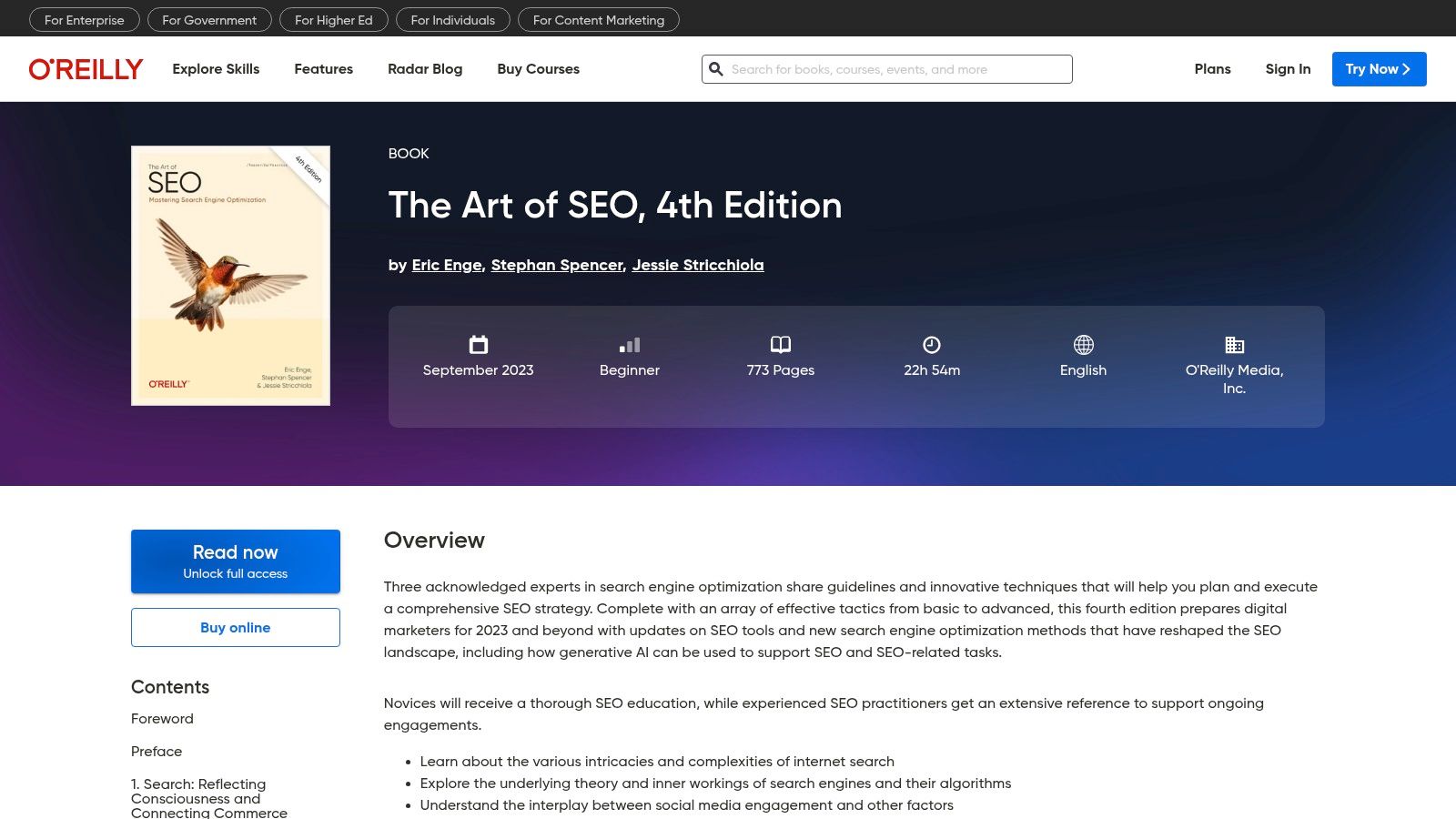
The Art of SEO (4th Edition) is still the closest thing the field has to a textbook. For PR pros, that's useful because communications work usually breaks down when teams treat SEO as a bag of isolated tactics instead of a system. This book gives the system.
It's not quick. It's dense, broad, and better used as a reference than a weekend read. But that depth is exactly why it belongs near the top of any list of SEO marketing books for communications leaders. It connects crawling, indexing, on-page signals, authority, measurement, and governance in a way that helps PR teams understand where press releases fit and where they don't.
Why it works for PR teams
A strong release rarely fails because the copy is weak. It fails because the page architecture, metadata, archive design, and internal linking around it are weak. This book helps teams see that difference.
PR leaders will get the most value from the chapters that explain search behavior and SERP features. Those sections make brand visibility easier to discuss with executives who only look at surface-level rankings.
- Best strength: It builds a complete mental model, not just a checklist.
- Best use case: Team leads who need to set SEO standards for newsrooms, media pages, and announcement archives.
- Main drawback: Some interface references age faster than the strategic concepts.
Practical rule: Use this book to decide process, not just page edits. It's strongest when a communications team needs publishing standards that survive staff turnover.
The broader market context supports why a book like this still matters. Industry estimates place the global digital marketing services market at about USD 109 billion in 2021, with projected growth of roughly 10 to 12% through the early 2030s, reflecting SEO's expanding strategic role inside marketing and communications work.
2. Product-Led SEO Eli Schwartz (Scribe Media)
Product-Led SEO is the right recommendation when a PR team has already figured out how to publish content, but hasn't figured out what deserves to exist as a permanent asset. That distinction matters. Many press teams produce one-off announcements when they should be building durable resource hubs, executive bios, event libraries, or newsroom structures designed for discovery.
This book is less tactical than many readers expect. It doesn't hand over a long set of page-level instructions. Instead, it frames SEO as a product and information architecture discipline. That makes it especially useful for communications leaders trying to influence where press content lives on a site and how discovery paths are designed.
Best use inside a PR workflow
This is a strong book for teams that collaborate with web, product marketing, or content strategy. It helps PR professionals argue for pages that keep earning attention after launch instead of disappearing into a chronological archive.
That's the key trade-off. A team looking for immediate technical fixes may feel under-served. A team looking for strategic direction on owned media structure will probably find it more valuable than a narrower handbook.
Press pages don't become discoverable because they exist. They become discoverable because the site treats them like assets instead of leftovers.
The book also aligns with how professionals still learn SEO strategy. Aggregated industry survey reporting indicates that 45 to 60% of mid-level marketers in North America and Western Europe rely on self-education through books and free online content as their primary source for SEO strategy. That behavior fits this title well. It's a strategy book first, and a useful one when PR needs to shape site architecture instead of chasing isolated optimizations.
3. SEO 2026 Learn Search Engine Optimization with Smart Internet Marketing Strategies Adam Clarke
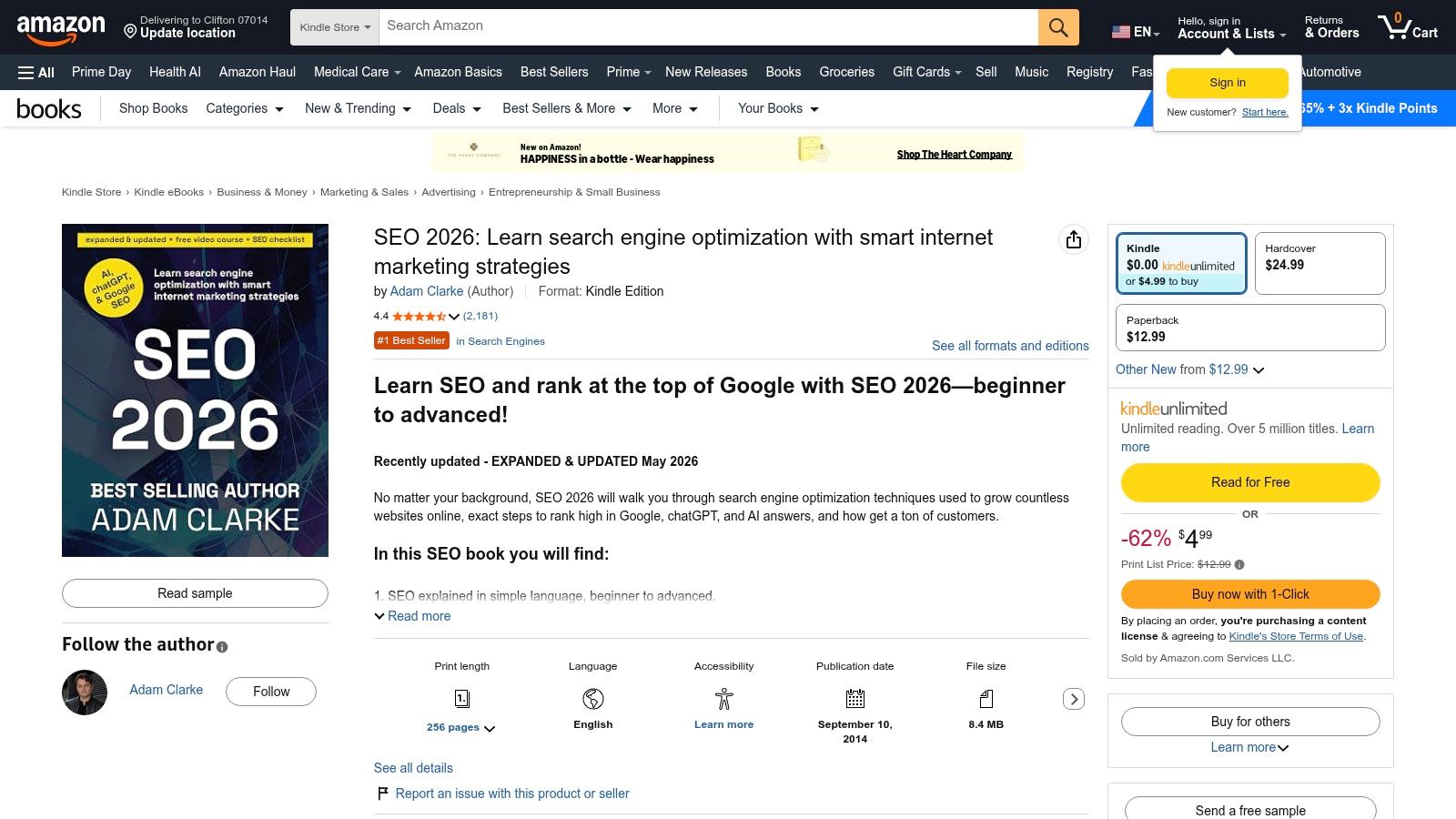
SEO 2026 by Adam Clarke is one of the easier entries on this list to hand to a founder, junior PR manager, or generalist marketer. It's practical, plain-English, and built for action rather than theory.
That makes it useful for small communications teams. Many SEO marketing books are either too abstract or too technical for a newsroom-style environment where one person may be writing releases, updating a media kit, and talking to leadership in the same afternoon. This one tends to keep priorities clearer.
Where this book earns its spot
The annual-refresh style is both the benefit and the limitation. It usually reflects recent search shifts better than older beginner texts, but it can also date quickly in places where platform specifics change. The smart move is to use it for the fundamentals and sanity checks, not as a permanent source of tool-by-tool instruction.
For press teams, the strongest value is its checklist orientation. It helps with keyword targeting, title decisions, page structure, and basic technical awareness without burying readers in jargon. That's especially useful when a team wants to apply SEO directly to announcement pages, newsroom posts, and campaign landing pages tied to media outreach. Press Release Zen's guide to press releases for SEO pairs well with that use case.
- Good fit: Small businesses, startups, and lean agencies.
- Less ideal: Enterprise teams needing advanced technical governance.
- Best outcome: Faster execution on core on-page decisions.
There's a broader reason beginner-friendly books keep selling. Independent bibliographic data aggregated by neutral industry analysis sources indicates that SEO as a subject category in business and marketing books nearly doubled its title count between 2010 and 2015, rising from roughly 1,800 to 2,000 titles to about 3,500 to 4,000. That expansion happened because more teams needed usable guidance, not just specialist theory.
4. SEO For Dummies (7th Edition) Peter Kent (Wiley)
SEO For Dummies works best when a communications team needs shared language. Not advanced strategy. Not cutting-edge experimentation. Shared language.
That sounds basic, but it solves a real problem inside PR organizations. Writers, account managers, executives, and web teams often use the same SEO terms to mean different things. This book helps level that out. It explains architecture, on-page basics, links, and measurement in a way non-specialists can absorb quickly.
Best for shared language across teams
This is not the book to buy for deep technical SEO. It's also not where a senior digital PR strategist should stop learning. But it's a strong bridge text for comms professionals who need to collaborate better with developers, analytics teams, or agency partners.
Its biggest strength is clarity. Its biggest weakness is that some examples and references can age out. Still, clarity has real value, especially for training.
A PR team that understands title tags, internal links, indexing, and crawl basics will brief agencies better and catch weak implementation earlier.
The sustained appeal of beginner SEO books isn't theoretical. Industry-sourced market data indicates that “SEO for Dummies” and similar titles have consistently ranked among top business titles on major retail platforms, which reflects ongoing demand for structured beginner-to-intermediate learning. For a comms department that wants everyone speaking the same SEO language, that demand makes sense.
5. The Fundamentals of Brand SERPs for Business Jason Barnard
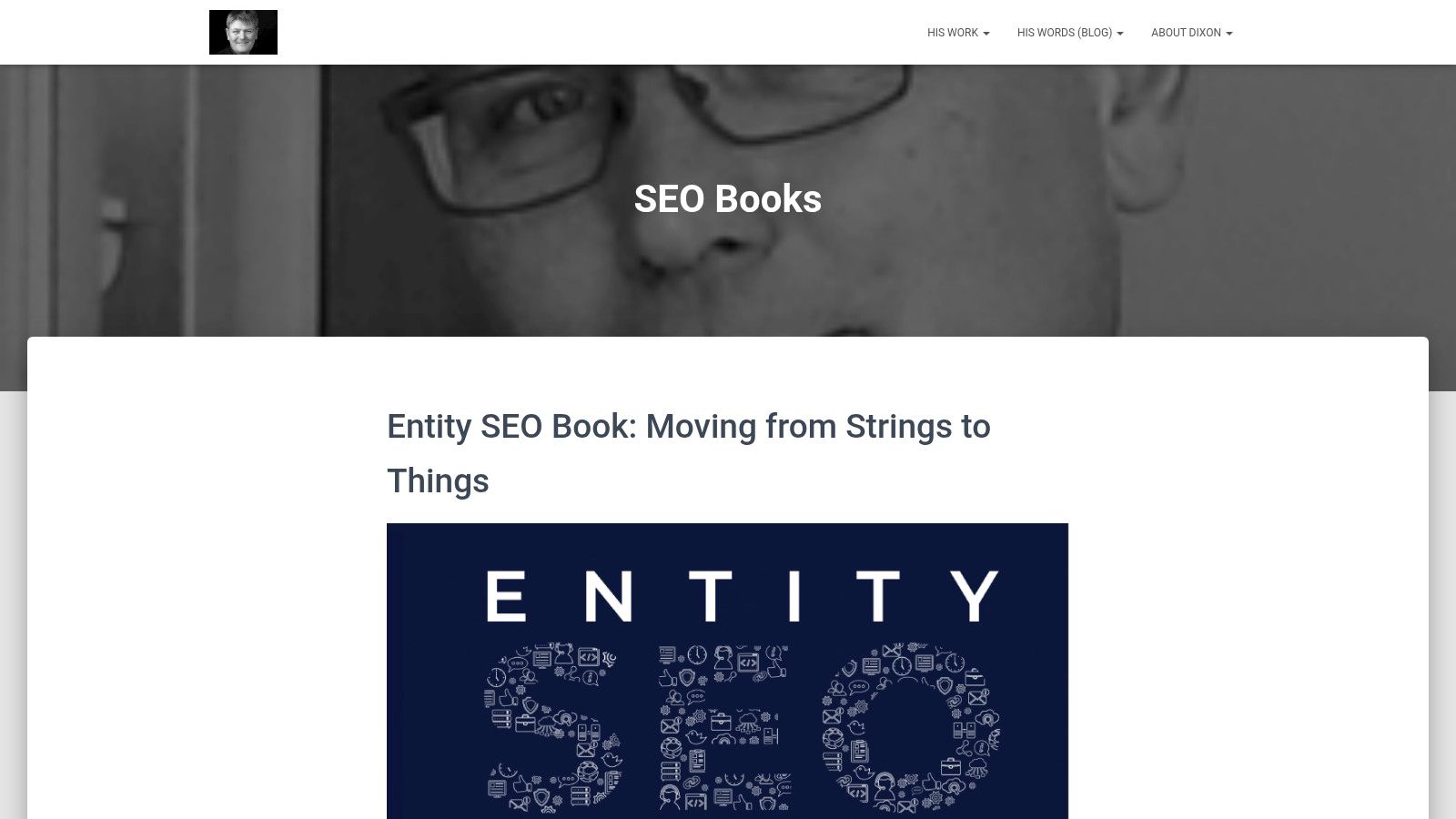
The Fundamentals of Brand SERPs for Business is one of the most directly relevant books for PR people on this list. It connects reputation, search visibility, entity understanding, corroboration, and structured brand presence. That combination maps almost perfectly to communications work.
Most SEO books spend more time on non-branded search than branded search. That's fair for broad SEO education, but it leaves a major gap for PR. Press teams are often judged by what people see when they search a company name, a founder name, or a spokesperson after coverage lands. This book addresses that exact problem.
What PR teams can do with it
The strongest use case is brand result governance. Teams can apply its ideas to executive bios, company descriptions, profile consistency, media mentions, and newsroom architecture. It also helps PR pros think more clearly about how third-party mentions and owned pages reinforce each other.
The trade-off is scope. This isn't a full SEO operating manual. It's focused. But that focus is why it's valuable.
- Use it for: Brand SERP cleanup, Knowledge Panel support, executive reputation work.
- Don't expect: A full treatment of technical SEO or broad keyword strategy.
- Best audience: In-house PR, corporate communications, and reputation-sensitive agencies.
Readership behavior supports the relevance of that focus. Aggregated survey reporting from English-speaking markets suggests that around 45 to 50% of respondents used SEO books specifically to learn on-page optimization, keyword strategy, and link-building, while roughly 30 to 40% used them to prepare for certifications or refresh knowledge after major Google updates. Brand SERP work sits right between those needs because it blends foundational SEO with reputation management.
6. Entity SEO Moving from Strings to Things Dixon Jones
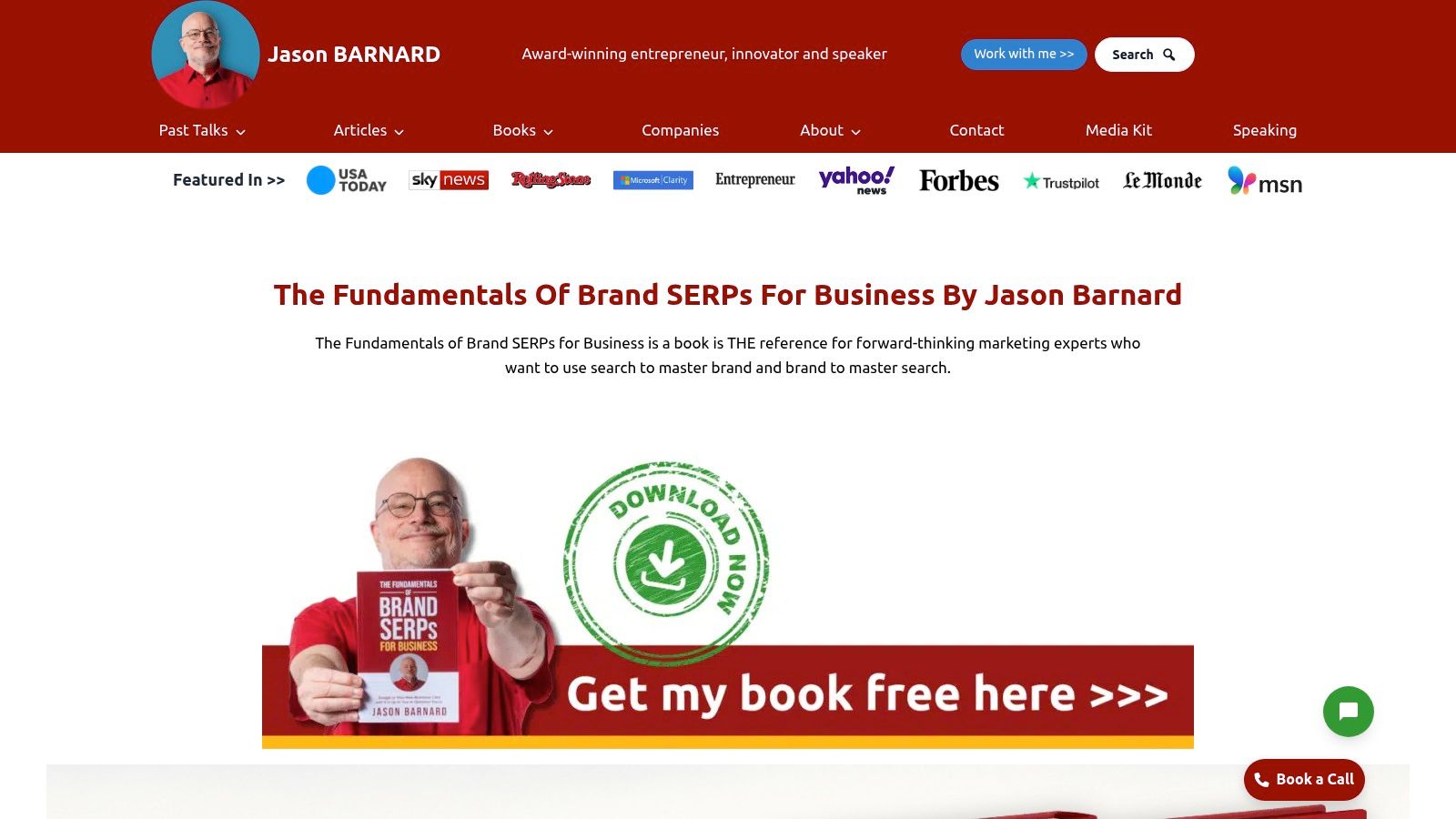
Entity SEO is narrower than most books here, and that's a feature, not a flaw. Communications teams are increasingly dealing with a search environment that tries to understand organizations, people, products, and events as connected entities instead of just matching keywords on pages. This book helps explain that shift.
For PR professionals, entity thinking matters because press work already revolves around attribution, credibility, names, dates, and relationships. A release announcing a partnership, acquisition, event, or product launch contains exactly the kind of factual structure search systems and AI systems use to interpret a brand.
Why entity thinking matters in communications
This book is strongest when readers already know the SEO basics. A newcomer may find parts of it too abstract or technical. But a mid-level or senior communications practitioner will probably recognize how useful the ideas are for executive pages, media centers, author pages, about sections, and archival release templates.
It also speaks to a gap in current SEO publishing. Existing SEO marketing book coverage rarely explains how to adapt broader SEO advice for single-asset formats such as press releases, even though communication research has noted that press releases now play dual roles as media bait and search-visible assets. That omission leaves PR teams to figure out announcement-level keyword selection and metadata structure on their own.
Field note: Entity clarity is often what separates a release that gets indexed from a release that gets understood.
The book won't replace a general SEO reference. It should sit beside one. But for PR teams trying to improve how search engines connect their brand, people, and announcements, it covers ground that broader texts often skip.
7. The Link Building Book Paddy Moogan (Aira)
The Link Building Book is one of the easiest recommendations for digital PR teams because it sits right at the overlap between SEO and campaign execution. It's modern, practical, and centered on earning links with assets people want to cite.
That's the part many comms teams miss. A standard press release may support awareness, but it usually isn't enough by itself to earn durable authority. Link-worthy assets need stronger hooks. Data studies, tools, visual resources, expert commentary pages, and highly useful support content do more work over time than a simple corporate announcement.
How it fits digital PR
The book shines. It walks through campaign planning, asset ideation, outreach, and reporting in a way that maps well to PR workflows. It's especially good for teams that want to turn announcements into larger authority-building campaigns.
Its main limitation is that it assumes the team can produce something worth linking to. If the organization only publishes routine release copy, results will be limited. Press Release Zen's guide to writing a press release for SEO helps with the announcement layer, but this book is better for what should surround that announcement.
- Strongest chapter type: Research and ideation.
- Best practical outcome: Better campaign concepts before outreach starts.
- Weakest fit: Teams looking only for passive link acquisition.
There's a useful behavioral signal behind books like this. Aggregated survey reporting indicates that 55 to 70% of digital marketing professionals in the U.S., UK, and Australia regularly use commercial SEO tools for keyword research and competitor analysis, while roughly 60 to 70% of that cohort still reads at least one SEO-specific book or definitive guide per year. For digital PR, that balance makes sense. Tools show opportunities. Books teach judgment.
8. Ultimate Guide to Link Building (2nd Edition) Garrett French and Eric Ward
Ultimate Guide to Link Building takes a more campaign-discipline approach than trend-driven digital PR advice. That's why it remains useful. It pushes teams to research opportunities, assess value, and pursue links with a clearer sense of intent.
For PR pros, this is important because not all coverage creates the same SEO outcome. Some mentions send referral traffic. Some strengthen relevance. Some do almost nothing. A book that forces better prospecting discipline helps teams stop treating every pickup as equal.
Where it helps most
This title is a good fit for agencies and in-house communicators who already know outreach basics and want stronger planning. It's less helpful for someone who wants a broad SEO education from one book.
Its practical value shows up in campaign framing. Teams can use the prospecting logic here to turn partnership pages, resource mentions, speaking pages, and media pages into link opportunities that are aligned with authority goals, not just visibility goals.
Better outreach starts before the email draft. It starts with choosing targets that make sense for the story and the site.
The downside is scope. This is a link-building book, not an all-in-one SEO guide. That said, demand for SEO-specific educational material remains strong enough to support specialized books like this. Analyses of global online book-sales data from 2020 to 2022 indicate that SEO-related print and digital books accounted for about 12 to 15% of all digital-marketing and search-related titles sold, which suggests practitioners still buy narrow, tactical guidance when it solves a real problem.
9. Technical SEO Professional Web Optimization (Human Level, 2024)
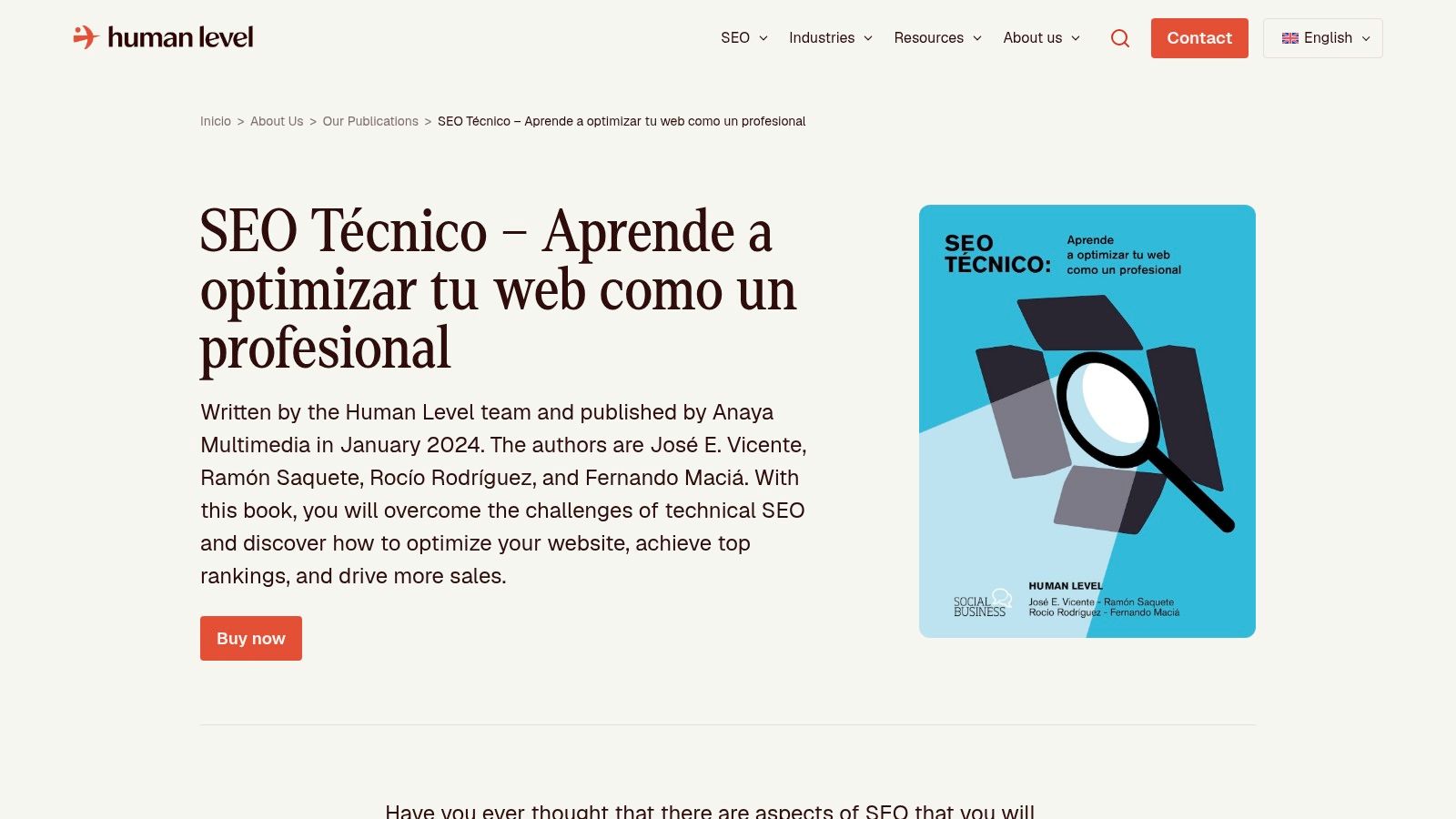
Technical SEO Professional Web Optimization is the book for PR leaders who are tired of asking why newsroom content isn't getting indexed properly. It deals with the machinery behind discovery. Crawling, rendering, indexing, architecture, internationalization, and performance.
That may sound too technical for communications. It isn't. A press release can be well written and still fail because the release sits in an orphaned archive, loads badly, renders inconsistently, or lacks template-level metadata controls. PR teams don't have to implement every technical fix themselves, but they do need enough technical literacy to ask better questions.
What PR leaders should take from it
This title is most useful when communications works closely with web or engineering teams. It gives PR professionals a stronger way to evaluate newsroom templates, vendor distribution environments, and archive structures.
The best use isn't reading it cover to cover and trying to become a technical SEO specialist. The best use is extracting the sections that affect how release pages are published and discovered. Press Release Zen's guide to optimizing press releases with SEO keywords and metadata complements that workflow well.
- Read for: Crawl logic, site architecture, rendering, indexing.
- Skip if: The immediate need is basic keyword education.
- Most valuable to: Enterprise comms, multilingual brands, and agency teams auditing client newsrooms.
This kind of technical grounding matters because implementation quality changes outcomes. The verified industry data notes that teams combining book-derived SEO checklists with platform analytics have reported faster time-to-rank improvements on medium-competition terms than teams relying on ad hoc experimentation. For PR, that principle translates neatly to release templates, metadata discipline, and newsroom architecture.
10. SEO in 2026 (annual anthology series) Majestic/Casting Cred
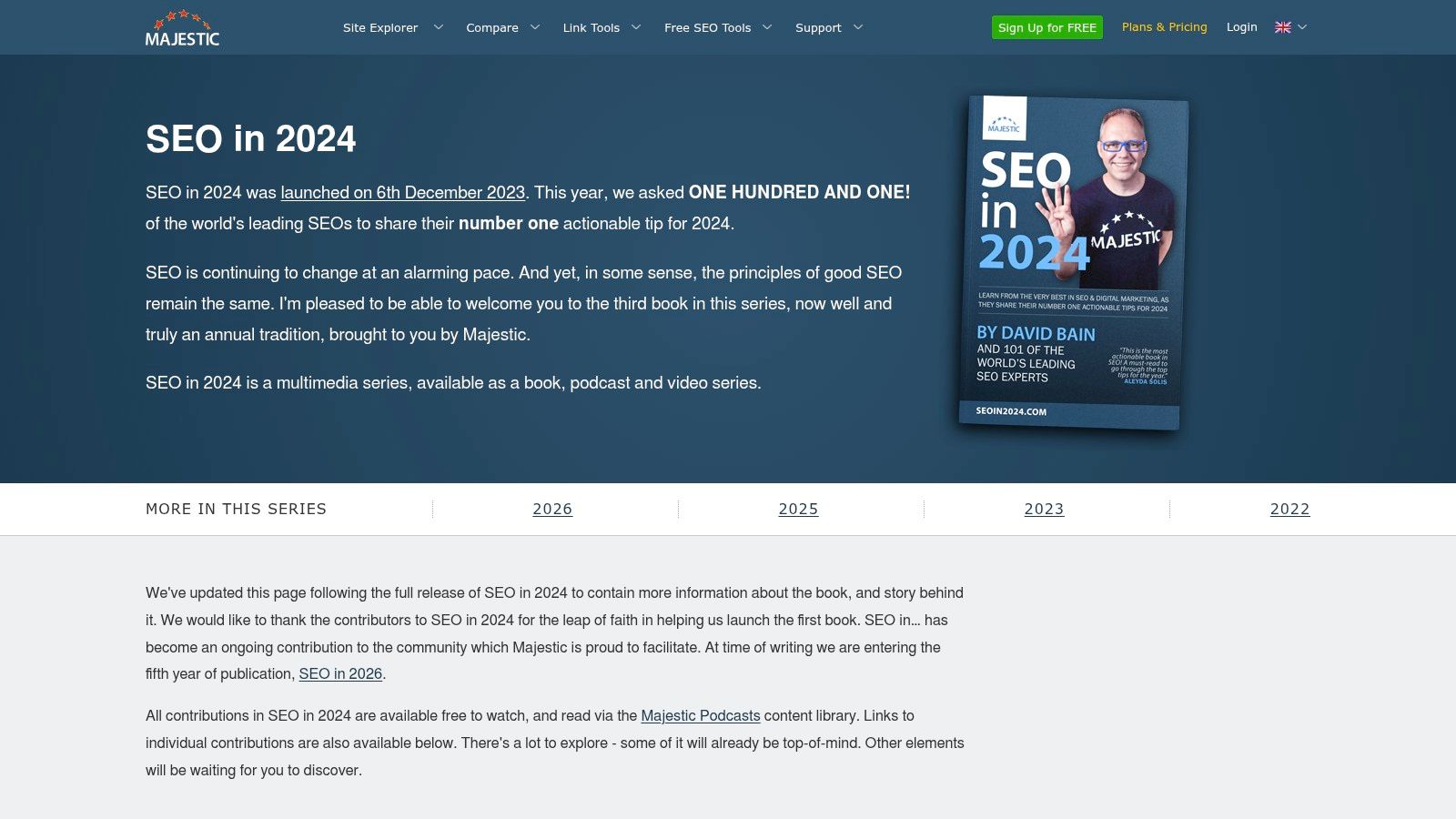
SEO in 2026 is useful for a different reason than the rest of this list. It isn't one unified methodology. It's a collection of viewpoints from working SEOs. For senior communications people, that's often an advantage.
A single-author book gives consistency. An anthology gives range. In a search environment shaped by AI answers, citation surfaces, entity understanding, UX expectations, and shifting publishing patterns, range matters. PR leaders often don't need one more rigid framework. They need multiple credible lenses to pressure-test plans.
Why anthologies help senior communicators
This type of book works best for planning sessions, internal discussion, and spotting emerging themes. It's less useful when a junior team member needs a step-by-step handbook. Some essays will feel more applicable than others. That unevenness comes with the format.
Still, the format matches the moment. Existing SEO books often lag behind the shift from classic ranking models to AI-first discovery and citation behavior, especially for trust-heavy content types like announcements. PR teams need guidance on structuring facts, dates, and entities so systems cite them accurately, not just crawl them.
A current anthology can help fill that gap faster than a traditional textbook cycle. It also pairs well with adjacent reading, including this external 2026 playbook for AI search, for teams thinking beyond classic SERP positions.
Top 10 SEO Marketing Books, Quick Comparison
| Resource (Author / Publisher) | Core focus | Readability & depth | Best for (target audience) | Key USP / Value proposition | Price / Format |
|---|---|---|---|---|---|
| The Art of SEO, O'Reilly Media | Full SEO framework: crawling, on‑page, off‑page, technical, SERP features | Deep, strategic reference; dense | PR/comms leaders, governance teams | Industry textbook linking SEO strategy to business outcomes | Paid, print/ebook |
| Product‑Led SEO, Eli Schwartz (Scribe Media) | SEO as product & IA; discovery-first distribution | Strategic, accessible; fewer step‑by‑step checklists | Product, marketing & PR teams building press hubs | "Build for discovery" mindset; exec-friendly narratives | Paid, print/ebook |
| SEO 2026, Adam Clarke | Fundamentals + recent updates; checklists & prioritized tasks | Beginner‑friendly; concise; regularly updated | Small teams and non‑technical marketers | Fast ramp with plain‑English to‑dos and annual refreshes | Paid, ebook/Kindle |
| SEO For Dummies (7th), Peter Kent | SEO basics: terminology, site setup, on‑page, analytics | Very accessible; broad but lighter on depth | PR professionals needing core SEO literacy | Simple shared‑language primer for cross‑functional teams | Paid, print/ebook |
| The Fundamentals of Brand SERPs for Business, Jason Barnard | Branded SERPs, Knowledge Panels, entity corroboration | Focused and actionable | Brands and exec reputation managers using press releases | Practical roadmap to own branded search results | Paid, print/ebook |
| Entity SEO, Dixon Jones | Entities, Knowledge Graph, schema, relationships | Technical and niche; future‑proof focus | PR teams concerned with entity identity & metadata | Deep dive into semantic/ entity optimization for brand clarity | Paid, print/ebook |
| The Link Building Book, Paddy Moogan (Aira) | Link earning lifecycle: research, assets, outreach, reporting | Practical, current; online format | In‑house PR/SEO teams converting press assets into links | Free, regularly updated, practitioner tactics mapped to PR | Free, online |
| Ultimate Guide to Link Building, Garrett French & Eric Ward | Campaign link acquisition, audits, outreach frameworks | Practitioner playbook; research focused | Teams running link campaigns from coverage & partnerships | Strong prospecting discipline and outreach value props | Paid, print/ebook |
| Technical SEO: Professional Web Optimization (Human Level) | Crawl efficiency, JS SEO, indexing, international & performance | Up‑to‑date technical depth; actionable checklists | Developers + comms vetting distribution vendor tech | Concrete fixes for crawl/render/index problems at scale | Paid, print/ebook |
| SEO in 2026 (annual anthology), Majestic/Casting Cred | Essays on AI, LLMs, entity strategies, UX & search shifts | Bite‑sized expert essays; uneven depth by chapter | Leaders seeking multiple viewpoints and trend signals | Rapid, diverse perspectives to inform roadmaps and experiments | Paid/annual anthology (digital) |
Start Building Your SEO Knowledge Stack
The best SEO marketing books for PR teams don't all serve the same purpose, and that's why a stack works better than a single title. One book should teach the system. Another should sharpen a specialty. A third should help with current changes in search and publishing behavior. That mix is more useful than hunting for one perfect volume.
For many communications professionals, the smartest first move is to choose based on the immediate bottleneck. If the problem is broad understanding, The Art of SEO or SEO For Dummies gives a better base. If the issue is brand visibility after coverage lands, Jason Barnard's book is the better starting point. If the team needs to turn campaigns into authority, the link-building books become more practical. If release pages aren't being discovered or indexed reliably, the technical title will save more time than another general overview.
That matters because PR work now extends well beyond announcement writing. Teams are managing branded search results, executive visibility, newsroom architecture, media kit discoverability, and the long-tail search value of archives. Yet existing SEO book coverage still leaves meaningful gaps for press-focused publishing. Verified industry background notes that many SEO guides still emphasize evergreen blog clusters and product content while under-addressing how to optimize a 300 to 500 word press release for both journalists and search visibility. That gap is exactly why PR professionals need a more selective reading list.
Books also still have a practical place in a field dominated by tools. Verified survey summaries indicate that many practitioners continue to rely on books and definitive guides each year even while using commercial SEO platforms daily. That combination is healthy. Tools surface queries, rankings, and competitors. Books create judgment, vocabulary, and process. PR teams need both.
The strongest application pattern is simple. Read one book with a purpose. Turn three to five ideas into publishing rules. Apply those rules to the newsroom, release template, executive bio pages, and campaign support assets. Then review performance with analytics and search data. Repeat. That cycle is more effective than passively collecting recommendations.
For PR and communications professionals, the upside goes beyond traffic. Better SEO literacy improves media page structure, strengthens brand corroboration, sharpens messaging discipline, and helps teams defend the value of owned press assets long after a launch window closes. It also improves careers. People who can connect communications strategy to search visibility become more valuable inside agencies, in-house teams, and consulting roles.
Press Release Zen offers practical support for that next step. The site's guides, templates, and comparisons help teams apply SEO thinking directly to press releases, metadata, formatting decisions, and distribution strategy. That's the useful bridge between reading and execution.
Press Release Zen helps PR teams turn announcements into durable search assets with practical guides, templates, and distribution advice. Explore Press Release Zen for actionable resources on writing stronger releases, improving metadata, and building newsroom workflows that support both media pickup and search visibility.