What turns a campaign into a story journalists want to cover? Most roundups of marketing campaign examples focus on creative, slogans, or social reach. That misses the part communications teams care about most. A campaign becomes durable when the press angle, release cadence, and media narrative are built into the launch from day one.
That's why the strongest campaign analysis doesn't stop at the ad itself. It looks at what the company announced, when it announced it, which proof points it emphasized, and how PR worked alongside social, partnerships, retail, and owned media. For communications leaders, that's the gap between admiring a campaign and adapting one.
The campaigns below are useful because they show different PR mechanics in action. Some used founder access. Some used a values-based narrative. Others turned product packaging, user participation, or thought leadership into a media hook. Not every tactic is replicable at every budget, and not every viral idea scales cleanly. Teams also need a downside plan, especially when campaigns rely on controversy, cause positioning, or stunts. That's where disciplined messaging and crisis management planning matter.
These marketing campaign examples focus on what PR and communications professionals can reuse: the announcement angle, the narrative frame, the media assets, and the sequencing.
Table of Contents
- 1. Airbnb's Belong Anywhere Global Brand Campaign
- 2. Patagonia's Environmental Activism Press Campaign
- 3. Dollar Shave Club's Disruptive Founder-Led Campaign
- 4. Dove's Real Beauty Press Campaign
- 5. Tesla's Product Launch Press Strategy
- 6. Coca-Cola's Share a Coke Personalization Campaign
- 7. GoPro's User-Generated Content Press Strategy
- 8. Warby Parker's Disruption and Social Impact Campaign
- 9. Nike's Social Justice Campaign
- 10. HubSpot's Inbound Marketing Thought Leadership Campaign
- Side-by-Side Comparison of 10 Marketing Campaigns
- Your Blueprint for a Press-Powered Campaign
1. Airbnb's Belong Anywhere Global Brand Campaign
Airbnb's strongest communications move wasn't talking about inventory. It was talking about identity. “Belong Anywhere” gave reporters, hosts, travelers, and partners a bigger story than short-term accommodation.
That distinction matters for PR. A feature-led release has a short shelf life. A belonging-led narrative supports market entry announcements, host storytelling, partnership news, executive interviews, and lifestyle coverage without forcing every story back into a product demo.

Narrative before feature list
For communications teams, the lesson is simple. Brand campaigns travel further when the press release leads with a human outcome, then supports it with market relevance and visual proof. Airbnb-style messaging works because the story can appear in travel, culture, business, and local press at the same time.
A practical release structure for this kind of campaign usually includes:
- Human tension first: Open with how travel feels fragmented, impersonal, or transactional, then position the brand around connection.
- Market relevance next: Tie the announcement to a city launch, partnership, host milestone, or travel behavior shift without overloading the release.
- Visual assets ready: Give journalists photography, short video clips, and host or guest stories they can use immediately.
Practical rule: If the campaign idea can't be explained in one emotionally clear sentence, the release probably won't carry it.
This is one of the most useful marketing campaign examples for brands that need a press narrative broad enough to support multiple announcements over time. The risk is drift. If every expansion release says “belonging” but the actual customer experience feels inconsistent, the message starts sounding decorative rather than credible.
2. Patagonia's Environmental Activism Press Campaign
Patagonia's communications model works because its PR is tied to action, not mood. Many brands want the authority of mission-led storytelling. Fewer are willing to announce decisions, positions, and commitments that can be scrutinized.
That's the key distinction. Values-based PR only holds up when the newsroom can connect the release to a visible corporate choice, whether that's an environmental initiative, a legal stance, or a long-term operating principle.

Proof has to precede promotion
Patagonia is a useful model for communicators because it shows how earned media can come from conviction when the release contains evidence, context, and leadership accountability. Teams planning this kind of campaign should build the newsroom packet before pitching.
That packet should include:
- Documented action: Announce a concrete initiative, policy, or legal action, not a vague commitment.
- Leadership context: Use executive quotes to explain why the company is acting and how the move fits a longer mission.
- Background material: Give journalists timelines, prior initiatives, and supporting documents so they don't have to reconstruct the story themselves.
Teams building values-led announcements can borrow the planning discipline found in strong public relations campaigns. The trade-off is obvious. A mission campaign creates stronger identity, but it also raises the standard for consistency. Once a brand asks to be judged by its values, every future announcement gets read through that lens.
3. Dollar Shave Club's Disruptive Founder-Led Campaign
Dollar Shave Club showed how far a founder voice can travel when the message is sharp enough for both customers and reporters. The campaign didn't sound polished in the traditional corporate sense. That was the advantage.
The company framed itself against an entrenched category, gave media a memorable spokesperson, and made the value proposition easy to repeat. Reporters didn't need to decode the pitch. They could summarize it in one sentence and move straight to the story.
A founder voice that reporters can use
This kind of campaign works when the founder becomes a reliable editorial asset. Journalists need someone who can explain the problem, take interviews quickly, and keep repeating the same thesis without sounding scripted.
Communications teams can borrow three useful techniques here:
- Use tension, not noise: Frame the story as a clear market challenge to expensive incumbents.
- Make the value proposition quotable: The release should contain one line that captures price, convenience, or category frustration in plain language.
- Offer fast access: Founder-led PR loses momentum if interview scheduling turns into a bottleneck.
A disruptive release doesn't need to sound formal. It needs to sound usable.
This is one of the best marketing campaign examples for startups because it proves that personality can substitute for scale, at least early on. The risk is overreliance on tone. If the jokes overpower the offer, the campaign earns attention without building long-term trust.
4. Dove's Real Beauty Press Campaign
Dove's “Real Beauty” campaign remains a strong communications case because it gave the press more than ad creative. It gave them a social conversation, a point of view, and campaign materials that could keep generating stories over time.
The campaign worked as a media narrative because it wasn't treated like a one-day launch. It unfolded through imagery, documentary-style content, partnerships, and a broader challenge to conventional beauty messaging.
Sequence the conversation
For PR teams, the lesson is sequencing. A campaign tied to a cultural issue should not burn all of its angles in a single release. It needs staged announcements that keep the story alive while staying anchored to one central message.
A useful structure looks like this:
- Launch the platform: Introduce the campaign idea and its central challenge to the category.
- Extend with content: Follow with visual assets, interviews, and community or educational initiatives.
- Support with credible framing: Add partner voices or contextual material that helps the press treat it as more than brand theater.
Teams that need to tighten the structure of these announcements should understand what a press release is at the operational level, not just the formatting level. The release has to do real work. It has to carry a thesis, supply usable quotes, and point the journalist toward a broader story package.
The trade-off with issue-led campaigns is credibility risk. If the product, brand history, or follow-through conflicts with the campaign message, journalists and audiences will notice the gap quickly.
5. Tesla's Product Launch Press Strategy
Tesla changed expectations around product launch PR by making technical announcements feel like mainstream news. That doesn't happen automatically. Complex engineering stories usually stay trapped in specialist outlets unless the communications team translates the significance for broader audiences.
Tesla-style launches combine technical detail, executive visibility, event theater, and a sense of category disruption. The release works best when it doesn't merely list specifications. It interprets why the specifications matter.
Technical detail needs editorial translation
Product launches in complicated categories need two layers of messaging. One layer serves engineering, trade, and analyst readers. The other serves general business and consumer press.
Communications teams handling this type of campaign should build both from the start:
- Technical layer: Include concrete product details, manufacturing context, and what changed from previous models or systems.
- Narrative layer: Explain why this launch matters for buyers, infrastructure, sustainability claims, or market positioning.
- Event layer: Coordinate the release with a live reveal, executive posts, visual assets, and press follow-up.
Teams trying to sharpen this operating model can study a stronger public relations tactic mix that connects announcement timing, spokesperson access, and distribution. This is especially important when a launch also appears at trade shows or physical showcases, where partners such as expo stand builders influence how the story looks in person.
Tesla is one of the more instructive marketing campaign examples because it shows that product PR can carry brand mythology. The risk is oversaturation. When every announcement is framed as history-making, media fatigue sets in fast.
6. Coca-Cola's Share a Coke Personalization Campaign
What happens when the package does the work of the press release?
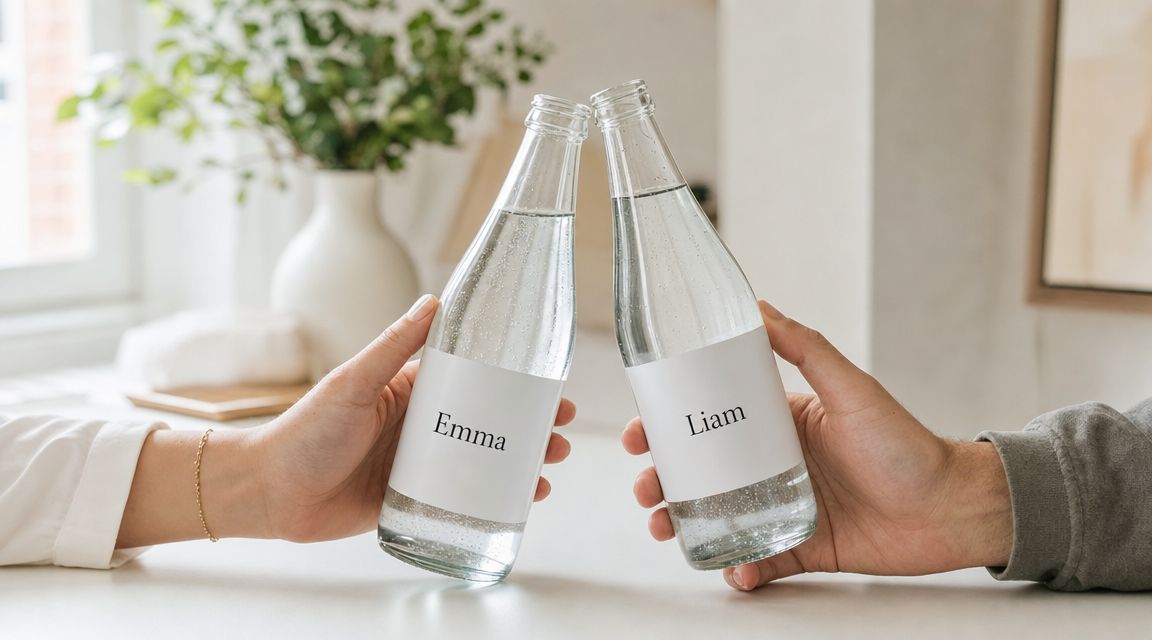
Coca-Cola answered that with Share a Coke. The campaign replaced part of the brand mark with common first names, turning a standard bottle into something people wanted to hunt for, give to friends, and post online. It began in Australia and expanded across major markets, becoming one of the clearest examples of packaging-led publicity.
That shift matters for communications teams because the product itself carried the story. Reporters did not need a long explanation to understand the angle. A photo of a bottle with a recognizable name communicated the idea immediately.
Packaging became the press hook
For PR teams, the smart move was not personalization alone. It was making personalization visible, local, and easy to pitch. A city editor could cover the local rollout. Retail reporters had a merchandising angle. Lifestyle outlets could frame it around gifting, identity, or social sharing. The same core campaign produced different stories for different desks.
That is the part many brands miss. Personalization only helps PR when the audience can spot it in one glance and understand why it feels specific to them.
Use this framework when evaluating a packaging-led campaign:
- Make the change visually obvious: If the product looks different on shelf and in photos, media coverage becomes easier to secure.
- Build local variants into the rollout: Names, neighborhoods, languages, or regional editions give local outlets a reason to cover a national campaign.
- Create multiple announcement points: Initial launch, expanded name sets, live activations, and limited runs can each support separate press outreach.
- Prepare for exclusion questions: If people cannot find their names or feel left out, the campaign can generate frustration as fast as buzz.
The trade-off is operational. Personalization creates stronger emotional response, but it also adds production complexity, inventory risk, and customer service pressure. Communications teams need answers ready before launch. Which names were chosen? How will people request missing ones? What is the response if the campaign is criticized for narrow representation?
Share a Coke remains useful because it shows how a product modification can become a PR system. The campaign gave media a simple visual, consumers a participatory behavior, and the brand a repeatable way to refresh coverage as it entered new markets.
7. GoPro's User-Generated Content Press Strategy
GoPro built a media engine by treating customers as creators, not just buyers. That shift changed the role of PR. Instead of relying only on product releases, the brand could pitch athlete partnerships, creator stories, competitions, and footage that demonstrated the camera in the most persuasive way possible.
That approach works because user-generated content gives reporters evidence of product capability in actual use. A brand claim says the camera performs in extreme conditions. A customer clip shows it.
The customer became the proof
This is one of the most adaptable marketing campaign examples for brands with visually demonstrable products. The campaign logic is straightforward. Turn customer participation into a repeatable editorial asset.
A communications team can operationalize that with a few habits:
- Promote creators, not just products: Releases should highlight standout users, not bury them beneath technical copy.
- Package footage for media: Journalists are more likely to cover a story when usable visuals are already cleared and organized.
- Tie capability to a human story: The content lands better when the release explains who created it and why it matters.
User-generated campaigns fail when brands ask for content without giving participants status, distribution, or a reason to care.
The trade-off is control. UGC gives the campaign authenticity, but it also introduces inconsistency in quality, brand safety concerns, and dependence on audience enthusiasm. Teams need submission rules, usage rights, moderation standards, and a plan for what gets amplified.
8. Warby Parker's Disruption and Social Impact Campaign
Warby Parker combined two stories that many companies keep separate. One story was market disruption in eyewear. The other was social impact. Used together, they gave the press a business angle and a mission angle at the same time.
That dual framing is powerful because different outlets pick up different parts of the narrative. Business media can focus on the model. Lifestyle outlets can focus on design and customer experience. Cause-oriented coverage can focus on the company's broader positioning.
Two narratives running together
PR teams can learn a lot from that structure, but it only works when the stories support each other rather than compete. If affordability, design, and impact feel disconnected, the brand sounds overengineered.
A stronger release stack usually includes:
- Business innovation: Explain what changed about buying behavior, distribution, or pricing logic.
- Brand identity: Show how the customer experience reflects the company's point of view.
- Impact connection: Make the social component relevant to the company's actual operating model, not an isolated donation line.
This is a useful example for challenger brands that want more than feature-based differentiation. The risk is imbalance. If the impact story dominates, the business model gets lost. If the disruption story dominates, the social claim can look like decorative packaging.
9. Nike's Social Justice Campaign
Nike's partnership with Colin Kaepernick is one of the clearest examples of a campaign that generated both strong attention and strong division. For communications teams, the takeaway is not limited to “take a stand.” It's that a values-driven campaign needs message discipline before launch, during backlash, and long after the first headline.
Many campaign roundups celebrate boldness but underplay the trade-offs. That's a mistake. Cause-led and provocative campaigns can generate reach, but reach alone doesn't guarantee trust, clarity, or durable value. This gap is highlighted in this discussion of guerrilla marketing trade-offs and backlash risk.
Controversy requires message discipline
Nike's campaign is instructive because it shows how a polarizing message can still fit a long-standing brand identity when the company is prepared to hold the line. That preparation has to happen in the briefing documents, spokesperson prep, stakeholder communication, and media response plan.
For teams considering similar moves, three rules matter:
- Define the core message: Everyone from executives to social managers should answer the same core question the same way.
- Prepare for hostile framing: Build responses for criticism, not just support.
- Know the objective: If the campaign seeks identity reinforcement rather than universal approval, the team should say that internally before launch.
Not every brand should borrow this playbook. Some organizations mistake borrowed conviction for authentic positioning. When that happens, the campaign doesn't look brave. It looks opportunistic.
10. HubSpot's Inbound Marketing Thought Leadership Campaign
HubSpot built a campaign model that doesn't depend on spectacle. It used research, frameworks, education, and recurring publication cycles to create media relevance over time. That's especially useful for B2B teams that need authority more than virality.
Thought leadership campaigns work best when they produce newsroom-ready material on a schedule. Annual reports, methodology updates, educational programs, and customer trend stories give media something concrete to cover and give sales teams something credible to use.
Research as a recurring media asset
The strongest case studies and research-led campaigns don't just say the strategy worked. They show what changed. Adobe recommends that a strong marketing case study include before-and-after benchmarks, implementation details, and outcomes tied to KPIs such as traffic, leads, conversions, revenue, or cost reduction in this guide to building a marketing case study.
That guidance matters for PR because research releases need more than a headline claim. They need methodology, context, and comparative framing. They should also answer the replicability question. Some celebrated campaigns work because the brand already has huge reach or heavy media amplification, a limitation discussed in this review of which social campaign elements are actually reusable.
HubSpot stands out among marketing campaign examples because it built an announcement machine. The trade-off is patience. Thought leadership compounds slowly. Teams that expect instant cultural visibility usually abandon the model before it has time to work.
Side-by-Side Comparison of 10 Marketing Campaigns
| Campaign | Implementation complexity | Resource requirements | Expected outcomes | Ideal use cases | Key advantages |
|---|---|---|---|---|---|
| Airbnb, "Belong Anywhere" Global Brand Campaign | High, multi-year, cross‑channel coordination | Large budget, global content/creative teams, influencer & PR partnerships | Major brand awareness lift, listing growth, sustained earned media | Global brand repositioning and community-focused storytelling | Emotional storytelling, consistent global messaging, cross‑channel integration |
| Patagonia, Environmental Activism Press Campaign | Medium‑High, activism + legal coordination | CSR/legal teams, sustainability data, NGO partnerships, transparent reporting | Increased loyalty, thought‑leadership in sustainability, strong earned media | Values-driven positioning and credibility for purpose brands | Authenticity grounded in verifiable action, trust and media credibility |
| Dollar Shave Club, Founder‑Led Disruptive Launch | Medium, viral/guerrilla focus with founder visibility | Creative video production, founder media time, social media amplification | Rapid customer acquisition, viral reach, high earned media, exit potential | Startup/product launches aiming for fast growth and buzz | Distinctive founder voice, humor-driven virality, clear value proposition |
| Dove, "Real Beauty" Press Campaign | High, research‑backed, phased global campaign | Research budget, documentary production, NGO partnerships, long‑term PR | Large awareness gains, steady sales growth, long‑running coverage | Purpose-driven campaigns anchored in research and social impact | Research credibility, diverse representation, sequential momentum |
| Tesla, Product Launch Press Strategy | Medium‑High, technical announcements + CEO involvement | Technical teams, CEO social integration, live events, engineering data | Massive earned media, market influence, stock/brand impact | Product innovation announcements and technical credibility building | CEO visibility, technical specificity, ability to bypass traditional channels |
| Coca‑Cola, "Share a Coke" Personalization Campaign | Medium, phased, highly shareable rollout | Packaging/production changes, influencer/celebrity partnerships, retail ops | Sales uplift, huge social impressions, sustained campaign momentum | Consumer personalization and mass‑market engagement campaigns | Simple visual hook, high shareability, phased expansion for repeated news |
| GoPro, User‑Generated Content Press Strategy | Medium, community and sponsorship management | Community managers, sponsorships, event partnerships, content curation | Very high UGC impressions, strong niche awareness, continuous media pickups | Adventure/athletic brands leveraging customer content | User content as primary asset, authentic endorsements, community advocacy |
| Warby Parker, Disruption & Social Impact Campaign | Medium, DTC scaling with impact reporting | Funding/retail ops, charity program management, PR for openings | Fast growth, investor interest, local/national coverage, goodwill | Direct‑to‑consumer disruption with measurable social impact | Integration of social mission and business, measurable impact metrics |
| Nike, Social Justice (Kaepernick) Campaign | High, controversial stance with reputational risk | High‑profile partnerships, crisis planning, data tracking, media strategy | Massive reach, polarized coverage, sales and favorability shifts | Brands prepared to take clear public stands on social issues | Strong value alignment, significant cultural conversation and attention |
| HubSpot, Inbound Thought Leadership Campaign | Medium, regular research and educational outputs | Research teams, content production, events, data visualizations | Authority positioning, recurring media placements, increased adoption | B2B thought leadership, category education, software adoption | Original research, recurring press hooks, industry benchmarking authority |
Your Blueprint for a Press-Powered Campaign
These marketing campaign examples show that PR isn't a support function added after the creative is done. It's part of the campaign architecture. The strongest examples all gave the media something specific to work with: a founder with a sharp point of view, a product change that doubled as a visual hook, a values position backed by action, or a research asset that turned expertise into news.
For communications professionals, the most practical lesson is to stop asking only whether a campaign is clever. The better question is whether it can generate a sequence of credible announcements. One strong launch release is useful. A campaign platform that can support a launch, partnership, market expansion, customer story, executive interview, and follow-up feature is far more valuable.
That's also where discipline matters. Not every admired campaign is replicable. Some depend on giant audiences, cultural cachet, or a level of fandom smaller brands don't have. Others depend on controversy that a more risk-sensitive organization shouldn't invite. Teams need to separate reusable mechanics from one-off brand magic. Packaging as media is reusable. Customer storytelling is reusable. Clear founder tension is reusable. Massive built-in celebrity amplification usually isn't.
Measurement needs the same discipline. The article's best hard evidence appears only where verified data exists. For example, the long-running Got Milk? campaign launched in 1993, ran for two decades, and later reporting commonly cites a 6% increase in milk sales after the campaign gained traction, as described in this overview of classic marketing campaign examples including Got Milk. That matters because it reminds PR teams to connect messaging to a business problem and keep the narrative consistent long enough for public memory to form.
Optimization also matters after launch. One performance case study reported a 180% conversion increase from testing five elements at once, including headline variants, CTA button colors, form length, social-proof placement, and video testimonials, with shorter forms and above-the-fold social proof emerging as decisive variables in this multivariate optimization case study. For communicators, that's a reminder that earned media should push into conversion-ready destinations, not just awareness assets.
The practical blueprint is straightforward. Start with a story the media can summarize. Tie it to a real announcement. Prepare usable quotes and visual assets. Sequence the rollout. Build a response plan for friction. Then support the press moment with channels that carry the same message, from social to partnerships to retail to owned content. Brands that do this well don't just get coverage. They build narrative momentum.
Teams building the supporting channel mix can also tighten owned distribution, especially social setup and consistency, with guidance on setting up your business Facebook page.
Press Release Zen helps communications teams turn campaign ideas into usable media assets. The site offers practical templates, distribution guides, and step-by-step advice for writing releases that are clear, credible, and built for pickup. For PR professionals, founders, agencies, and in-house teams that want stronger announcement strategy without guesswork, Press Release Zen is a reliable place to start.