A crisis lands on a Friday afternoon. Legal wants to review every word. Leadership wants a statement in minutes. Social is already filling with screenshots, speculation, and bad-faith edits. The team knows the playbook needs work, but finding the right crisis communications conference often turns into another research project that stalls out in a crowded browser tab.
That's the problem this guide solves. A strong event doesn't just add ideas. It sharpens approval workflows, exposes blind spots in monitoring, and gives communications teams live examples of what peers are doing when the pressure is real. Preparedness has become a practical discipline, not a theoretical one, and organizations that activate a crisis plan report overwhelmingly positive results. In one recent benchmark, 98% of business leaders who activated their crisis communication plan said it was effective, and 77% rated it very effective.
The conference market reflects that shift. Crisis management is now a serious budget line, with the global crisis management market reaching $6.2 billion in 2026, and event buyers are looking for more than inspiration. They want training, peer access, and material they can bring back to the organization.
This guide gets to the point quickly. These are seven conference picks for 2026 that deserve attention, plus practical ways to turn attendance into more than a badge and a notebook. Teams handling logistics should also review this guide to streamlining event management process.
Table of Contents
- 1. PRWeek Crisis Comms Conference (Washington, DC)
- 2. Ragan Crisis Communications Virtual Conference (Online)
- 3. International Crisis & Risk Communication Conference (ICRCC) – Clemson University
- 4. International Crisis Management Conference (ICMC Newport) – Newport, Rhode Island
- 5. NIOA Annual Training Conference (National Information Officers Association) – Clearwater Beach, FL
- 6. IAEM Annual Conference & EMEX – International Association of Emergency Managers (Long Beach, CA)
- 7. Government Social Media Conference (GSMCON) – New Orleans, LA
- Top 7 Crisis Communications Conferences, Comparison
- Beyond the Badge: A Strategic Action Plan
1. PRWeek Crisis Comms Conference (Washington, DC)
A breaking issue hits before lunch. Legal wants tighter language, the CEO wants visibility, reporters are already calling, and the social team is tracking a version of the story that did not exist an hour ago. That is the environment PRWeek's Crisis Comms Conference is built for: fast decisions, cross-functional pressure, and public scrutiny with no extra time to think.
Among crisis communications conferences, this one earns attention because it is designed for working communicators, not academics and not emergency management generalists. The one-day format in Washington, DC appeals to teams that want current case examples, useful hallway conversations, and a realistic ask for budget approval. It is easier to get sign-off on a focused day of training than a longer event with heavier travel costs.
Why it stands out
PRWeek usually draws senior in-house communicators, public affairs leads, agency counselors, and brand teams that deal with reputation risk in real time. The conversations tend to stay close to the work: executive counsel, media response, stakeholder sequencing, social escalation, and the internal approval problems that slow a response when speed matters most.
That audience mix has practical value. You are not just attending sessions. You are also benchmarking how peers structure escalation, who owns message approval, and what they changed after the last serious incident.
Practical rule: A one-day event pays off when attendees arrive with two or three specific problems to solve, such as spokesperson readiness, dark-site governance, or conflicting approval chains.
The trade-offs are straightforward:
- Strong fit for busy teams: A concentrated agenda limits time out of office and makes attendance easier to justify.
- Better for strategy than drills: If your team needs simulations, certifications, or extended workshop time, this format may feel too short.
- Useful for visibility planning: The attendee base and DC setting make it a credible place to pursue a speaking opportunity or arrange media meetings around the event.
That last point is where this conference can do more for you than simple professional development. If your organization has handled a difficult issue well, or learned from one that went sideways, PRWeek can be worth approaching as a speaker, not just an attendee. A sharp pitch usually includes a clear case lesson, one operational takeaway, and a reason the story matters now. Skip the self-congratulation. Conference editors want specifics their audience can apply on Monday.
Attendance can also support a broader communications plan. If your executives, spokespeople, or issues team will be there, announce it with a short, factual update that explains why the event matters to your stakeholders and what topics your team is prepared to discuss. This guide on how to write a crisis communication press release is a useful starting point for that kind of announcement.
For teams that need a foundation before attending, this guide on what crisis communications is and how it works can help align internal stakeholders on the basics.
One caution from practice: do not treat conference attendance as the result. The value comes from what you do around it. Book meetings before you arrive. Identify the reporters, analysts, or peer contacts worth time on-site. Send one follow-up memo after the event with three changes your team should make. That is how a conference turns into operational improvement, not just a line item on the travel budget.
2. Ragan Crisis Communications Virtual Conference (Online)
Ragan's virtual format solves a different problem. Some teams don't need another networking trip. They need a working session that forces the group to update holding statements, internal messaging, and response templates without booking flights or losing two travel days.
That's where a virtual crisis communications conference can beat an in-person one. Distributed teams can attend together, compare notes in real time, and leave with a shared language for activation, review, and follow-up. For organizations rebuilding a plan, that convenience has real operational value.
Best use case
Ragan's format is strongest for teams that want structured instruction. It's especially useful when the communications function needs practical materials, not just perspective. Virtual workshops often work well for internal comms leads, social teams, and smaller departments that need to train multiple people at once.
The trade-off is obvious. Virtual events rarely produce the same side conversations, trust-building, or peer benchmarking that happens in hallways and over coffee at an in-person conference. That doesn't make them weaker. It makes them better for different goals.
- Good fit for playbook updates: Teams can move directly from session content to document revisions.
- Useful for broad participation: Remote access makes it easier to include legal, HR, operations, or regional communicators.
- Less effective for relationship-building: Attendees usually get less spontaneous access to peers and speakers.
Strong virtual events work when the organization treats them like a workshop, not background video. Calendars should be blocked, note-taking assigned, and debrief time scheduled.
There's also a tactical advantage for PR teams preparing conference-related announcements. A practical reference like this guide on how to write a crisis communication press release can help turn attendance or speaking activity into outward-facing visibility. That matters when leadership wants evidence that training spend also supports brand credibility.
Visit the Ragan Crisis Communications Virtual Conference page.
3. International Crisis & Risk Communication Conference (ICRCC) – Clemson University
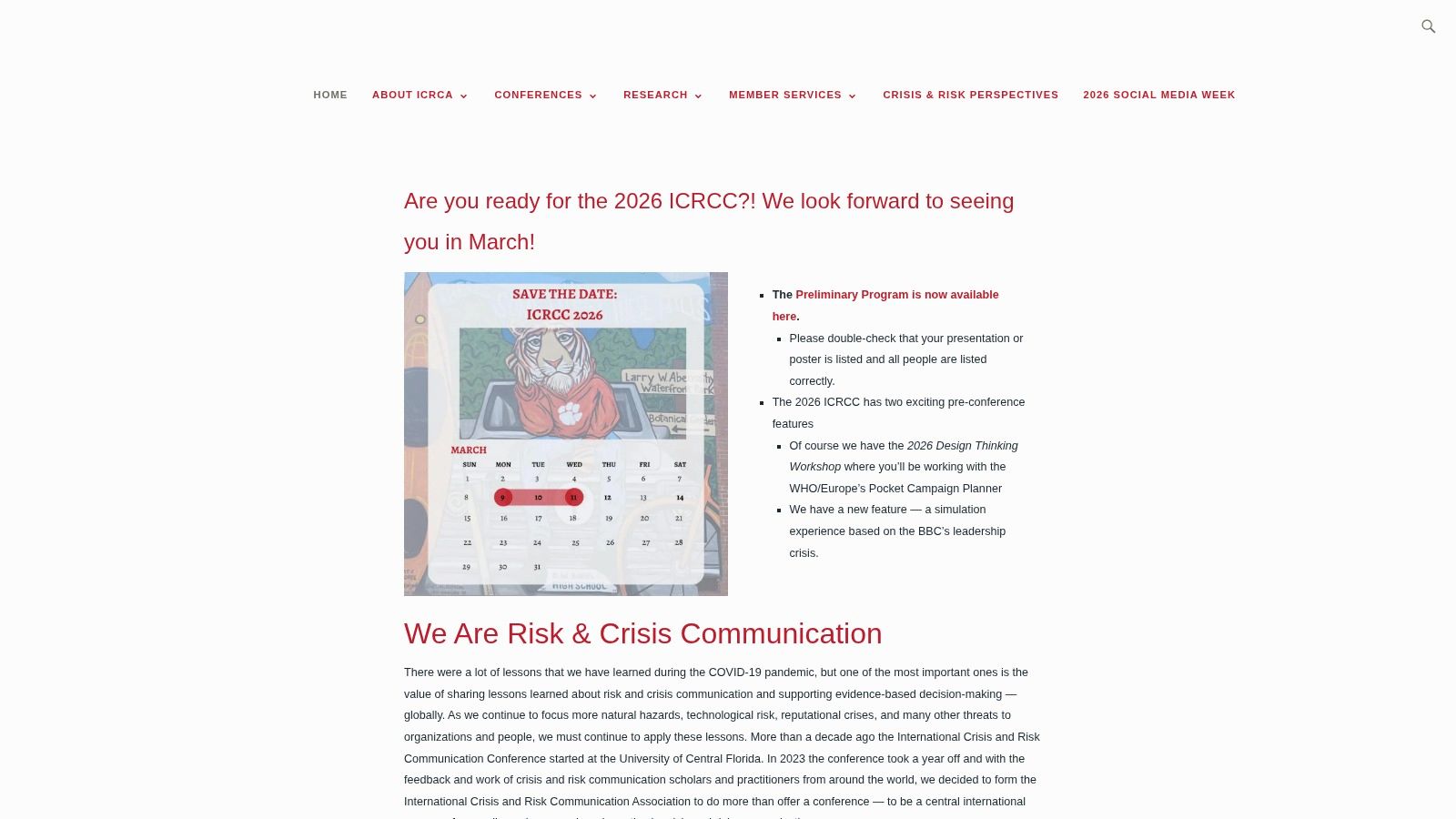
A crisis hits on Monday. By Friday, leadership wants more than a recap of what the team said and when they said it. They want to know what held up, what failed under pressure, and how the organization will measure improvement before the next incident. That is where ICRCC tends to stand apart.
ICRCC sits outside the usual commercial conference circuit and brings a stronger research-to-practice mix. For communications teams, that matters because crisis work does not end with message approval or media handling. Teams also need a repeatable way to test assumptions, evaluate stakeholder response, and judge whether training changed performance back at work.
That measurement angle is often missing from conference buying decisions. The Institute for Public Relations offers useful guidance on communications research and evaluation, and that perspective fits this event well. Buyers should ask harder questions after attendance. Which decisions improved because of what the team learned? Which parts of the response process became faster, clearer, or easier to defend internally?
Where it delivers value
A university-hosted conference usually attracts people who want to examine methods, not just swap war stories. That makes ICRCC a strong choice for teams working on scenario design, rumor control, stakeholder mapping, risk perception, and message testing before an issue becomes a headline.
It tends to fit public-sector communicators, healthcare systems, NGOs, regulated industries, and corporate affairs teams that need a more disciplined framework. The trade-off is real. Attendees looking for fast-turn media coaching, headline drills, or ready-to-use statement templates may find some sessions more conceptual than tactical.
Teams get the most from research-driven conferences when they arrive with a measurement question already defined.
Use that to your advantage before you go. If the goal is visibility as well as learning, pitch a speaking proposal tied to a real operational challenge your team has handled, not a generic "lessons learned" summary. If attendance is confirmed, prepare a short announcement for customers, partners, or employees that explains why your organization is participating and what capability you expect to strengthen. On site, line up a few priority conversations in advance with faculty, panelists, and peers who can sharpen your approach to evaluation. Those conversations often produce better post-event value than passive note-taking.
A few realistic expectations help:
- Strong for evaluation and planning: Useful for teams building decision frameworks, assessment methods, and risk communication models.
- Best for buyers with a defined problem: Session value rises when attendees know which planning or measurement gap they need to fix.
- Less immediate for purely tactical needs: Some takeaways will need translation into workflow, training, or executive reporting once the team gets home.
Visit the International Crisis & Risk Communication Conference website.
4. International Crisis Management Conference (ICMC Newport) – Newport, Rhode Island
The International Crisis Management Conference is the pick for communicators who don't sit in a pure media-relations silo. Many crisis leads now work shoulder to shoulder with business continuity, security, compliance, and operations. A PR-only event can miss that broader reality.
That wider lens matters because the market itself has moved toward integrated readiness. In social media crisis management, the market was valued at USD 1.88 billion in 2023 and is projected to grow at over 21% CAGR through 2032, with the crisis communication services subsegment expected to exceed USD 3.2 billion by 2032 and North America holding over 38% revenue share in 2023. For conference buyers, that suggests growing demand for monitoring, alerting, analytics, and training that connect communications to operational response.
Who gets the most from it
ICMC Newport tends to make the most sense for communications leaders embedded in resilience structures. If the role includes crisis command, tabletop exercises, executive notifications, or continuity planning, this conference is likely to feel more relevant than an event centered mainly on press statements and media interviews.
That also creates a clear limitation. Professionals whose work is heavily focused on spokesperson prep, investor scrutiny, or newsroom relations may find some sessions too operations-heavy.
- Best for cross-functional leaders: Valuable for teams aligned with security, risk, and continuity functions.
- Good for tabletop culture: Workshops and drills usually produce stronger internal takeaways than presentation-only formats.
- Less PR-centric: Messaging detail may take a back seat to command structure and resilience planning.
The practical upside is that this type of event often helps communicators earn more credibility inside the organization. When PR understands the incident structure, response timing usually improves because communications isn't bolted on at the end.
Visit the International Crisis Management Conference website.
5. NIOA Annual Training Conference (National Information Officers Association) – Clearwater Beach, FL
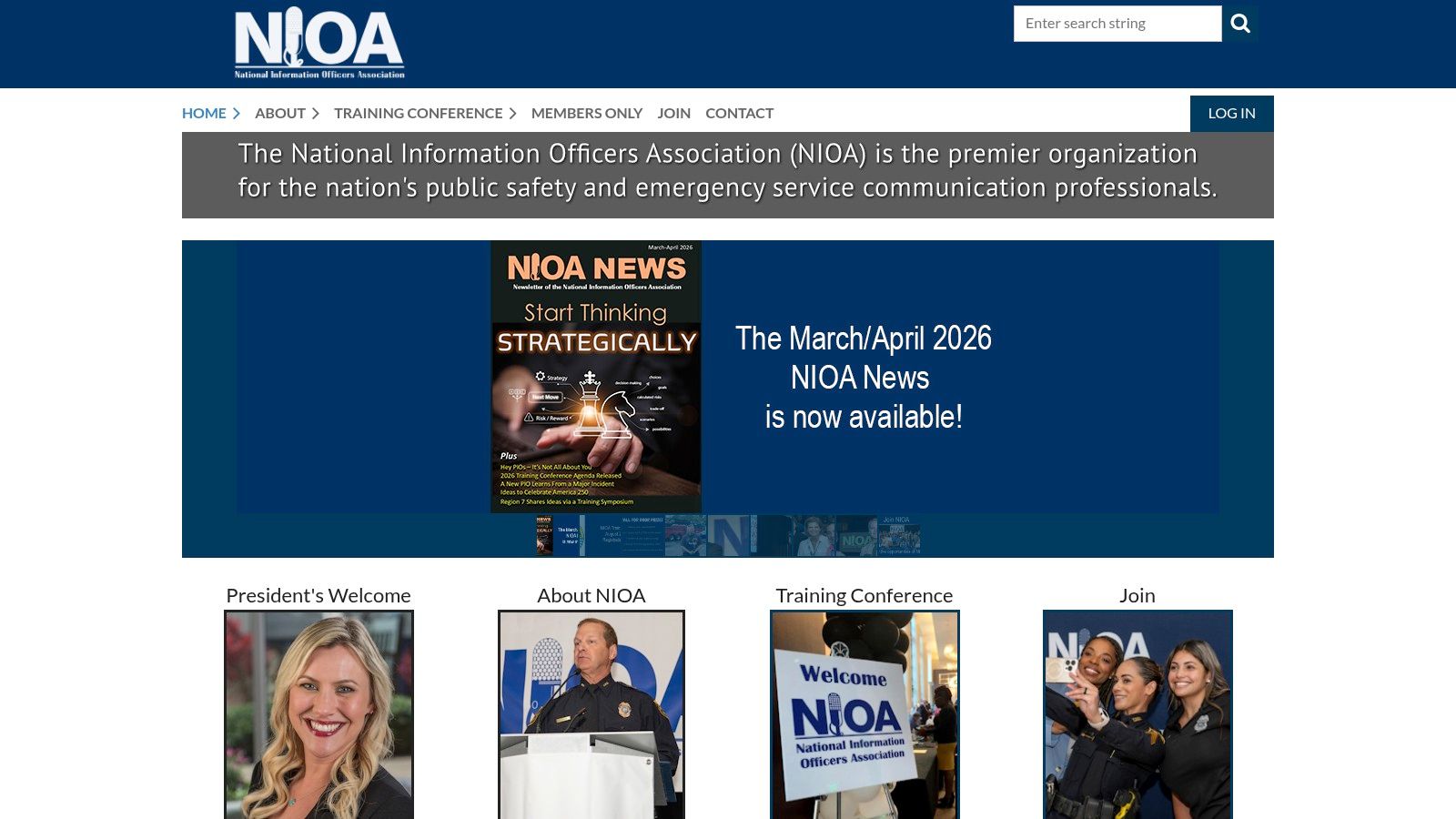
NIOA isn't built for polished brand reputation discussions. It's built for situations where the communicator may be dealing with public safety, emergency alerts, media staging, family information, and public trust at the same time. That focus gives it a different kind of practical authority.
For government agencies, utilities, higher education safety teams, and any organization that interfaces with emergency operations, this is one of the more relevant events on the calendar. The scenarios tend to feel less hypothetical because the audience often works close to active incident structures.
Why it matters
A public information officer conference can sharpen skills that corporate teams often overlook. Briefing discipline, community messaging, rumor control, and coordination with emergency managers all become more important when a crisis has a physical safety dimension.
The event also offers visibility for vendors and service providers that serve that audience. NIOA lists exhibitor and sponsorship options, which can matter for technology firms or advisory groups trying to build relationships in the public-sector response ecosystem.
Public-safety-oriented conferences are useful even for private organizations when plant incidents, campus safety issues, service outages, or community disruptions are part of the risk profile.
A few candid trade-offs:
- Very strong for incident communications: Media briefings, alerts, and public reassurance are central.
- Less focused on boardroom crises: Executive reputation, shareholder pressure, and investor narratives usually aren't the main focus.
- Excellent niche networking: Contacts are highly relevant if emergency coordination is part of the job.
Visit the NIOA website.
6. IAEM Annual Conference & EMEX – International Association of Emergency Managers (Long Beach, CA)
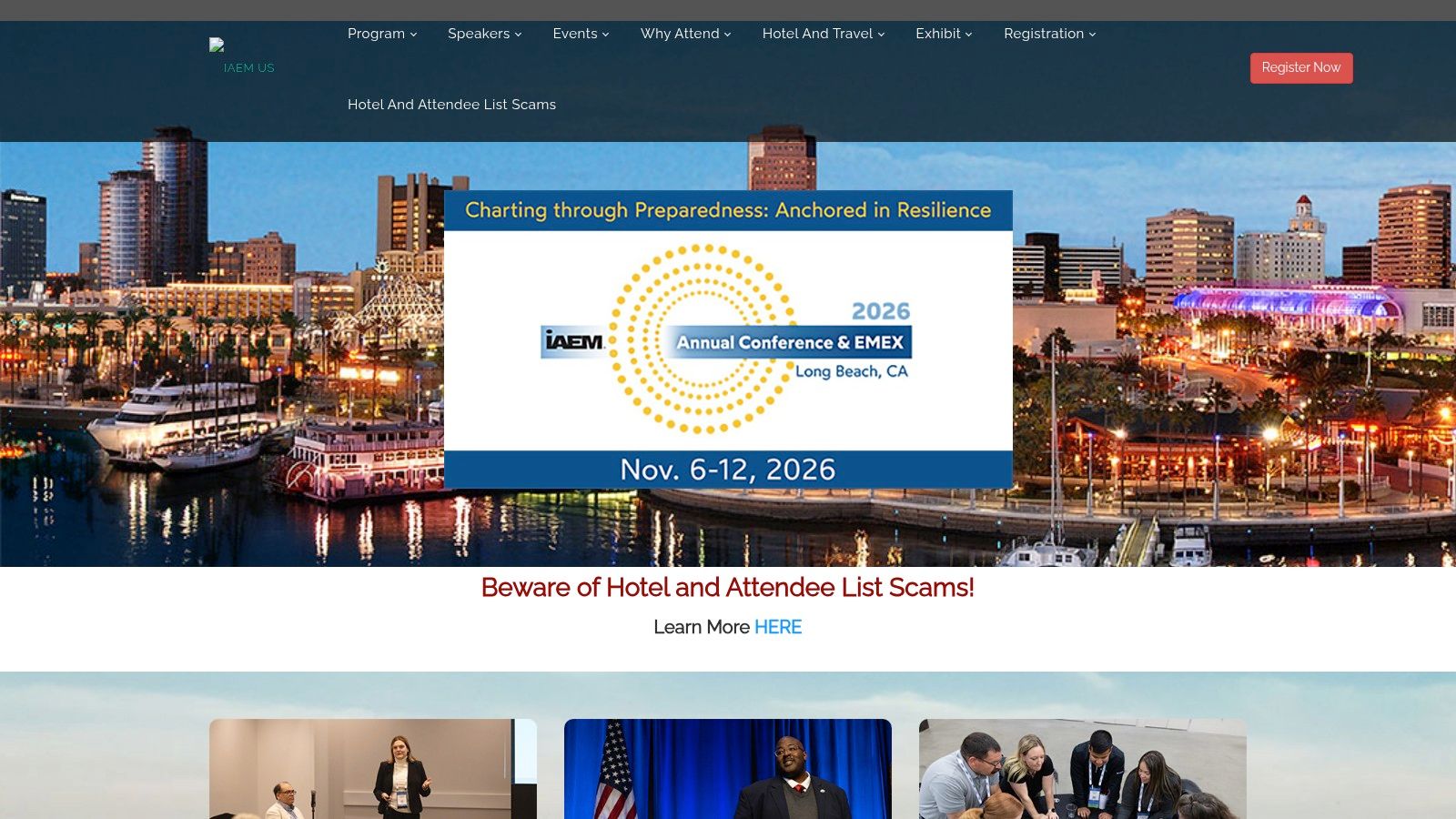
IAEM Annual Conference & EMEX is large enough that communications professionals need a strategy before registering. Without one, it's easy to spend days in sessions adjacent to the role but not directly useful to the next crisis response.
With one, it can be one of the most valuable events on the list. This conference brings crisis communicators into direct contact with emergency managers, warning specialists, continuity professionals, and public-sector operators. That kind of access matters when a communications team needs stronger coordination with the people who own the operational picture.
Practical trade-offs
This is not a PR boutique event. That's the advantage and the drawback.
A communicator who wants message architecture, executive prep, and media interview coaching as the main course may feel overextended by the scale. A communicator who needs to understand joint information systems, warning flows, public notification, and cross-agency alignment will likely find it worth the time.
- Best for operational alignment: Strong option for communicators who work across emergency management structures.
- Excellent for broader exposure: The conference often surfaces tools, workflows, and coordination models PR teams don't see at media-centric events.
- Harder to network narrowly: Large events require deliberate meeting plans to avoid shallow connections.
The most effective attendees usually pre-book meetings, choose only a few thematic tracks, and ignore the instinct to sample everything. At a conference this large, discipline matters more than ambition.
Visit the IAEM Annual Conference & EMEX website.
7. Government Social Media Conference (GSMCON) – New Orleans, LA
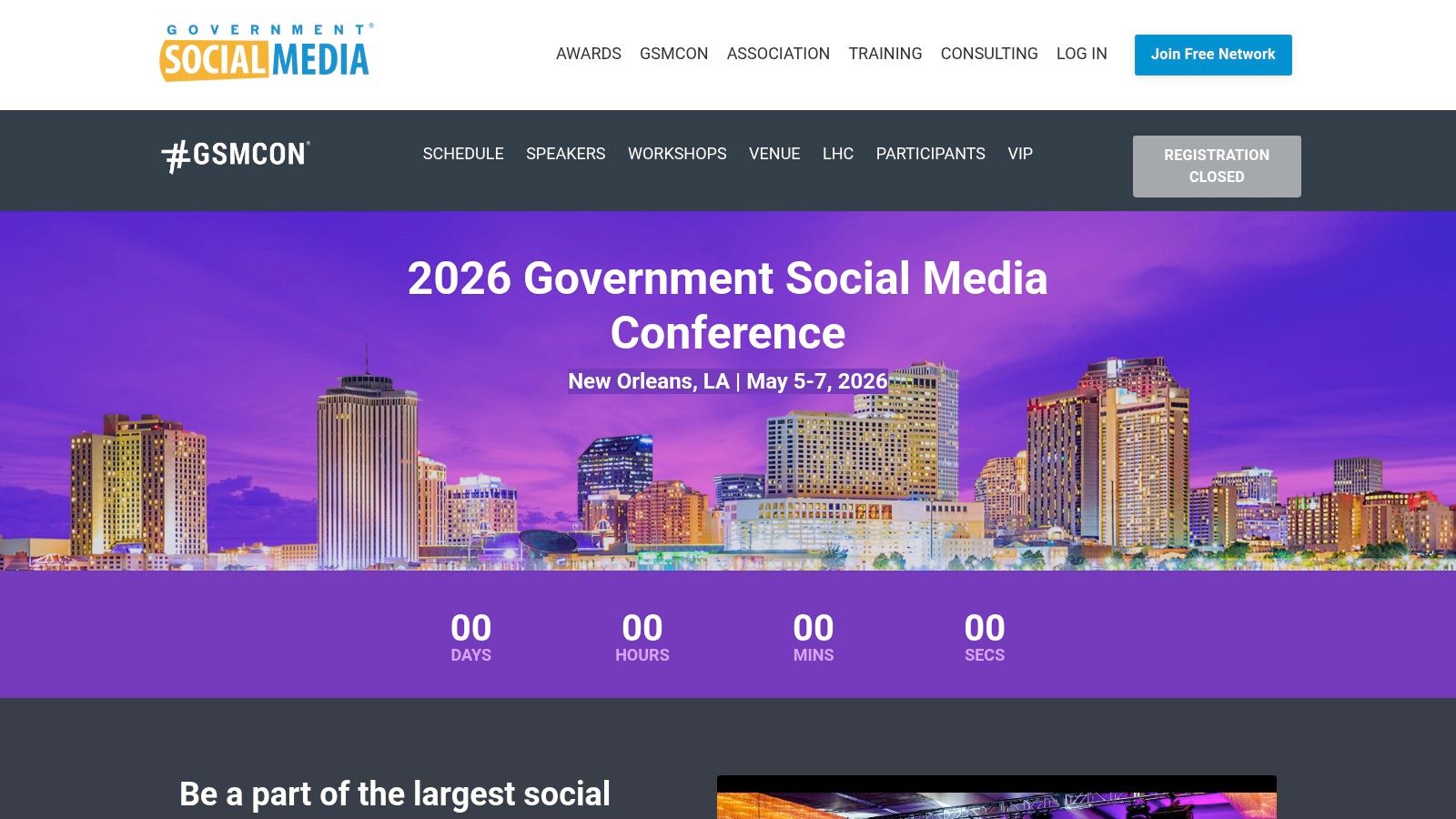
A false post starts circulating at 7:12 a.m. By 7:40, reporters are calling, residents are sharing screenshots, and the original claim is already mutating across platforms. That is the operating environment GSMCON addresses better than almost any event on this list.
GSMCON earns its place because social is often the first battleground in a crisis, not the last distribution step. Teams that manage public trust in real time need tighter approval paths, clearer moderation rules, better rumor-control protocols, and faster coordination between communications, legal, operations, and customer-facing staff.
Its pricing also makes the event easier to justify than some broader conferences. GSMCON has listed in-person registration at $999 and virtual attendance at $599, with add-on workshops available. That gives smaller public-sector teams, universities, utilities, hospital systems, and nonprofits more room to send the people who run the channels instead of only senior leadership.
Where GSMCON delivers the most value
This conference is strongest for teams that need practical channel execution under pressure. That includes alerting, public reassurance, comment moderation, escalation decisions, content freezes, multilingual response, and post-incident cleanup after the immediate surge passes.
It also fills a gap many crisis events leave open. Social managers and digital leads rarely need another abstract discussion about reputation risk. They need workflows that hold up when falsehoods spread quickly, when AI-generated content muddies verification, and when one bad screenshot outpaces a polished press statement.
- Best for real-time response systems: Strong fit for teams handling rumors, public questions, and fast updates across social channels.
- Useful for operational playbooks: Sessions tend to support approval maps, escalation rules, moderation standards, and platform-specific response choices.
- Less suited to spokesperson coaching: Executive media prep, investor messaging, and board-level crisis positioning are usually not the focus.
The strategic upside is bigger than attendance alone. If your team plans well, GSMCON can support three goals at once: sharpen social response procedures, build visibility for your communications leadership, and create news hooks around your participation. That means pitching a speaking session early, preparing a short announcement about attendance or a panel appearance, and assigning one person to capture on-site insights for media and stakeholder follow-up. Teams refining that process should review this guide to crisis communications and social media strategy.
Visit the Government Social Media Conference website.
Top 7 Crisis Communications Conferences, Comparison
A bad fit wastes more than a registration fee. It can leave a communications lead with interesting notes, no usable process changes, and no clear story to tell leadership about why the trip mattered.
This comparison works best as a selection tool. Use it to match the event to the problem you need to solve, the team you need to bring, and the kind of visibility you want from attending, whether that means better crisis workflows, a speaking slot, or press opportunities tied to your presence on site.
| Event | Implementation complexity | Resource requirements | Expected outcomes | Ideal use cases | Key advantages |
|---|---|---|---|---|---|
| PRWeek Crisis Comms Conference (Washington, DC) | Medium, focused, single-day sessions with practical takeaways | Moderate, registration cost plus travel to Washington, DC | Case studies, response frameworks, peer comparison | In-house PR leaders and agency teams focused on the U.S. market | Strong practitioner audience, current brand and reputation discussions, easier to justify as a short trip |
| Ragan Crisis Communications Virtual Conference (Online) | Low to medium, template-led and workshop-oriented | Lower travel burden, higher registration cost, on-demand access can extend value | Playbooks, templates, training materials, completion certificate | Distributed communications teams building or formalizing crisis process | Hands-on format, replay access, useful for teams that need immediate documents rather than networking |
| International Crisis & Risk Communication Conference (ICRCC), Clemson University | High, research-based content that takes more translation into practice | Moderate, travel plus variable registration costs | Measurement approaches, message testing ideas, evidence-based frameworks | Teams that want stronger rigor in planning, evaluation, and stakeholder analysis | Blends academic and practitioner perspectives, good fit for leaders who want to improve how they assess crisis decisions |
| International Crisis Management Conference (ICMC Newport), Newport, Rhode Island | High, cross-functional workshops and scenario work across several days | High, multi-day attendance, travel, lodging, and time away from the office | Better alignment across communications, operations, security, and risk teams | Organizations managing enterprise-wide crisis readiness, not just media response | Strong for drills and resilience planning, especially where communications must coordinate with non-communications leaders |
| NIOA Annual Training Conference (National Information Officers Association), Clearwater Beach, FL | Medium, scenario-driven training built around public information officer duties | Moderate, travel costs plus optional sponsor or exhibitor spend | Media briefing practice, EOC and JIC coordination, incident communication discipline | Government agencies, utilities, campus safety teams, and public sector communicators | Direct access to experienced PIO peers, practical incident-response lessons, solid venue for speaker pitches tied to public safety communication |
| IAEM Annual Conference & EMEX, International Association of Emergency Managers (Long Beach, CA) | High, broad agenda with operational tracks and certification options | High, longer event, travel, and greater time commitment | Cross-agency coordination, exposure to emergency management tools, certification progress | Emergency managers and communications teams working closely with emergency management functions | Large stakeholder mix, strong operational context, useful for teams that need crisis communications tied to incident management systems |
| Government Social Media Conference (GSMCON), New Orleans, LA | Low to medium, tactical and platform-specific | Moderate, in-person or virtual registration options plus optional workshops | Social response tactics, escalation fixes, moderation ideas, after-action improvements | Government communicators, utilities, higher education teams, and private sector social leads | Strong for digital response practice, hybrid access, and sessions that can quickly turn into updates to channel policy or escalation rules |
The trade-off is straightforward. Broad emergency management events usually give stronger cross-functional context, while communications-specific conferences tend to produce faster changes in messaging, approvals, media handling, and spokesperson readiness.
A second filter matters just as much. If attendance needs to support visibility, not just learning, prioritize conferences where your team can realistically pitch a session, schedule media meetings, or issue a concise announcement about participation without sounding self-congratulatory. That is often easier at niche practitioner events than at large multi-track conferences with crowded agendas.
Beyond the Badge: A Strategic Action Plan
The actual test starts after registration clears. A conference can either become a line item on an expense report or a working program that sharpens response playbooks, puts your spokespeople in front of the right rooms, and gives leadership visible proof that the trip produced something useful.
That outcome rarely happens by accident.
Pitching for a Speaking Slot
Strong speaking proposals solve a problem that attendees are already trying to fix at work. Conference organizers usually pass on broad themes and favor sessions built around a specific pressure point, such as rumor escalation on social channels, delays caused by legal review, or message drift between corporate, operations, and field teams in the first hours of an incident.
Start with the agenda from the last one or two years. Review the session titles, speaker mix, and recurring topics. Then look for the opening. Sometimes that means a case study with a clear lesson. Sometimes it means a workshop format instead of another panel. The goal is fit, not cleverness.
I have seen mediocre pitches get accepted because they were clear, practical, and easy to place on the program. I have also seen strong subject matter experts get rejected because their abstracts read like brand copy.
A proposal usually needs four things:
- A defined problem: Name the operational issue in plain language.
- A practical takeaway: Promise a tool, framework, checklist, or decision process attendees can use.
- A credible point of view: Show why your team has earned the right to teach this topic.
- A short bio: Keep it tied to crisis work, leadership responsibility, and relevant incidents or sectors.
Good titles help. “How We Cut Approval Time During a Fast-Moving Crisis” is easier to schedule than “Communicating With Confidence in Uncertain Times.”
Relationship work also counts. Event teams notice who follows the conference, responds to call-for-speaker themes, and contributes useful ideas before submissions close. That does not guarantee a slot, but it improves your odds and helps your pitch feel informed rather than generic.
Announcing Your Attendance with a Press Release
A press release only works if there is actual news. A speaking role, hosted roundtable, executive availability for interviews, new research timed to the event, or a clear point of view on a conference theme can justify an announcement. “Our team will attend” usually cannot.
Keep the release tight. State who is attending, what role they have, what issue they are prepared to address, and why that issue is relevant to the conference audience right now. That gives reporters, partners, and prospects a reason to care.
The trade-off is straightforward. A promotional release may please internal stakeholders, but it rarely earns attention outside your company. A narrower release with a real angle will usually perform better with media and industry readers, even if it says less about the business overall.
Press Release Zen can support that process in a practical way. Its resource library includes templates and guidance for conference announcements and crisis-related press materials, which helps teams draft faster and keep the message disciplined. Smaller communications teams often benefit most because they may not have a dedicated media relations writer. Explore Press Release Zen for resources that support stronger event visibility and more disciplined communications execution.
Securing Media Coverage On-Site
On-site coverage is won before anyone boards the plane. Build a short media list early. Include beat reporters, trade editors, newsletter writers, podcasters, and the event's own content team if they publish interviews or daily recaps. Then send a concise note with a timely angle, not a general company introduction.
Speakers have a built-in advantage because the session itself gives journalists a reason to talk. Attendees without a session need a sharper offer. That might be informed commentary on the conference's dominant issue, a sector-specific lesson from recent incidents, or a well-supported point of view on where response plans keep breaking down.
Speed matters on-site. So does ownership.
Use a simple operating plan:
- Book meetings before travel: Lock in media, partner, and prospect conversations while calendars are still open.
- Assign one content lead: Give one person responsibility for quotes, photos, session notes, and approval coordination.
- Prepare a fast response kit: Have speaker bios, headshots, company boilerplate, and key talking points ready to send.
- Turn insights into assets quickly: Publish commentary, internal memos, client notes, or follow-up releases while interest is still high.
Teams that treat the conference as a field operation get more from it. The badge gets you in the door. The plan determines whether you leave with stronger visibility, better relationships, and material that improves crisis readiness once everyone is back at work.