A Riverside press release usually doesn't fail because the news is weak. It fails because the story reads like it could belong anywhere, and local editors don't have time for copy that ignores the city's real concerns. When the announcement connects to Riverside residents, nonprofits, neighborhoods, or public services, it has a far better shot at earning attention from people who cover the Inland Empire.
That's the practical truth behind press release Riverside work in 2026. Local coverage still starts with relevance, but relevance in Riverside means more than naming the city. It means showing what changed, who benefits, and why a local journalist's audience should care right now.
Table of Contents
- Before You Write Strategizing for Riverside Impact
- Crafting Your News Story for a Local Audience
- Building Your Riverside and Inland Empire Media List
- The Right Way to Distribute and Follow Up
- Measuring Real-World Results in the Local Market
- Riverside Press Release Checklist and Examples
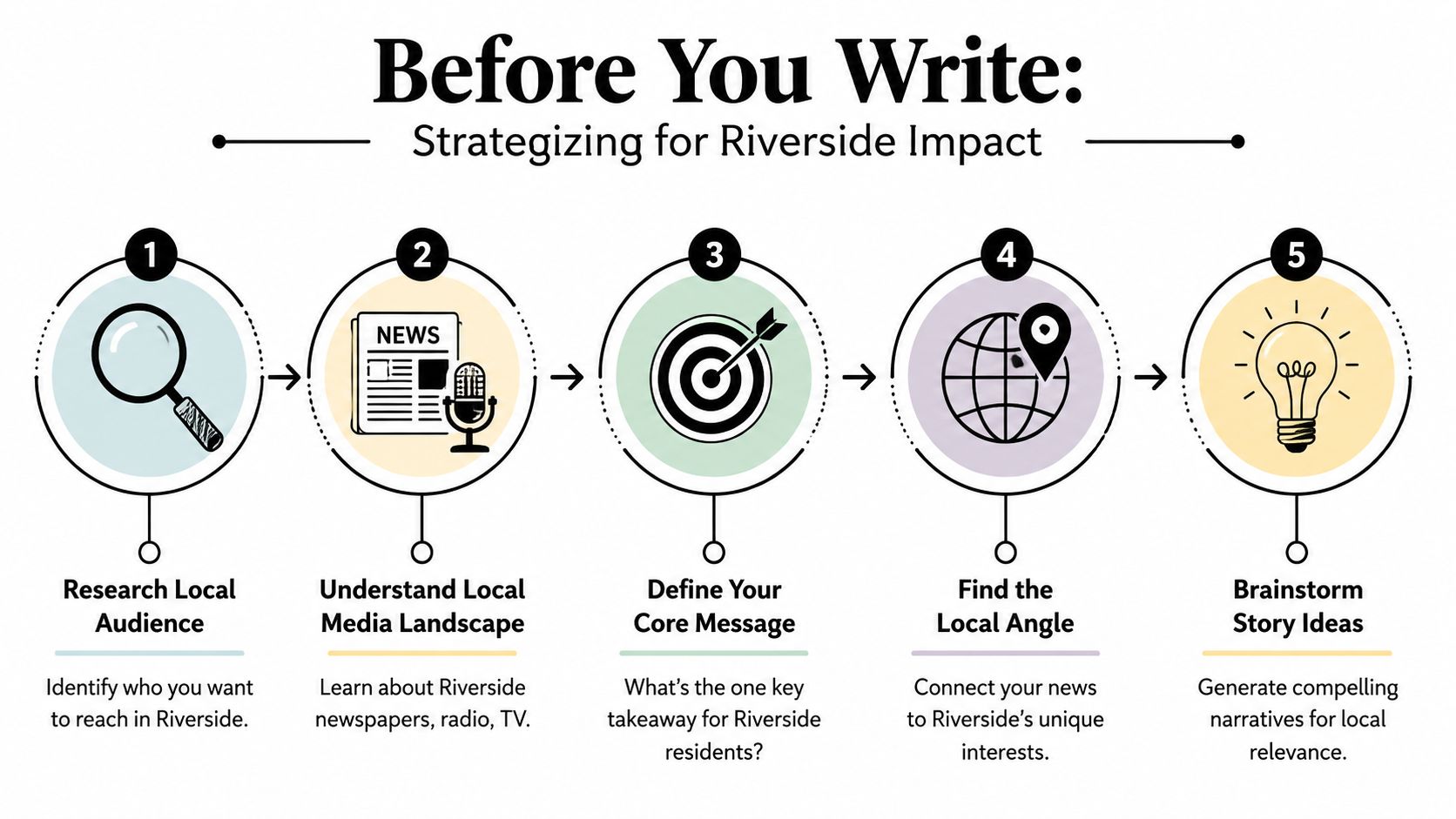
Before You Write Strategizing for Riverside Impact
A Riverside announcement needs a local reason to exist. A business opening, nonprofit launch, staffing update, or public-service notice becomes newsworthy when it changes something for people in Riverside, not just for the organization issuing it. The City of Riverside's own release on a $5 million revolving loan fund for local nonprofits is a good example of the kind of announcement that works because it has a defined audience, a time-sensitive window, and a clear community effect in the city itself (City of Riverside release).
Start with the audience, not the announcement
The first question is simple, who in Riverside should care. That audience might include The Press-Enterprise readership, neighborhood Facebook groups, local bloggers, city staff, business owners, or nonprofit leaders. Each group wants a different angle, and a release that tries to speak to all of them at once usually speaks clearly to none of them.
Practical rule: if the release can't answer “why Riverside, why now, and why this audience,” it's not ready.
That audience-first mindset pairs well with broader campaign planning. A useful companion resource on measuring PR with social insights can help teams think beyond publication and toward the signals that show whether local readers engaged.
Find the local angle before you draft
The strongest Riverside releases usually anchor the story in one of three things. They tie the news to a neighborhood, they connect it to a public need, or they show a direct benefit to a local group. A grand opening in Downtown Riverside, a youth program serving Eastside families, or an event tied to a civic calendar all give journalists something concrete to report.
A quick planning filter helps:
- Who is affected? Name the residents, customers, members, or partners.
- What changes locally? Show the practical impact in Riverside terms.
- What proof exists? Identify dates, locations, partners, and service details.
- What makes it timely? Explain why the moment matters now, not later.
The point of this stage is discipline. Riverside journalists don't need more hype, they need a clear reason to cover the story, and the release should make that decision easier from the first paragraph.
Crafting Your News Story for a Local Audience
A strong local release follows a familiar structure, but the details have to do real work. A headline should be specific enough to tell an editor what changed. The lead paragraph should answer who, what, when, where, and why without forcing readers to hunt for the point. If the news serves the public, the release should be useful as well as readable.
Build the release from the top down
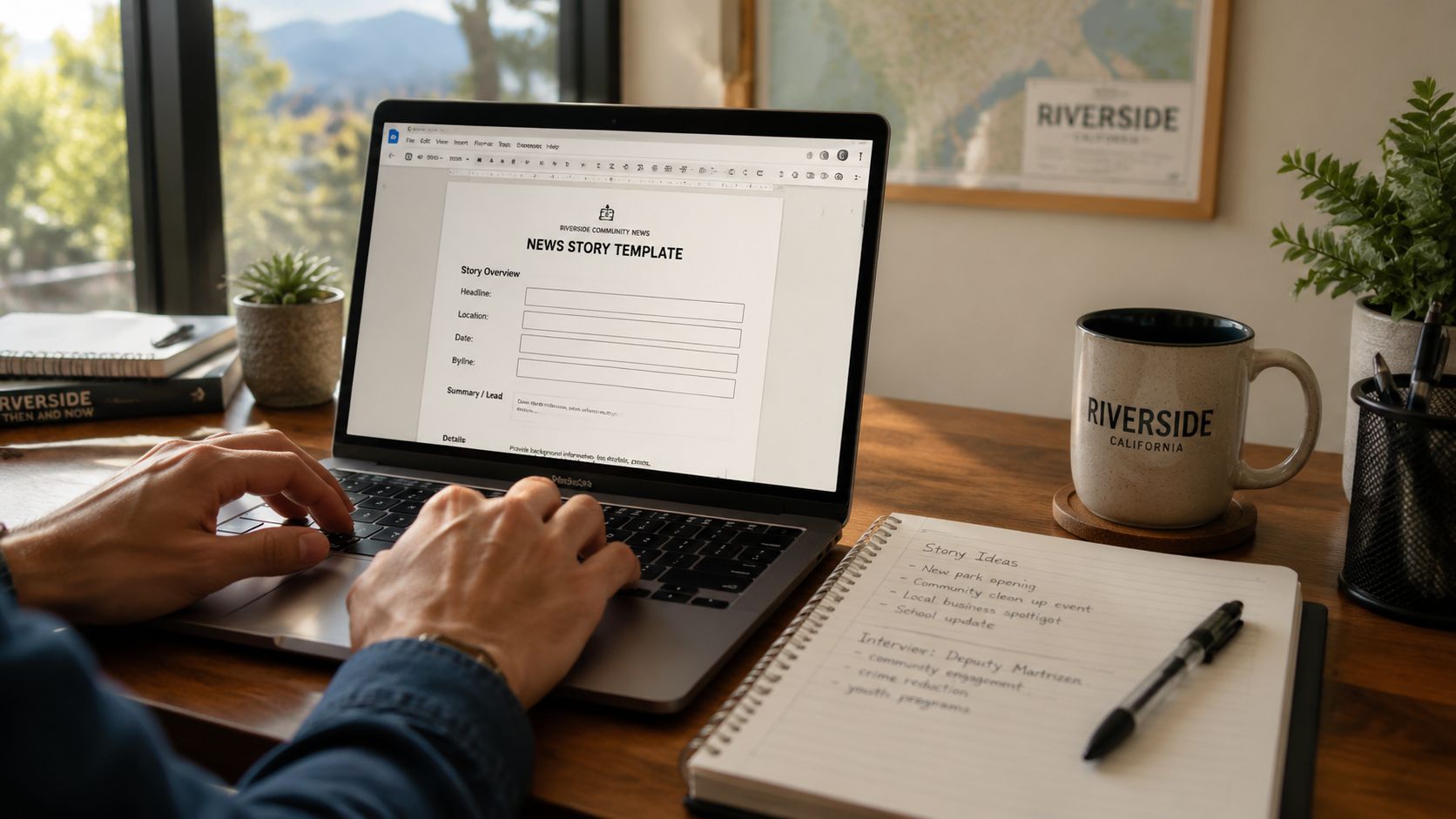
The headline should carry the core promise of the story. For a Riverside business, that might mean the neighborhood and the action appear right away. For a nonprofit, the headline should usually emphasize the service or benefit first, because that is what local reporters can translate into a community story. A lead paragraph then sets the frame and keeps the reader moving.
A practical template looks like this:
- Headline: Riverside organization announces the news in plain language.
- Subhead: Add the benefit, location, or local relevance.
- Lead: Give the essential facts immediately.
- Body: Add context, quotes, and supporting details.
- Boilerplate: Close with a short company or organization description.
Keep the first 40 to 60 words clean. If the reader still doesn't know why the release matters, the pitch is already fighting uphill.
Local context belongs in the body, not buried in the boilerplate. Mentioning a Riverside neighborhood, a partner organization, a community center, or a nearby landmark gives reporters material they can reuse. A grand opening near the Wood Streets carries a different feel than one that only says “in Riverside,” because the neighborhood itself can sharpen the story.
Make service information easy to use
Service-oriented releases need more operational detail than brand announcements. The City of Riverside's homelessness resources page shows why public-facing communications often need specifics such as shelter capacity, seasonal availability, and outreach contacts to be of practical use to residents (City homelessness resources). That same logic applies to nonprofits, clinics, school programs, and crisis-adjacent notices.
A useful local release should include the details readers can act on right away:
- Location: Exact address or service area.
- Timing: Dates, hours, or enrollment window.
- Access point: Phone number, email, or registration path.
- Audience: Who qualifies or who should attend.
- Support info: Referral contacts, if the service is sensitive or urgent.
When the release balances news value with practical information, it becomes more than publicity. It becomes a local resource that editors can trust and readers can use.
Building Your Riverside and Inland Empire Media List
A targeted media list beats a mass email blast every time. Riverside coverage usually comes from a mix of city desks, business reporters, community outlets, radio hosts, and regional digital publishers, so the list needs to reflect that mix. The goal is not to contact everyone. The goal is to contact the right people with a story that fits their beat.
For a clear primer on how a media outlet works in a press outreach context, the guide at what is a media outlet gives a useful foundation before building the list.
Start with outlet fit, not outlet fame
The most effective Riverside list usually starts with the publication's audience and editorial lane. A reporter covering local government wants different material than someone writing about openings, events, or philanthropy. That's why a curated list matters more than a large spreadsheet.
| Outlet Name | Primary Focus | Audience | General Submission/Tip Link |
|---|---|---|---|
| The Press-Enterprise | Local news, business, government, community issues | Riverside County readers | News tip and newsroom pages |
| Inland Valley Daily Bulletin | Inland Empire news and community coverage | Regional readers | News tip and contact pages |
| The Sun | Regional news and community updates | Inland Empire audience | Newsroom contact pages |
| KVCR | Public radio news and regional reporting | News and culture listeners | Station contact and tip channels |
| Riverside TV | City-focused public information and local updates | Riverside residents | City media and contact resources |
| Local community blogs | Neighborhood events, small business, civic stories | Hyperlocal readers | Site-specific contact forms |
Use beats and timing to sharpen the pitch
A Riverside pitch lands better when it reaches a reporter already covering the topic. Business openings should go to business or economic development writers. Youth programs belong with education, nonprofit, or community reporters. Public-service announcements fit better with city hall, civic, or health-oriented coverage.
A light social scan helps too. Reporters often signal current interests on LinkedIn or X, and that tells outreach teams what's most timely. If a journalist has been covering housing, transit, or arts, a pitch should connect to that pattern instead of forcing a random angle.
One strong reporter match is worth more than twenty generic sends.
For teams building a repeatable workflow, the distribution framework at how to distribute a press release can help structure the outreach process without turning it into spam. Press Release Zen also offers planning and template resources that fit neatly into that workflow, although the primary advantage still comes from matching story to beat.
The Right Way to Distribute and Follow Up
Distribution is where many solid releases lose momentum. Teams send too broadly, hit inboxes at the wrong hour, or follow up so often that they strain relationships before a reporter has time to read the pitch. In Riverside, where local coverage is limited and editors guard their time carefully, a narrow, well-timed approach usually beats a wide blast.
A practical distribution plan usually combines direct pitching with selective wire use. Direct email gives you control over the angle, the subject line, and the human details that make a Riverside story feel local. Wire services can add reach, but reach alone does not win placement in the Press-Enterprise, The Riverside Record, or other Inland Empire outlets. A useful framework from SuperX distribution insights treats distribution as a channel choice, not a send-and-hope step. If you are still shaping the outreach process, the guide on how to distribute a press release is a practical starting point.
Time the send for the newsroom, not the calendar
A press release should land when a reporter can use it. That means avoiding inbox clutter and thinking like an editor at the Press-Enterprise, KVCR, or a city desk that is juggling breaking news, meetings, and deadlines. If the announcement is time-sensitive, the subject line and first sentence need to carry the point immediately.
Timing decisions work best when they are tied to newsroom reality.
- Is the story embargoed or immediate? That changes the send strategy.
- Does the release need local morning attention? Then morning inbox timing matters.
- Is there an event date or public meeting attached? Send early enough for planning.
- Will reporters need interviews? Put source availability in the first outreach.
A Riverside pitch also benefits from beats. Business openings belong with business or economic development reporters. Youth programs fit education, nonprofit, or community desks. Public-service announcements usually do better with city hall, civic, or health-focused coverage. If a reporter has been covering housing, transit, or arts, connect the release to that pattern instead of forcing a random angle.
Follow up without sounding desperate
Follow-up should add something useful. A short note that offers a source, clarifies a detail, or points to a stronger local angle is more effective than vague “just checking in” language. Keep it brief, respectful, and easy to skip if the reporter is not interested.
A good follow-up email usually does three things. It reminds the reporter what the story is, it adds one useful detail, and it gives a clean out. That last part matters in Riverside and across the Inland Empire because journalists remember who makes their job easier, and they remember who keeps pushing after the answer is already clear.
Professional standard: if the follow-up cannot be read in under half a minute, it is too long.
Press release distribution should not be treated as the whole campaign. It is one part of a wider outreach plan, and local coverage is most likely when the message goes to the right person, at the right time, with a reason to care.
Measuring Real-World Results in the Local Market
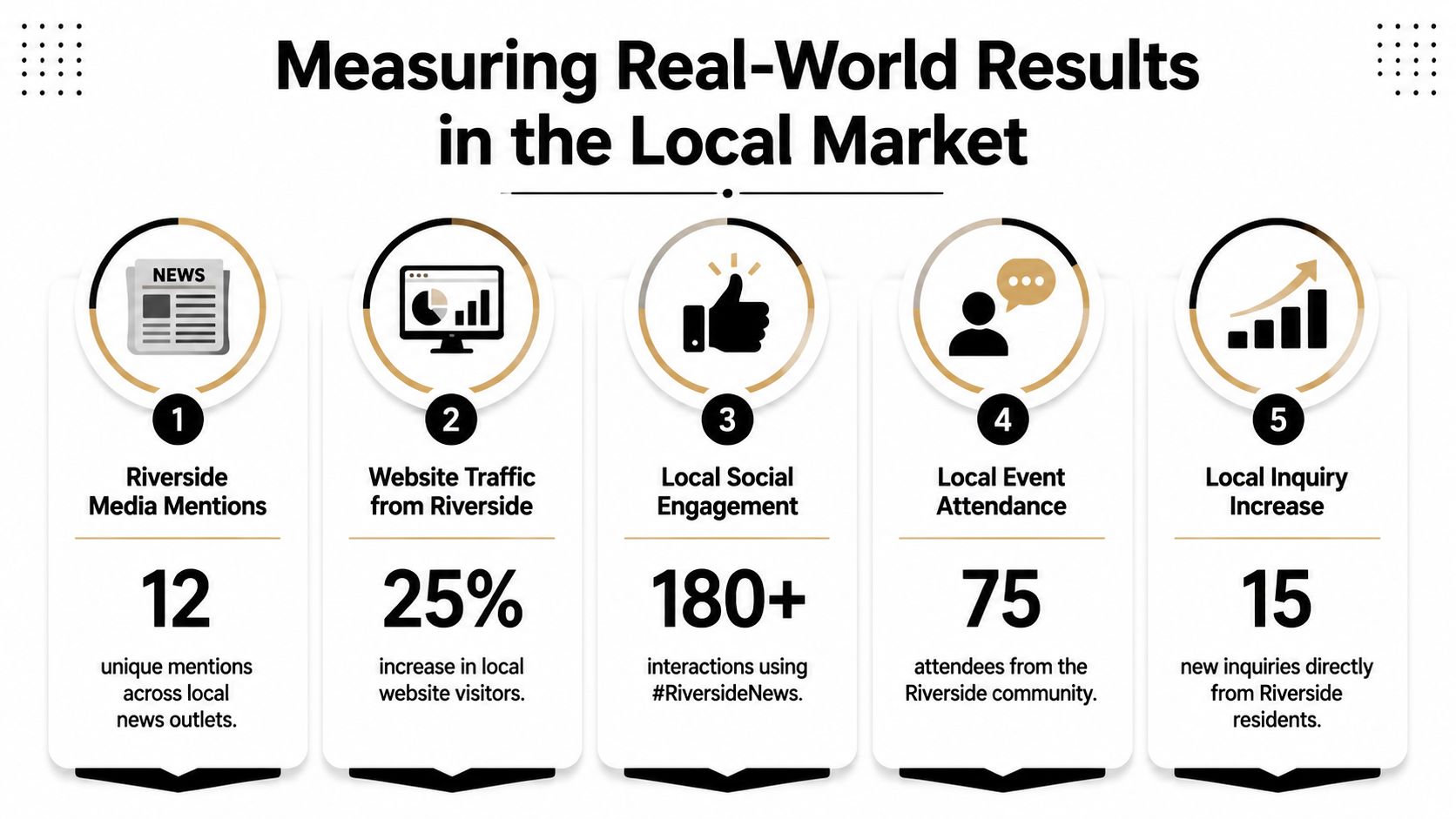
A Riverside release should be judged by what it changes, not by how many publication logos appear on a report. Screenshots of pickups do not tell a business whether readers acted. Start with one primary objective, then measure a small group of connected KPIs, the same practical approach used in Brandpush's press release distribution resource.
Choose metrics that match the goal
A nonprofit launch should not be measured the same way as a store opening. If the goal is sign-ups, conversions matter more than impressions. If the goal is authority, placement quality and backlinks matter more than raw pickup. The measurement plan should match the business or community result the release was meant to support.
A practical KPI set often includes:
- Placement quality: Which outlets covered the story and how prominent the coverage was.
- Referral traffic: How many visitors arrived from the release or linked coverage.
- Branded search lift: Whether more people searched the organization by name.
- Conversions: Form fills, registrations, calls, or donations tied to the campaign.
- Engagement: Clicks, shares, and time on page for linked assets.
For teams that want a repeatable reporting format, how to measure press release performance explains how to turn those signals into a simple scorecard. The point is straightforward. A release should function as a business tool, not a publicity trophy.
Track the campaign on a simple timeline
UTM tagging separates guesswork from evidence. Every destination link should be tagged so traffic from a Riverside release can be traced back cleanly. Record baseline data before the send, then review results at 24 hours, 7 days, and 30 days so short-term pickup and longer-tail effects both get captured.
That timeline helps Riverside teams see more than one snapshot. Early traffic shows whether the subject line and outlet mix got attention. Later checks show whether the coverage kept driving readers to take action, return to the site, or search for the organization by name.
The best reporting also compares channels. If a release is picked up by a local outlet, a trade site, and an aggregator, separate those results instead of folding them together. That makes it easier to tell which placements send real visitors and which ones mainly add visibility.
A release also needs a local readout. A Riverside campaign may generate fewer total clicks than a broader statewide push, but the local traffic may be more valuable if it comes from people who can attend an event, use a service, or make a purchase nearby. The right measurement question is not only how much attention the story got, but whether that attention came from the audience the release was written for.
Riverside Press Release Checklist and Examples
A Riverside release is ready only when the local details are tight. The document should read cleanly, the contact info should work, and the angle should make sense to someone who lives or reports in the city. If any of that is off, the release looks rushed, and that weakens the pitch before anyone opens it.
Final checklist before sending
- Headline is specific: It names the news, not just the organization.
- Lead answers the basics: The reader understands the point immediately.
- Local relevance is clear: Riverside, a neighborhood, or a local stakeholder is tied to the story.
- Useful details are included: Date, place, contact, and action steps are visible.
- Quotes add meaning: They explain impact instead of repeating the headline.
- Media list is targeted: The story goes to reporters who cover the topic.
- Links are tagged: UTM parameters are in place for measurement.
- Proofreading is done: Names, dates, addresses, and phone numbers are verified.
Example 1, Wood Streets cafe opening
Headline: New Riverside Cafe Opens in Wood Streets With Community-First Menu and Weekend Hours
Lead: A new neighborhood cafe has opened in the Wood Streets area of Riverside, offering coffee, breakfast items, and a casual meeting space for local residents and nearby workers.
Body: The cafe's owners say the goal is to give the neighborhood a welcoming spot for morning coffee, informal meetings, and weekend gatherings. The release would add the exact address, opening date, hours, and a short quote about why the location matters to the team.
Boilerplate: Include a short paragraph describing the cafe, ownership, and any community partnerships.
Example 2, youth mentorship nonprofit program
Headline: Riverside Nonprofit Launches Youth Mentorship Program for Local Students
Lead: A Riverside nonprofit has launched a youth mentorship program designed to connect local students with trained adult mentors and community support.
Body: The release should explain who can enroll, how mentors are selected, what the program offers, and where families can get help. If the program includes an application window, school partnership, or referral contact, those details should appear prominently so the story reads as both news and service information.
A release like this works because it gives editors something concrete, local, and useful. The strongest Riverside announcements don't just announce change, they show exactly how that change reaches the community.
If a Riverside team needs help turning a raw announcement into a local story that editors can use, Press Release Zen at pressreleasezen.com is a practical place to start for planning, structure, and distribution resources.