A product team signs off on branded boxes, operations books a packing run, and only then does marketing ask who should receive them and how success will be tracked. I see this sequence all the time, and it usually leads to the same problems: one box goes to creators with completely different audiences, shipping data lives in three places, disclosures get handled inconsistently, and the team cannot tie spend back to reach, content, or revenue.
A stronger PR package for influencers program starts before the first insert card is printed. It runs as a repeatable campaign system with audience tiers, approval rules, fulfillment workflows, rights language, and reporting built in from the start. That structure cuts waste, makes legal review easier, and gives the brand a program it can run again without rebuilding the process every quarter.
The box is only one asset.
Strong programs also separate functions that brands often blur together. If your team is still mixing press materials, creator gifting, and partnership assets in one workflow, it helps to review the difference between a press kit vs media kit before outreach begins. On the operations side, scalable execution often depends on partners that can handle versioning, inserts, inventory control, and multi-recipient fulfillment without turning every send into a custom project. That is where custom kitting for brands can support a cleaner campaign build.
This article treats influencer gifting as a managed PR channel. The goal is a program you can repeat, scale, audit, and improve.
Table of Contents
- Laying the Groundwork for Your Campaign Strategy
- Designing an Unforgettable Unboxing Experience
- Perfecting Your Influencer Outreach and Pitch
- Managing the Logistics of Packaging and Shipping
- Navigating Compliance, Usage Rights, and Disclosures
- Measuring Success and Building Relationships
- Frequently Asked Questions About PR Packages
Laying the Groundwork for Your Campaign Strategy
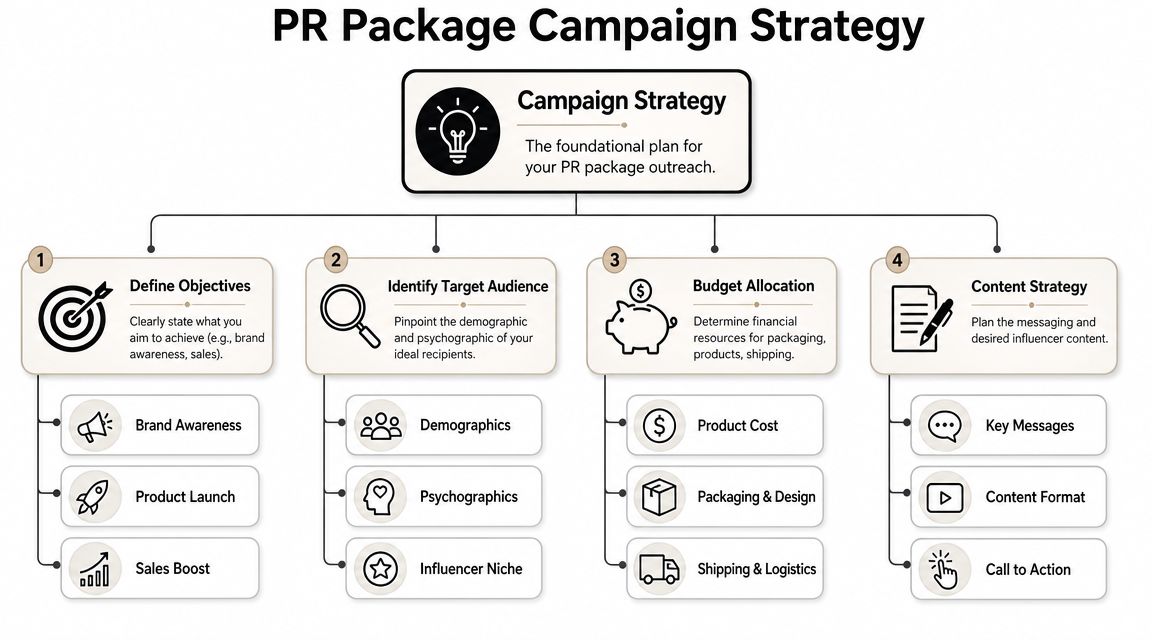
A launch box lands on 40 desks, costs real money to assemble, and gets polite thank-yous but little usable content, no lift in traffic, and no clear lesson for the next send. That usually happens because the team treated a PR package for influencers as a one-off gift instead of a campaign system.
Start with the business result, then build the send around it. If the goal is awareness, define what visible proof counts as progress. If the goal is content creation, specify the asset types, timing window, and usage permissions you need. If the goal is sales, set up creator-level tracking before outreach starts. A package without measurement is expensive sampling.
Start with a business outcome
Strong campaigns answer one question early. What needs to happen for this program to earn another budget line next quarter?
That answer has to be specific. “Get the product out there” creates confusion across PR, social, and ecommerce teams. “Secure usable creator content for launch week.” “Drive tracked visits from creator-specific links.” “Generate qualified awareness with editors, estheticians, and niche creators in one product category.” Those are workable campaign outcomes because each one can be measured and assigned.
I use four planning questions before approving any send:
- What change are we trying to create
- What signal will confirm that change
- How will each recipient be tracked
- What is gifted freely, and what requires prior agreement
The fourth question matters more than many teams expect. It separates organic seeding from negotiated deliverables and keeps the program compliant from the start. If your team needs help aligning outreach language with campaign goals, this guide to influencer press release writing and campaign messaging is a useful reference.
For brands selling through social commerce, timing gets tighter. Product availability, creator posting windows, and storefront readiness need to match. HiveHQ explains that overlap well in its guide to TikTok Shop influencer PR, which is useful for teams trying to connect product seeding to sales operations instead of running two separate programs.
Build segmentation before the box
A scalable program does not send the same kit to every name on a spreadsheet. Segment first, then decide what each group should receive, what context they need, and what outcome fits that tier.
Three segments usually cover the bulk of campaign planning:
- Awareness seeds: creators or editors who are a strong audience fit, but have no posting obligation
- Content prospects: creators likely to produce strong organic content if the product and presentation match their style
- Performance partners: creators who should receive tracked links, codes, usage-rights terms, or paid follow-up offers if early results are strong
Repeatability starts once these tiers exist, the team can reuse them across launches, swap in new products, and compare results by segment instead of guessing why one send worked and another stalled.
Packaging strategy also changes by segment. A skincare educator may need formulation notes and clinical positioning. A lifestyle creator may need a simpler story, a strong hero SKU, and a fast visual payoff. A journalist may need a concise press note and launch facts. The box is not the strategy. The segmentation logic is.
Build a campaign brief your team can reuse
Before outreach or assembly begins, create a one-page brief with the same fields every time. That document should include campaign goal, audience segment, send list owner, tracking method, budget per recipient, shipping window, compliance notes, and success criteria. Keep it plain enough that PR, legal, social, and operations can all use it.
A reusable brief improves two things. It reduces internal confusion, and it makes post-campaign analysis possible. Teams can compare sends by product category, creator tier, package cost, and conversion path because the inputs were documented the same way each time.
Sample KPIs by Campaign Goal
| Campaign Goal | Primary KPI | Secondary Metrics |
|---|---|---|
| Brand awareness | Brand mentions | Share of conversation, repostable content volume |
| Product launch | Influencer-generated content | Asset quality, timing of posts around launch window |
| Sales activation | Traffic from unique promo codes or creator links | Cart activity, product page engagement, creator-specific inquiries |
| Community building | Social engagement | Saves, comments, DMs, repeat creator participation |
| Press and earned attention | Media mentions | Inbound requests, referral conversations, quote opportunities |
Assign ownership before anything ships. One person owns the list. One owns approvals. One owns fulfillment and delivery tracking. One owns reporting. Shared responsibility sounds collaborative, but in PR package campaigns it usually means missed deadlines, unclear disclosures, and no reliable read on ROI.
Designing an Unforgettable Unboxing Experience
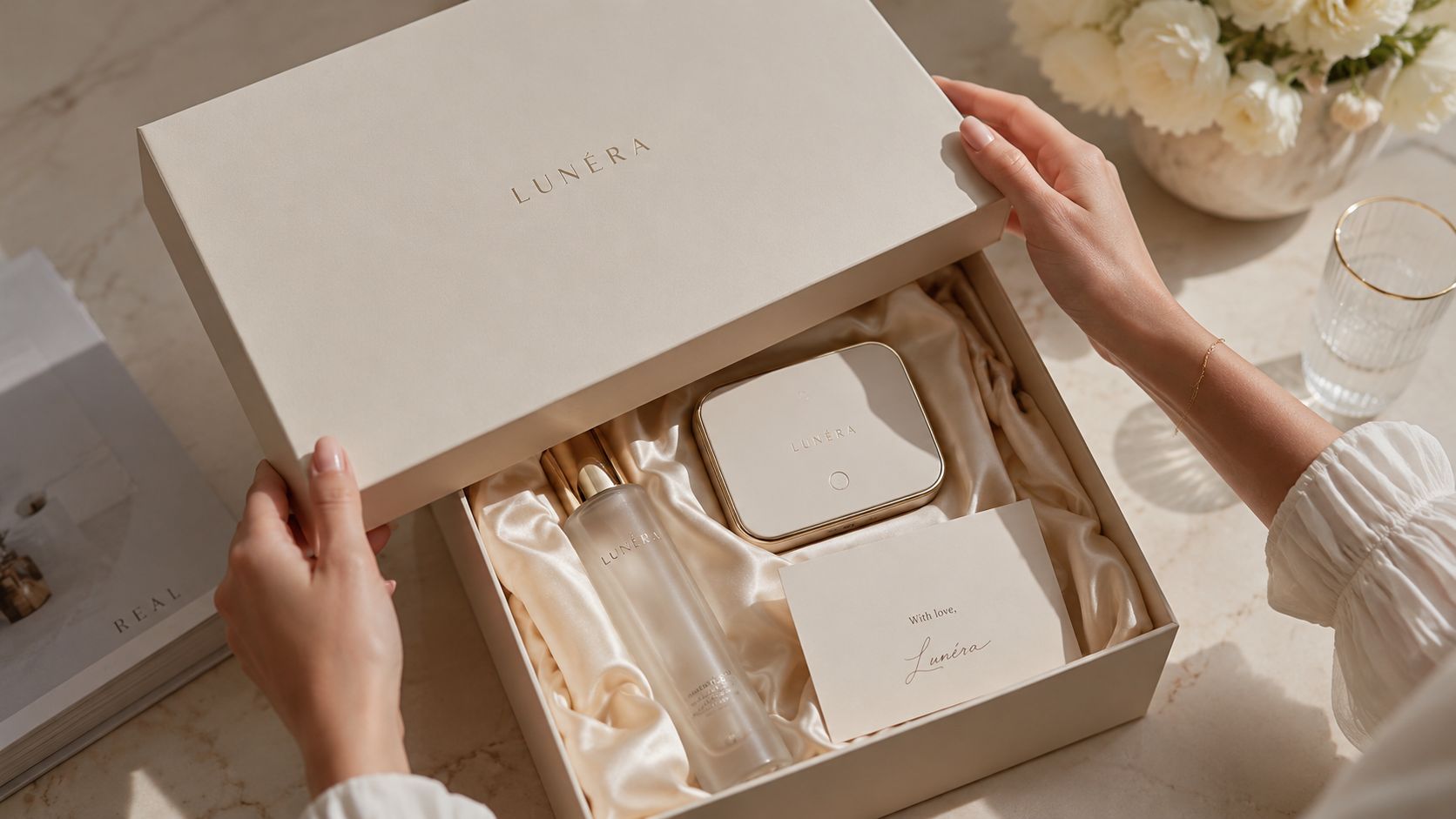
A good box doesn't need to be overloaded. It needs to be legible on camera, aligned with the creator, and easy to unpack without confusion. The most effective packages usually feel edited, not stuffed.
Research summarized by impact.com points to a reliable design stack. Use a single visually strong hero product, add small but meaningful extras, optimize the unboxing for social content, avoid fragile or temperature-sensitive items when possible, and include a handwritten note with a clear CTA to tag the brand in this roundup of creator PR package practices.
Pick one hero product
The hero product carries the visual story. It should be the item the creator can hold up in the first few seconds of a Reel or TikTok and instantly communicate what the package is about.
That means the hero product should be:
- Visually readable: clear shape, recognizable branding, camera-friendly finish
- Relevant to the creator's audience: not just your newest SKU
- Simple to demonstrate: easy to use, easy to explain, easy to capture
When brands ignore this, they often send assortment-heavy kits with no focal point. The creator opens five average items instead of one standout one. The result is cluttered content.
Use extras to support the story
Extras work best when they reinforce the main item instead of competing with it. A mini tool, sample size companion product, branded insert, or tactile packaging detail can all deepen the brand story. Random filler usually weakens it.
For brands trying to operationalize this across multiple campaigns, a specialized partner can help standardize assembly, inserts, and presentation. This overview of custom kitting for brands is useful because it frames kitting as an execution system, not just a packaging decision.
A smart insert set usually includes:
- A short welcome card: who the send is for and why they were selected
- A concise product guide: what matters most, without turning into a brochure
- A simple CTA: tag instructions, launch timing, or where to request more info
For teams mixing creator sends with editorial outreach, it also helps to keep support materials distinct. This guide on press kit vs media kit differences and best practices is a useful reminder that creator-facing assets and media-facing assets shouldn't be treated as the same document.
Make the box easy to film
A social-ready unboxing is a production choice. Brands should test the opening motion, tissue placement, card order, and whether logos show up clearly on a phone camera. If the recipient has to dig through shredded filler to find the main product, the package is working against the content.
The best unboxing experiences remove friction. They don't ask the creator to figure out the brand story alone.
A simple internal test helps. Hand the closed package to someone on the team with a phone. Ask them to film a single-take unboxing. If they hesitate, fumble, or ask what to open first, the creator probably will too.
Perfecting Your Influencer Outreach and Pitch
A creator can love the product and still ignore the send if the outreach feels lazy, unclear, or risky. The pitch decides whether your PR package program scales cleanly or turns into a pile of unconfirmed addresses and low-intent replies.
Strong outreach starts before the first email goes out. Build a creator list that can be reused, filtered, and audited across campaigns. That means ranking people by fit, expected content value, and operational reliability, not just by audience size.
Build a tiered list
A practical outreach list usually includes three groups.
Priority creators fit the campaign story, posting window, and brand standards closely. They are the right candidates for launch sends, hero placements, and follow-on paid work if performance is strong.
Working creators are dependable niche matches. They often produce clearer product education and stronger conversion intent because the item already belongs in their content mix.
Discovery creators are early-stage tests. They help teams check messaging, packaging response, and audience interest before increasing volume.
The list should also function as an operating document. Add fields for prior contact history, category fit, posting cadence, audience quality, shipping status, disclosure habits, and whether the creator has handled gifted product transparently in the past. That record keeps future campaigns faster and more consistent. It also helps legal and PR teams review decisions if a send creates problems later.
For creators who want to understand the brand-side screening process, REACH has a useful piece on securing brand collaborations.
Write a pitch that makes the decision easy
Good outreach reduces effort for the recipient. Bad outreach asks the creator to figure out the fit, the product, the ask, and the timeline with almost no context.
Keep the note short enough to scan quickly, but specific enough to qualify interest. As noted earlier, a concise pitch tends to perform better than a long brand introduction. The goal is not clever copy. The goal is a fast yes, no, or not now.
A reliable structure looks like this:
- Lead with the fit: reference a specific content theme, audience behavior, or format the creator already uses
- State the product plainly: say what it is and why it matches their content
- Define the send clearly: gifted sample, gifted send with optional posting, or a campaign that may expand into paid work
- Ask for one action: interest confirmation first, shipping details second
- Attach only what helps: a short product overview, launch timing, approved claims, or visual references
One detail matters more than teams expect. Do not imply an obligation if the package is only a gift. If posting is optional, say so directly. If content rights, exclusivity, or timing matter, those terms belong in the outreach or immediately after interest is confirmed, not buried after delivery.
Outreach standard: Personalization should show commercial fit, not perform admiration.
For campaigns tied to a launch, regulated claims, or message-sensitive positioning, give creators a structured reference they can use without rewriting your brand story from scratch. This guide to influencer press release writing with examples, tips, and templates is a practical model for building creator-facing support materials that are usable.
Finally, score outreach like a channel, not a courtesy exercise. Track reply rate, accept rate, shipped rate, post rate, content quality, and time-to-post by creator tier. Those numbers show whether your list quality is improving, whether your pitch is too vague, and whether the program can scale without wasting product.
Managing the Logistics of Packaging and Shipping
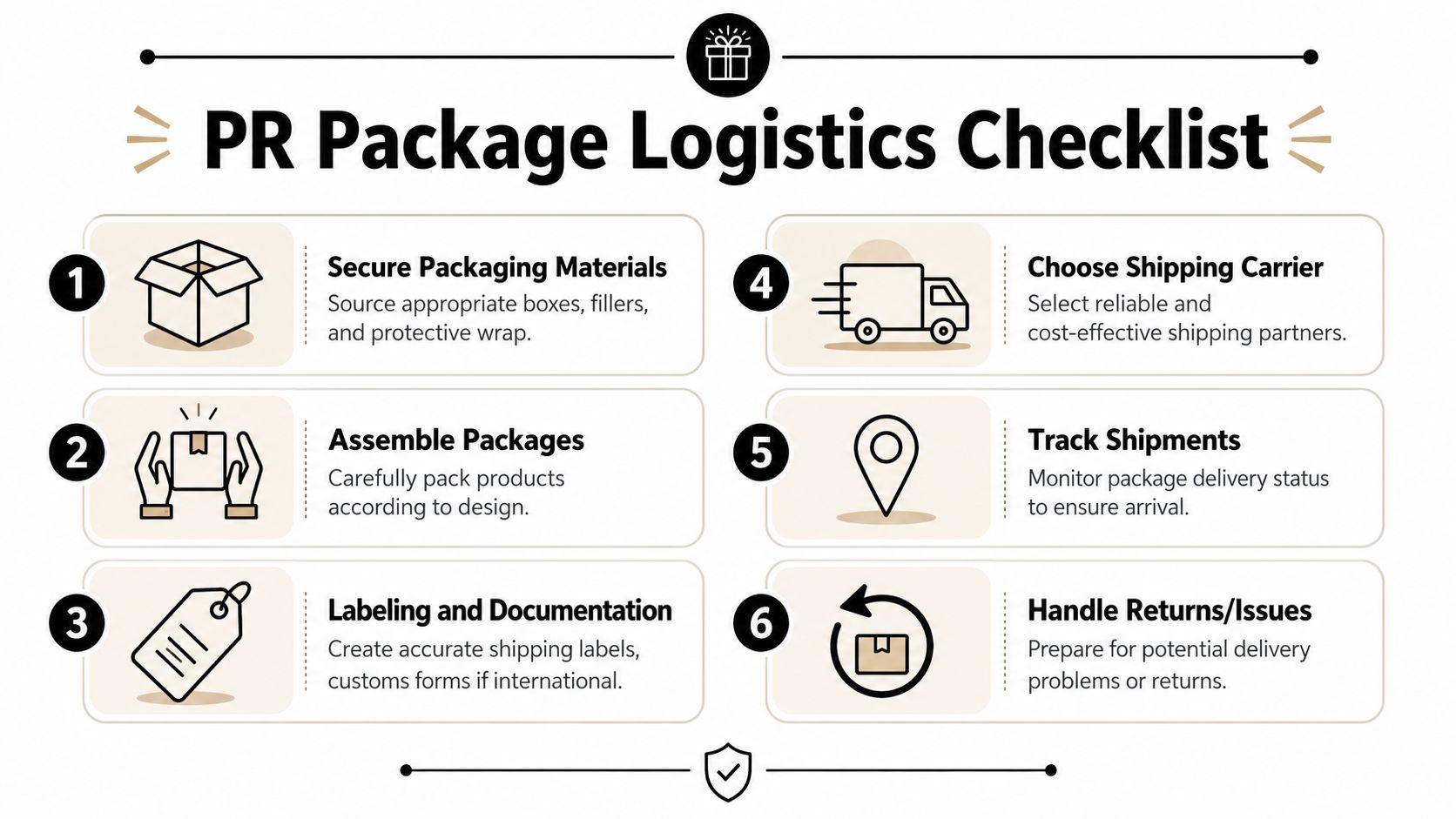
Logistics shape the first impression as much as copy or creative. A delayed, damaged, or poorly timed delivery can turn a promising creator relationship into silence. Teams that treat fulfillment as back-office admin usually end up paying for that mistake in wasted product and missed posting windows.
Choose packaging based on campaign risk
Custom-branded boxes can create a stronger arrival moment, but they aren't always the right decision. If the campaign is a small fit test, a stock box with polished inserts may be more efficient. If the product is fragile, outer protection matters more than premium presentation. If theft risk is a concern, over-branding the exterior can be a liability.
A simple decision lens helps:
| Scenario | Better choice | Why |
|---|---|---|
| New campaign with unproven creator fit | Stock outer box with branded interior | Lowers waste while preserving presentation |
| High-visibility launch send | Custom presentation box | Supports shareability and stronger brand recall |
| Fragile or sensitive product | Protective packaging first | Content value disappears if the product arrives damaged |
| Broad seeding run | Repeatable modular format | Speeds assembly and keeps quality consistent |
Brands often overspend on outer packaging and underspend on protective inserts. The recipient never rewards that trade-off if the contents shift, leak, crack, or arrive looking handled.
Shipping timing affects content timing
Send windows need as much planning as package design. Delivery timing influences whether the creator opens the box on camera, sets it aside, or misses the intended launch moment entirely.
Useful operating habits include:
- Avoid late-week arrivals when possible, especially for time-sensitive launches
- Confirm addresses close to ship date so packages don't go to outdated management offices
- Separate domestic and international workflows because customs, documentation, and transit uncertainty can change the experience
- Track every package actively instead of assuming carrier status tells the whole story
A PR box isn't delivered when the carrier scans it. It's delivered when the recipient can actually use it.
International shipping needs extra caution. Customs forms, restricted items, and country-specific delivery norms can affect both timing and compliance. Teams running global seeding should build regional versions of the same program instead of forcing a single universal shipping model.
Navigating Compliance, Usage Rights, and Disclosures
A PR package campaign can look polished, generate strong content, and still create avoidable legal risk. The break point is usually not the box itself. It is the moment a brand assumes gifting is informal, disclosures are optional, or posted content is free for the brand to reuse.
D'Andrea Visual notes that in the U.S., the FTC can treat free product as compensation when it is tied to endorsement activity, and disclosures need to be clear and easy to notice in its PR package overview. That has direct program implications. If the campaign is meant to scale, compliance cannot live in scattered DMs or one-off judgment calls from junior staff.
Set the disclosure standard before outreach goes out
Creators need plain instructions, not hints.
If there is any expectation of posting, say that in writing. If there is no obligation, say that too. The problem starts when brands send mixed signals such as "no pressure" while tracking who posted and following up for coverage. That creates risk for the brand and confusion for the creator.
A working disclosure brief should cover:
- Whether the package is purely a gift or tied to requested content
- What disclosure format the brand expects
- Where the disclosure should appear in captions, videos, or Stories
- Who approves questions about launch claims or regulated language
- Which markets need different wording
Short labels often work better than brand-written script. In practice, creators need room to speak in their own voice, but the disclosure still has to be obvious. A hidden hashtag, an end-of-caption mention, or a fast spoken disclosure that misses the first few seconds of a video is a weak setup.
Usage rights should be explicit, not assumed
Here, gifting programs often slip from scrappy to sloppy.
A creator posting an unboxing does not give the brand automatic rights to reuse that content in email, paid social, product pages, retail media, or whitelisting campaigns. Organic reposting, paid amplification, editing rights, term length, territory, and credit requirements should be stated before content goes live. If those terms are not defined early, the campaign may produce usable-looking content that the brand cannot safely use.
I usually advise teams to separate rights into tiers. One tier covers organic reposting on the brand's owned channels. Another covers paid usage. A third covers broader commercial use such as web, PDPs, and ad creative. That structure keeps lightweight seeding lightweight while still giving the team a repeatable framework.
Clear rights language reduces friction later. It also helps quantify ROI, because the team knows which assets can support paid and owned performance after the initial post.
Build records that can survive scale
Compliance work is operational work.
The same overview also points out that creators may need to track the value of gifted goods and that programs running across markets can face stricter labeling expectations, including in the U.K. That matters because a repeatable PR package program needs a record trail, not just shipping confirmations and screenshots.
Track these fields in one system:
- Creator name and handle
- Market and governing disclosure rules
- What product was sent and its stated value
- Delivery date
- Whether posting was optional, requested, or contracted
- Disclosure guidance shared
- Usage rights granted
- Links to live content
- Any compliance corrections requested after posting
This level of documentation sounds heavy until a creator posts without disclosure, a paid team wants to reuse top-performing content, or finance asks what inventory was sent against which outcome. Then it stops feeling administrative and starts looking like basic campaign control.
Teams that treat PR packages as a channel, not a courtesy, usually run cleaner programs. They can audit disclosures, confirm permissions, compare earned content against rights cleared, and expand creator seeding without rebuilding the process every quarter.
Measuring Success and Building Relationships
A launch week box goes out to 75 creators. Twenty post. Eight drive strong saves and replies. Three create content the brand can reuse across paid and owned channels. One becomes a long-term partner. That is the true job after delivery. A PR package for influencers program either produces a usable pipeline of creators and assets, or it becomes an expensive shipping exercise.
Track the outcomes you defined earlier
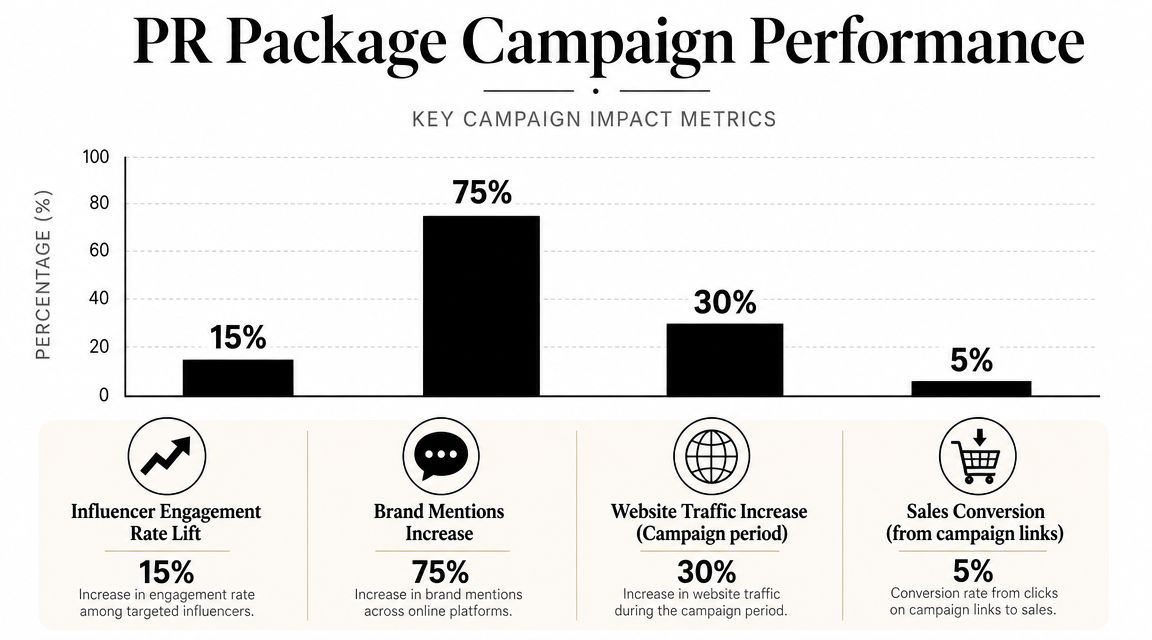
Measurement needs to match the job of the send. If the package was built for awareness, review reach, mentions, story repost opportunities, and comment quality. If the send was tied to traffic or trial, look at creator links, code use, landing page behavior, and assisted conversions together. Teams lose clarity when they force every gifting campaign into a last-click sales report.
The strongest reporting setup blends channel metrics with operator notes. Numbers show what happened. Notes explain whether the creator is worth sending to again.
A practical scorecard includes:
- Content output: posts, stories, reels, unboxings, and untagged mentions caught through monitoring
- Traffic and conversion signals: unique links, promo codes, on-site behavior, and any lift tied to the campaign window
- Asset value: visual quality, message accuracy, and whether the content is usable across organic, paid, or retailer channels based on rights already cleared
- Creator reliability: response time, shipping accuracy, professionalism, disclosure quality, and openness to future collaboration
- Audience fit: comment sentiment, question volume, save rate, and whether the audience reaction matches the brand's target buyer
For teams building a repeatable reporting process, this guide to public relations reporting is a useful reference for turning creator activity into a format leadership can review quickly.
Build a relationship system, not a thank-you routine
Relationship management needs structure. A creator who posts once with strong audience fit should not disappear into the same spreadsheet as a recipient who never opened the email. Segment creators after each wave. Use simple buckets such as re-send, test for paid partnership, seasonal fit, product mismatch, and no follow-up.
That discipline changes the economics of gifting. The first send is usually the most expensive because it carries outreach, packaging, shipping, and uncertainty. The second or third touch is where efficiency improves, because the team already knows who responds, who discloses correctly, and who creates content worth using.
A useful post-campaign follow-up process looks like this:
- Thank the creator promptly and reference the specific post, angle, or audience reaction that performed well
- Record the outcome in one place so PR, social, influencer, and paid teams are not keeping separate versions of creator history
- Flag high-value creators for the next action such as an early launch send, affiliate test, paid brief, or ambassador review
- Review weak-fit sends critically and note whether the issue was creator selection, product relevance, timing, or package design
The brands that scale this well do one thing consistently. They treat every send as a data point for the next decision. That approach improves creator selection, sharpens ROI, and builds a cleaner, more compliant program over time.
Frequently Asked Questions About PR Packages
How should a brand budget for a PR package campaign
Start with categories, not a lump sum. Product cost, packaging materials, kitting labor, shipping, creator support materials, and tracking all need their own line items. That structure makes it easier to see where the campaign is expensive and where the team is overengineering.
Budget should also follow creator tier and campaign purpose. A discovery send doesn't need the same spend profile as a launch kit for top-priority creators. Many teams get into trouble by building every package at the highest possible standard, then realizing they can only afford to send a handful.
A practical method is to design one modular core package and then create upgrade layers. Priority recipients might get personalized extras or premium presentation. Broader seeding recipients get the same strategic message and hero product in a more efficient format.
What if an influencer accepts the package and never posts
That outcome should be expected in gifting. It isn't always a failure. If the campaign was positioned as product seeding with optional coverage, non-posting is part of the model. The issue becomes more serious when the brand implied an expectation but never documented it clearly.
The right response depends on the setup:
- If posting was optional: log the send, monitor for delayed use, and don't push aggressively
- If posting was expected: follow up politely, restate the original agreement, and ask whether timing changed
- If the creator went silent completely: mark the relationship accordingly and avoid repeat sends without a new conversation
A brand shouldn't react emotionally to non-posting. It should tighten qualification, outreach clarity, and package fit for the next round.
The cleanest fix for non-posting is usually upstream. Better selection and clearer expectations beat stricter follow-up.
When should gifting be combined with payment
Combine gifting with payment when the brand needs more than authentic discovery. If the campaign requires guaranteed deliverables, fixed posting dates, usage rights beyond simple reposting, detailed talking points, or cross-platform content packages, payment usually belongs in the structure.
Gift-only sends work best when the brand is testing fit, building early awareness, or seeding products to creators who may naturally use them without pressure. Paid collaborations make more sense when the brand needs certainty.
A simple rule helps. If the campaign brief contains obligations, approvals, revisions, exclusivity, or paid usage, treat it like a contracted partnership, not a casual gift.
The strongest programs use both models. They seed broadly to find natural matches, then invest in the creators who prove they can carry the brand well.
Press Release Zen helps PR teams turn scattered campaign activity into clearer communication assets. For teams that need practical templates, strategy guides, and execution support around announcements, media materials, and reporting, Press Release Zen is a useful working resource.