Most advice about PR packages obsesses over tissue paper, custom inserts, and whether the box looks good on camera. That's backward. A beautiful package sent to the wrong person, with no clear campaign objective, weak outreach, and sloppy follow-up is just an expensive shipping exercise.
The brands that consistently figure out how to get PR packages working for them treat the box as one part of a larger communications system. They decide what result they want, identify who can realistically help create that result, ask for permission before shipping, track delivery, monitor mentions, and document the value of what was sent. That's what turns product seeding into a repeatable channel instead of a one-off stunt.
Table of Contents
- PR Packages Explained Press Kits vs Influencer Boxes
- Define Your Strategy Before You Ship
- Building a Package That Gets Noticed
- Perfecting Your Outreach and Pitch
- From Your Warehouse to Their Doorstep
- Answering the Big Questions Your PR Package FAQ
PR Packages Explained Press Kits vs Influencer Boxes
The phrase PR package causes confusion because teams use it to describe two different assets. One is built for editorial work. The other is built for creator content and audience exposure. If the team mixes them up, the campaign starts with the wrong expectations.
What each one is for
A press kit supports reporting. It gives a journalist what they need to evaluate and cover a company, launch, product, or announcement. That usually means structured information, approved language, images, facts, product details, and contact information. It can be digital, physical, or both.
An influencer box is different. It's a curated bundle of samples and branded materials meant to encourage unboxing content, social sharing, or editorial-style attention. Industry guidance describes the modern PR package as part of an influencer-and-media-kit model, with emphasis on researching the recipient's audience, contacting them before shipping, and following up after 2 to 3 weeks to allow time for testing and posting, according to industry guidance on PR packages.
A press kit answers, “What should someone know to cover this?” An influencer box answers, “What should someone experience to share this?”
The distinction matters because each asset is judged differently. Journalists care about clarity, relevance, timing, and whether there's a story. Creators care about product fit, audience fit, presentation, ease of use, and whether the brand understands their content style.
A quick decision table
| If the goal is… | Use this | Typical contents | Main recipient |
|---|---|---|---|
| Earn reported coverage | Press kit | Press release, images, brand facts, product details | Journalist or editor |
| Generate social content or buzz | Influencer box | Product, note, brand extras, visual packaging | Influencer or creator |
| Support both outcomes | Both, separately packaged | Editorial assets plus creator-ready product experience | Media and creators |
Teams that need a cleaner explanation of terminology can use this breakdown of press kit vs media kit differences and best practices. It helps prevent a common planning error. A media contact doesn't need a gift box instead of usable information, and a creator doesn't want a dry folder that gives them nothing to film.
A useful rule is simple. If the recipient's job is to publish a story, give them material that reduces reporting friction. If the recipient's job is to create content, give them material that creates a clear experience worth sharing.
Define Your Strategy Before You Ship
Most failed seeding campaigns don't fail at the packaging table. They fail in the planning doc. The team starts choosing inserts before deciding whether the campaign is trying to drive coverage, creator mentions, product feedback, relationship building, or direct-response activity.
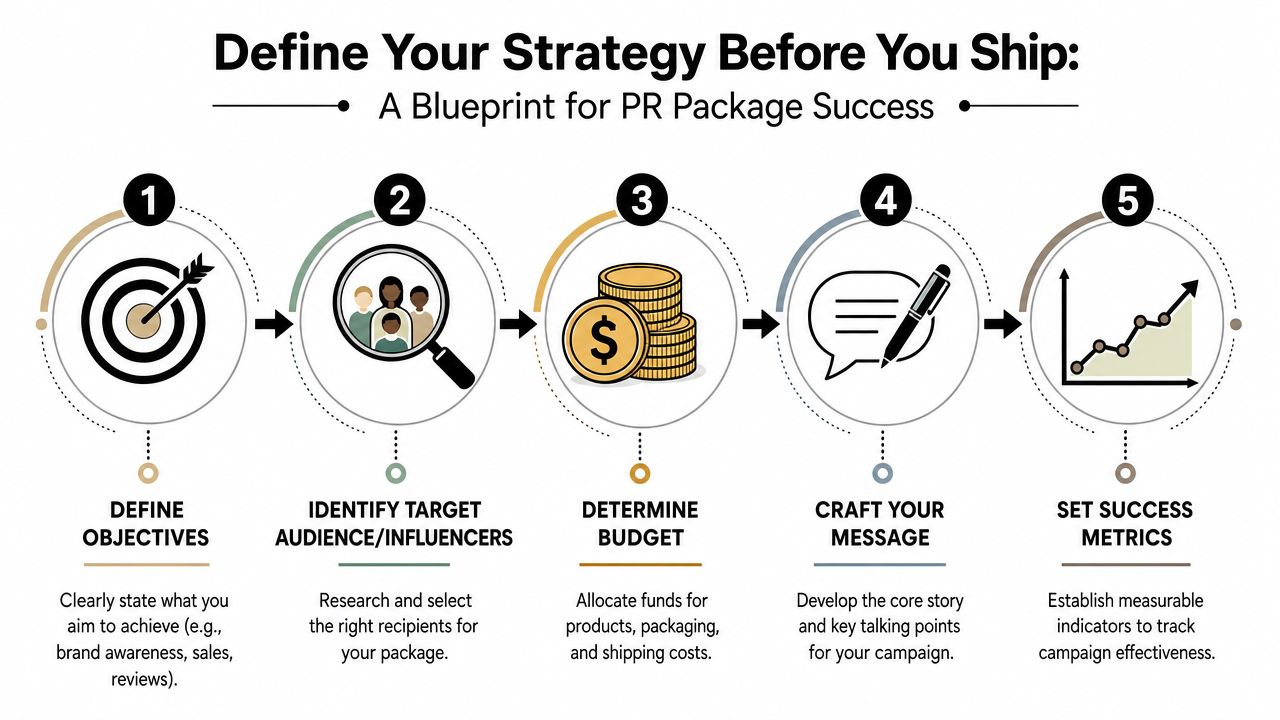
A practical workflow starts with KPIs, then moves to the recipient list, budget, shipping coordination, tracking, and follow-up. One operational guide also recommends shipping on working days rather than weekends or public holidays, then monitoring social mentions after delivery, as outlined in this PR package workflow guide.
Start with the business outcome
Before a single product leaves the warehouse, the team should answer four questions:
- What action should this campaign create
- Who is most likely to create that action
- What proof will count as success
- What happens after the package lands
If the campaign wants earned coverage, the package and outreach need a news angle. If the campaign wants creator content, the recipient shortlist should prioritize audience relevance and content style. If the campaign is relationship-led, the first send may have no immediate ask at all.
Practical rule: Don't let “awareness” hide weak planning. Awareness only matters if the team knows whose awareness, of what message, and what the next step is.
That planning discipline also keeps the team from overbuilding. A simple, well-matched send often performs better than a costly box designed for everyone and relevant to no one.
Build a list that can actually convert
Many teams get distracted by follower counts. A large audience can help, but fit matters more. Good recipient selection asks harder questions.
- Audience match: Does the recipient speak to the exact buyer, user, or community the brand wants to reach?
- Content format: Do they naturally post tutorials, product roundups, reviews, unboxings, or commentary that suits the item?
- Brand overlap: Have they already shown interest in adjacent products, routines, or categories?
- Professional signals: Do they publish contact details, media kit information, or collaboration guidance?
When a campaign involves creators, the selection process should look a lot like partnership vetting. The team is looking for alignment, not just reach. That's why thoughtful gifting often works best when it's treated as one part of a broader relationship-building approach. A useful outside read on that mindset is transforming business relationships with gifts, especially for teams trying to avoid generic send-and-pray tactics.
A messy list creates expensive waste. A tight list produces better outreach, cleaner tracking, and better follow-up conversations.
Budget for the campaign you can sustain
The product itself is only one line item. A realistic budget includes packaging materials, printed inserts, labor, shipping, replacement stock, and any paid collaboration costs if the brand decides free product alone isn't enough.
A short planning sheet should include:
- Product allocation: Which SKUs will be sent, in what quantity, and whether backup units are available.
- Packaging level: Premium presentation, standard kitting, or a hybrid based on recipient tier.
- Shipping profile: Domestic only, cross-border, fragile handling, tracked delivery, and signature needs.
- Follow-up resources: Who owns outreach responses, posting checks, and content logging.
Some teams also keep one line for test sends. That helps refine the offer and packaging before the campaign scales. It's a better use of budget than sending the same box to a broad list and hoping the market sorts it out.
Building a Package That Gets Noticed
The strongest PR packages don't feel random. They feel edited. Every item inside should answer one of three questions: what is the hero product, why does this recipient care, and what's the easiest story they can tell with it?
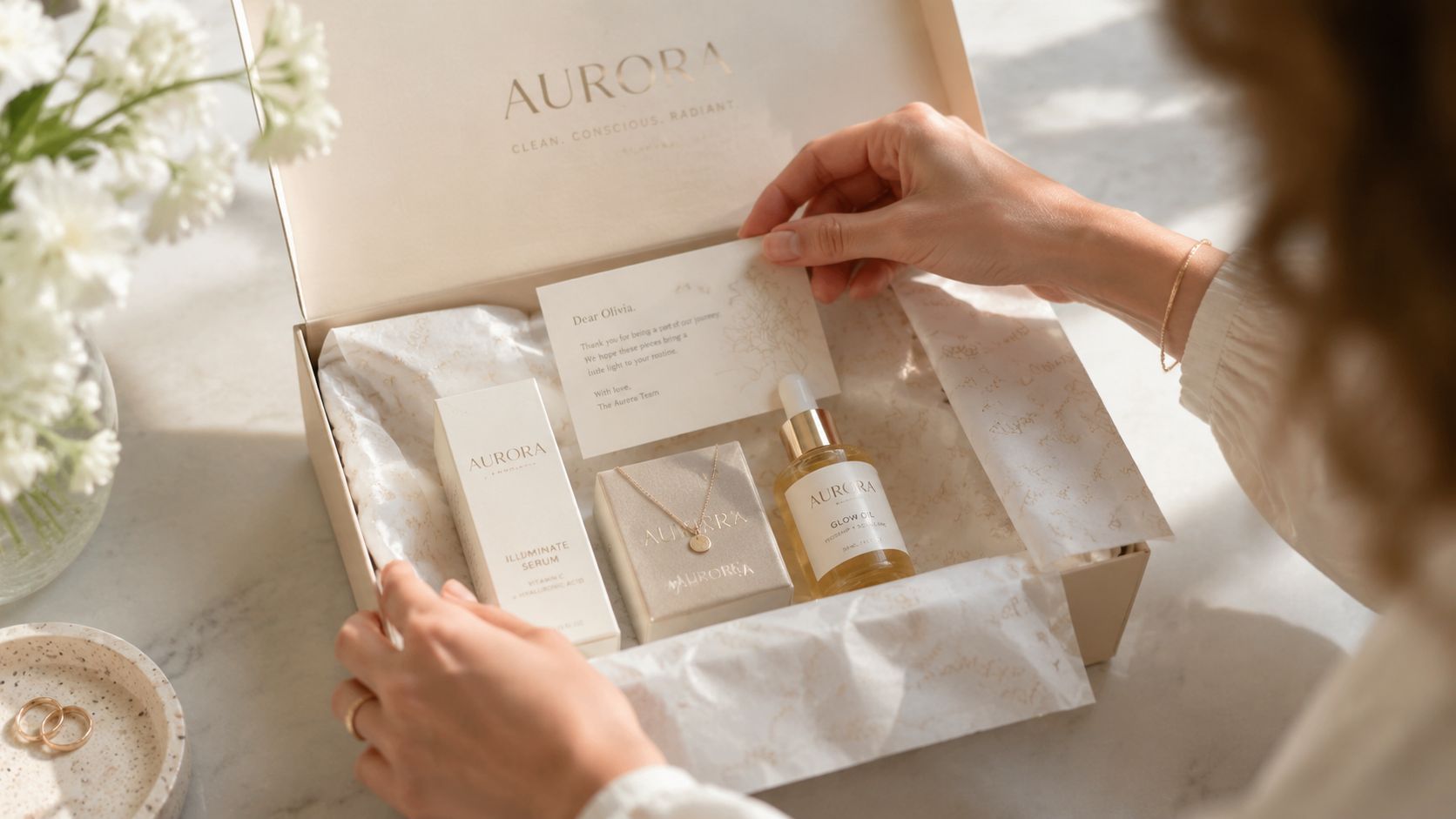
A beauty brand sending a serum to a skincare educator might include the product, a short usage cue, and one supporting item that helps show texture or routine placement. A food brand sending a seasonal launch to a recipe creator might include the core product, a serving suggestion, and packaging that looks clean on camera without overwhelming the product itself. The box should make the recipient's content creation easier, not more complicated.
What a strong package usually includes
There isn't one perfect formula, but the structure is usually consistent:
- A clear hero item: The recipient should know what the campaign is about within seconds of opening.
- A relevant supporting layer: This might be a complementary product, a swatch card, a sample set, or a contextual prop.
- A short personalized note: A short personalized note makes many packages either memorable or instantly generic.
- Useful brand information: Keep it concise. Include only what helps the recipient understand use, story, or fit.
The personalized note does most of the relationship work. It should mention why the brand chose that specific person and why the item fits their audience or content style. If the note could be copied into fifty other boxes with no changes, it shouldn't go in the box.
What makes an unboxing feel worth sharing
A creator notices care faster than cost. Good packaging feels intentional. Bad packaging looks like the brand spent heavily on decoration and forgot usability.
A few trade-offs matter more than teams expect:
| Better choice | Usually weaker choice |
|---|---|
| One photogenic hero product | Too many unrelated items |
| Compact packaging that frames the product | Oversized boxes filled with filler |
| Brief, recipient-specific note | Long brand letter copied to everyone |
| Recyclable or practical materials | Messy inserts that create cleanup work |
A team trying to improve package structure can review examples of a PR package for influencers. The value isn't in copying a look. It's in seeing how the package, message, and recipient fit together.
If the recipient has to work hard to figure out the angle, the package probably won't get posted.
Waste is another issue teams often ignore. A box can feel premium without using excessive layers, hard-to-dispose materials, or props that serve the brand more than the recipient. The best packaging choices support the product, survive shipping, and still look clean on camera. That balance usually beats novelty for novelty's sake.
Perfecting Your Outreach and Pitch
A PR package should rarely be a surprise. Surprise sounds exciting in brainstorm sessions, but in practice it creates delivery issues, internal gatekeeping, wrong addresses, and unopened boxes. Permission-based outreach is slower at the front end and far more efficient overall.
That matters because outreach success is already low. In 2025, the average journalist response rate to PR pitches was 3.43%, and only about 8% of PR pitches resulted in media coverage, according to this 2026 PR statistics roundup. Those numbers are a strong argument against generic blasts. When response is scarce, every recipient has to feel deliberately chosen.
Why permission beats surprise
A permission-based approach does four things at once. It confirms the right contact, checks whether there's actual interest, reduces shipping waste, and opens the relationship on respectful terms.
Mass outreach does the opposite. It treats the list like inventory. The result is predictable. Wrong timing, wrong fit, unclear expectations, and very little signal about why the recipient was selected.
A better process usually looks like this:
- Research first: Review recent content, audience fit, and whether the creator or journalist covers that category.
- Reach out directly: Ask whether they'd like to receive the product before sending anything.
- State expectations clearly: If there are no posting requirements, say so. If the team wants to discuss paid deliverables separately, say that too.
- Confirm logistics: Get the preferred shipping address and any relevant handling instructions.
Teams that want a broader framework can use this guide to a media outreach strategy. It helps align the pitch with the recipient instead of with the sender's internal excitement.
A pitch that sounds human
The best email pitches are short, specific, and easy to answer. They don't pretend familiarity. They show why the recipient was chosen and what would happen next if there's interest.
Hi [Name],
[Brand] is launching [product or collection]. The team reached out because your content on [specific topic or format] matches the audience this item is built for.
If you're open to it, the brand would like to send a PR package for consideration. The package includes [brief description].
There's no assumption of coverage or posting unless discussed separately. If you'd like to receive it, reply with the best shipping details and any preferences the team should know.
Thanks,
[Name]
[Role]
[Contact information]
That script works because it answers the recipient's first questions quickly. Who is this, why was this sent to this person, what is it, and what is being asked.
Keep the pitch short enough that the recipient can decide in one screen, not after scrolling through a brand manifesto.
If a recipient declines or doesn't reply, the team has learned something useful. That's better than shipping a box blindly and learning nothing.
From Your Warehouse to Their Doorstep
Creative work gets most of the attention, but logistics decides whether the campaign reaches the right hands in usable condition. A perfect package sent late, sent to an outdated address, or dropped at a closed office won't rescue itself.
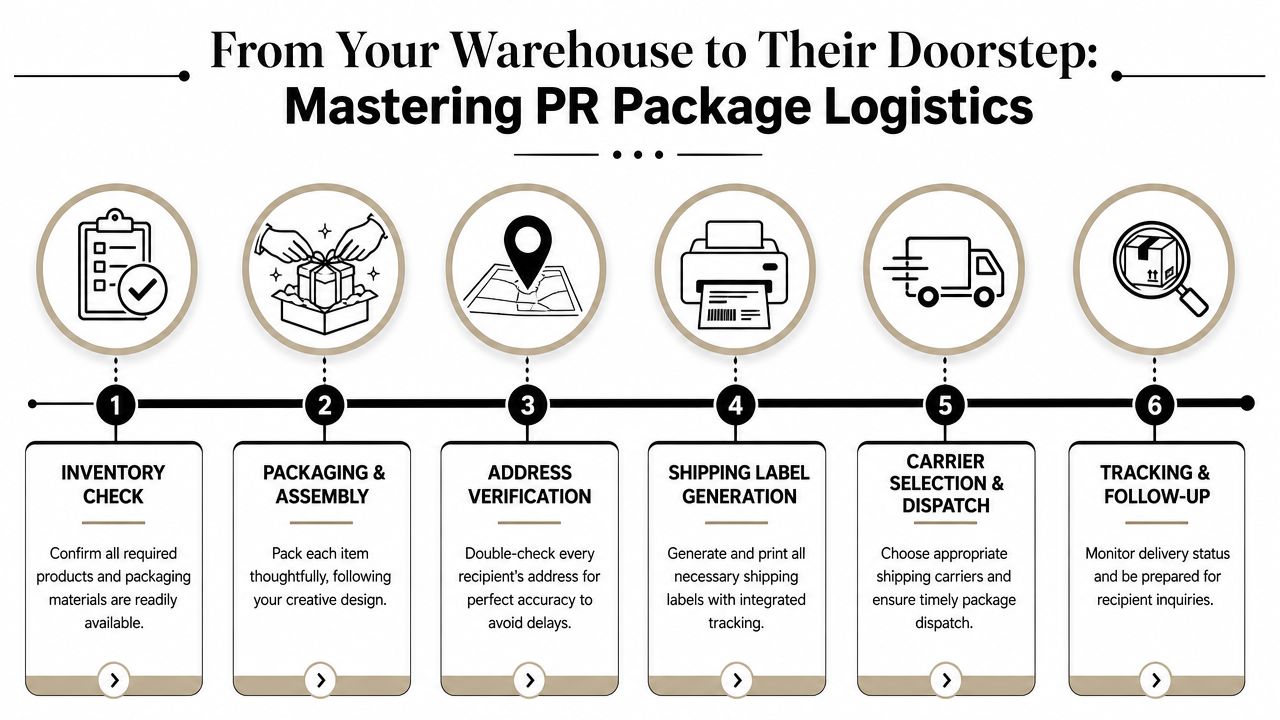
The shipping checklist that prevents avoidable mistakes
Before dispatch, the team should confirm the operational basics:
- Recipient details: Full name, current address, business name if needed, and any delivery notes.
- Package integrity: Inner protection, leak control for liquids, and presentation that still looks good after transit.
- Tracking setup: Every package should have a tracking number tied to the recipient record.
- Ship date choice: Use working days so packages arrive when someone can receive them.
A simple spreadsheet can handle this for small campaigns. Larger sends may need kitting support, fulfillment partners, or a 3PL that can manage assembly and shipping at scale. The key is that campaign data and shipping data stay connected. If the social team sees a mention, they should be able to trace it back to the exact send.
When to follow up after delivery
Follow-up shouldn't happen the minute the carrier marks a package delivered. Recipients need time to open, test, schedule, or decide whether the item fits their editorial or content plan.
A practical timeline is:
- Delivery confirmation: Check that the package landed.
- Internal note: Log the delivery date and any carrier issue.
- Observation window: Watch for stories, posts, mentions, or replies.
- Polite follow-up: Reach out if needed, without pushing for coverage.
A good follow-up asks whether the package arrived safely and whether the recipient needs anything else. A bad follow-up asks where the post is.
That distinction matters. PR packages are relationship tools first. If every send turns into pressure, future replies get harder.
Answering the Big Questions Your PR Package FAQ
The tactical side of PR packages gets plenty of attention. The harder questions usually don't. That's where teams get into trouble, especially when campaigns start blending gifting, partnerships, performance expectations, and creator compensation.
Are PR packages taxable for creators
They can be. A major gap in PR package guidance is the tax and accounting side. The IRS position highlighted in tax guidance is that compensation can be taxable even when it's non-cash, and income must be reported at fair market value, as discussed in this overview of creator tax treatment for free products.
That means a creator shouldn't assume a “free” product is automatically outside bookkeeping just because no cash changed hands. If a product is sent in connection with promotion, endorsement, or business activity, it can become a compliance issue. The exact treatment depends on facts and jurisdiction, so creators should keep records and get advice specific to their situation.
How should brands handle documentation
Brands should document PR sends with the same discipline they use for any other campaign asset. At minimum, that means keeping a record of what was sent, when it was sent, to whom, and what the item's fair market value was at the time of shipment.
A clean record helps with finance, internal reporting, campaign evaluation, and creator questions later. It also helps separate three situations that often get blurred together:
| Scenario | What the brand should document |
|---|---|
| Pure PR gifting with no guarantee | Item list, value, date, recipient, outreach consent |
| Product sent while discussing paid work | Same records plus negotiation notes |
| Paid collaboration with product included | Item records plus contract terms, usage rights, and disclosure expectations |
Many small teams often become casual. They ship from office stock, forget to log the package, and later can't reconstruct what happened. That's manageable once. It becomes a reporting problem when campaigns scale.
What should a creator do to start receiving PR packages
Creators searching for how to get PR packages usually focus on being noticed. A stronger approach is to become easy to evaluate.
A creator improves their chances when they provide:
- Clear contact information: Email should be easy to find and intended for brand communication.
- A usable media kit: Audience demographics, engagement metrics, past collaborations, and content examples help brands assess fit.
- Category consistency: A creator who regularly posts in one lane is easier to pitch than someone whose content changes direction every week.
- Posting quality: Brands look for clear storytelling, not just audience size.
Creators also benefit from pitching themselves selectively. Instead of waiting for random outreach, they can contact brands whose products already fit their audience and explain that fit in plain terms. Short, direct outreach works better than inflated promises.
Brands don't need a creator to be famous. They need the creator to be relevant, reliable, and easy to brief.
What if a brand wants deliverables from a PR send
This is becoming more common. Some brands no longer treat product seeding as pure awareness. They want clearer outcomes, usage rights, tracking, or a path to paid collaboration.
When that happens, the creator should separate the conversation into two parts. First, is this a no-obligation product send for consideration? Second, is the brand asking for deliverables? If deliverables, deadlines, reposting rights, whitelisting, or usage permissions are on the table, the arrangement needs to be treated more like a formal partnership than a casual PR send.
That distinction protects both sides. The brand gets clarity. The creator avoids doing contracted work under the label of gifting.
A practical way to respond is:
- Clarify expectations: Ask whether posting is optional or required.
- Ask about rights: Determine whether the brand wants to reuse content.
- Separate product from payment: If deliverables are required, discuss compensation plainly.
- Keep records: Save emails, shipping notes, and agreed terms.
How do teams judge whether a PR package campaign worked
A useful evaluation starts by matching the result to the original intent. If the campaign was for editorial visibility, the team should review coverage quality, relevance, and downstream traffic or inquiry patterns. If the campaign targeted creators, the team should review who posted, what kind of content appeared, whether the audience fit held up, and whether the campaign created new relationship opportunities.
Not every useful result shows up immediately in a report. Some sends create future partnerships, warmer replies, or better-fit creator lists. Those outcomes matter, but they only become visible if the team keeps notes.
The strongest review questions are often the simplest:
- Did the right people say yes to receiving the package
- Did the package arrive cleanly and on time
- Did the outreach message match the recipient
- Did the resulting coverage or content reflect the intended story
- Would the team send this exact package again
If the answer to the last question is no, the campaign still did its job if the team knows why.
Press Release Zen offers practical resources for teams building PR systems, not just one-off sends. Its guides and templates cover press materials, outreach strategy, and campaign preparation in a way that's useful for in-house marketers, founders, and communications teams that need a clearer process.