From Announcement to Acclaim: The Modern PR Campaign Playbook
A team has a launch date locked, an executive change approaching, or a reputation issue spreading faster than approvals can move. The hard part usually isn't getting busy. It's turning scattered activity into a coherent story that media will cover and audiences will remember.
That's where a useful pr campaign sample earns its keep. Not as inspiration alone, but as a working model that shows message hierarchy, timing, deliverables, and proof of impact. Modern PR teams are also expected to measure more than clipping volume. Industry guidance points to earned coverage, reach or impressions, sentiment, website referrals, conversions, share of voice, and message pull-through as the metrics that show whether a campaign changed awareness or behavior, not just whether it generated mentions (modern PR measurement guidance).
This guide moves quickly into seven recognizable playbooks. Each one can be adapted for a product launch, crisis response, nonprofit partnership push, values campaign, advocacy strategy, data announcement, or local opening. The point isn't to copy Apple or Patagonia line for line. The point is to borrow the structure that made their stories work, then rebuild it for a different brand, budget, and risk level.
Teams that want adjacent demand-generation ideas can also explore viral marketing techniques.
Table of Contents
- 1. Apple's iPhone Launch Press Campaign 2007
- 2. Domino's Pizza Pizza Turnaround Crisis Recovery Campaign 2009
- 3. Nonprofit No Kid Hungry Strategic Partnership Model 2010s
- 4. Airbnb We Accept Belonging Campaign 2015-2016
- 5. Patagonia Environmental Activism Press Strategy Ongoing
- 6. Netflix Subscriber Announcement and Data-Driven Press Strategy 2010s-2020s
- 7. Small Business Local Press Campaign Model Coffee Shop Opening Press Kit Strategy
- 7 PR Campaigns Compared
- Key Takeaways Building Your Own Winning Campaign
1. Apple's iPhone Launch Press Campaign 2007
The room is full, the press already expects a major announcement, and the company still has one job left. Give reporters a story they can file fast and audiences can repeat the same day. Apple did that in 2007 with unusual discipline.
The iPhone launch worked because the communications plan treated the event as one coordinated press system. The keynote carried the main narrative. The supporting materials removed friction for journalists. The product story itself was framed around a category shift, not a technical spec sheet.
The playbook behind the spectacle
A launch campaign built on this model usually has three parts.
First, selective pre-briefing under embargo. This helps a smaller group of reporters understand the product well enough to explain it clearly once the news goes live. Second, a central announcement moment such as a keynote, live demo, or staged reveal. Third, a fast asset release that includes the press announcement, executive quotes, product visuals, background notes, and spokesperson availability.
That sequence matters.
Specialist media often need technical detail and product context before they can write with confidence. Business reporters need a market angle. Broader news outlets need a consumer or culture frame. Sending every outlet the same pitch and the same asset set usually weakens coverage because each newsroom is solving a different editorial problem.
Practical rule: If a reporter cannot explain the launch in one sentence after reading your materials, the message is still too loose.
Apple also understood message compression. The campaign did not ask the press to memorize a long feature list. It gave them a simple editorial frame: this product changes what people should expect from a phone. That is the part many launch teams miss. Features support the story. They do not replace it.
What to borrow for a modern launch
A small company can use the same structure without Apple-sized resources, but there are trade-offs. Tight control creates stronger message consistency, yet it can frustrate outlets that want earlier access or more candid product testing. A broad media blast creates reach, yet it often lowers story quality. Choose based on the product, the audience, and how much scrutiny the launch can handle on day one.
For software, hardware, and consumer products, the repeatable tactics look like this:
- Build the media list in tiers: separate beat reporters, business press, reviewers, creators, and local media before outreach starts.
- Write one clear headline angle: define the market shift your launch represents, then make every asset support that claim.
- Prepare usable visuals early: screenshots, product photos, executive headshots, demo clips, and caption-ready images help editors publish faster.
- Train one lead spokesperson thoroughly: one sharp, well-briefed voice usually produces cleaner coverage than several loosely prepared executives.
- Create a day-of response plan: assign one person to handle incoming press questions, one to distribute assets, and one to track pickups and gaps.
Reporting should be planned before launch day, not improvised after the coverage comes in. A usable PR campaign sample includes the scoreboard: placements, publication dates, audience reach, sentiment, inbound media requests, press release performance, and the quality of message pull-through. Teams that need a simple reporting format can adapt ideas from Prowly's PR report template examples. That discipline turns a one-time launch into a process your team can repeat and improve.
2. Domino's Pizza Pizza Turnaround Crisis Recovery Campaign 2009
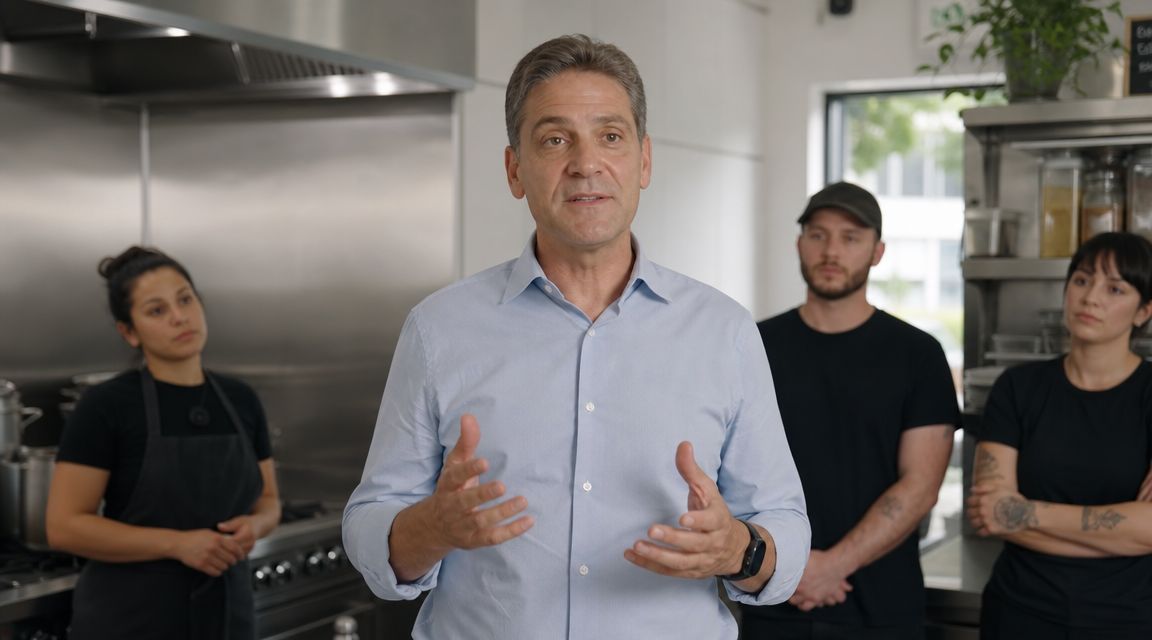
Domino's is a classic case of crisis PR done in public, not hidden behind legal phrasing. The company faced reputational damage, and the recovery effort worked because leadership acknowledged the problem directly, then kept communicating after the first wave of attention passed.
Many brands stop at the apology. That rarely repairs trust. Audiences want to see who took responsibility, what changed, and whether the company is willing to show uncomfortable details instead of polishing them away.
Why the response worked
Domino's leaned into visible accountability. CEO-led communication gave the response a face. Documentary-style content made operational change easier to believe. Publicly addressing negative feedback signaled that the company wasn't trying to outrun the issue.
The fastest way to lose a crisis narrative is to sound more concerned about image than harm.
At this stage, many crisis plans break. The messaging says "we take this seriously," but the evidence stays private. That gap invites skepticism. A better pr campaign sample for crisis work includes before-and-after messaging, internal action steps, external proof points, and a follow-up cadence.
What a usable crisis sample includes
A practical structure looks like this:
- Opening acknowledgment: State what happened without evasive wording.
- Leadership statement: Put the most accountable credible voice forward, not the safest one.
- Operational proof: Show retraining, policy updates, inspections, process revisions, or outside review.
- Public update rhythm: Continue issuing progress updates after the first statement.
The strongest case-study formats also follow a simple arc: baseline problem, campaign objective, execution, and post-campaign result (case study structure for PR results). For crisis campaigns, that sequence keeps teams honest. It forces them to document what was broken before they describe the fix.
A useful sample line for this kind of campaign is straightforward: “The company has reviewed the incident, suspended normal messaging, and is implementing revised operating procedures effective immediately.” It isn't flashy. That's the point. Crisis language should reduce doubt, not sound market-tested.
3. Nonprofit No Kid Hungry Strategic Partnership Model 2010s
No Kid Hungry demonstrates how nonprofit PR becomes stronger when the organization doesn't try to carry the story alone. Partnerships create new spokespeople, new channels, and new reasons for the media to care. One organization may have the mission, but a brand partner, local leader, or public figure can widen the audience dramatically.
That kind of campaign works best when every partner adds something distinct. One partner may contribute credibility, another reach, another funding, and another local activation. When all of them repeat the same generic lines, the partnership looks decorative rather than strategic.
Partnerships as the story engine
The best nonprofit partnership campaigns are built around message alignment and role clarity. Reporters should be able to see why the relationship exists beyond logo placement. If the cause, audience, and partner contribution fit together naturally, the coverage angle writes itself.
Data quality matters here too. Digital PR guidance highlights first-party data, survey findings, and public-domain data as especially useful evidence sources, with social metrics serving as supporting signals rather than the whole story (data sources for digital PR credibility). For nonprofit communications, that means campaign claims should specify whether they come from internal program data, commissioned research, or public records.
Field note: Partnership campaigns break down when one partner speaks emotionally and another speaks institutionally. Shared language should be approved early.
Sample copy structure for nonprofit outreach
A practical nonprofit pr campaign sample can use this message frame:
- Problem statement: “Families in this community are facing a barrier that requires coordinated support.”
- Partnership announcement: “The organization is joining with [partner] to expand awareness and mobilize local action.”
- Why this partner fits: “The collaboration combines community trust, operational support, and public visibility.”
- Call to action: “Residents can participate by donating, volunteering, attending, or sharing the campaign.”
This model is especially useful for school meal awareness, seasonal giving campaigns, healthcare access, and local advocacy pushes. It also creates multiple media hooks over time. The launch announcement, a local event, a partner expansion, and an impact update can each generate separate outreach moments.
The trade-off is coordination load. Partnership PR can produce broader coverage, but approvals multiply fast. Teams need one owner for shared messaging, one owner for media response, and a single source of truth for facts and assets.
4. Airbnb We Accept Belonging Campaign 2015-2016
Values campaigns attract attention quickly and scrutiny even faster. Airbnb's “We Accept” effort is a useful example because it wasn't framed only as a brand statement. It connected storytelling with policy changes, partnerships, and founder messaging.
That combination matters. Values-based campaigns often fail when the communications team moves before the operations team does. Audiences can tolerate an imperfect company trying to improve. They rarely tolerate a polished moral statement with no visible action behind it.

Values messaging only works when operations move first
Airbnb's approach used real people and belonging-centered narratives rather than abstract corporate language. That made the campaign feel more human, but it also raised the standard for consistency. Once a brand claims a social value publicly, every product choice, policy decision, and spokesperson comment gets measured against it.
A lot of teams underestimate the risk. They launch the creative, then discover that customer support scripts, moderation standards, or partnership criteria don't match the message.
If the campaign says inclusion but the process still creates exclusion, reporters will find the gap.
How to build this kind of pr campaign sample
A practical framework for this type of campaign includes:
- Policy change first: Document what changed internally before outreach begins.
- Story selection with care: Use real hosts, customers, members, or employees whose experiences support the message without feeling staged.
- Credible external partners: Civil rights groups, advocacy organizations, or trusted community institutions increase legitimacy.
- Long-tail reporting: Publish updates over time, not just one announcement.
This is also where the need for a pr campaign sample is frequently underserved. Many articles explain brand purpose and audience targeting, but they stop short of offering fillable samples for situations like crisis, launch, executive transition, or advocacy. That execution gap matters because teams still rely on templates and structured artifacts to move quickly and reduce mistakes (why teams need situation-specific PR templates).
For values-driven work, a good sample includes not only the press release, but also a spokesperson brief, anticipated criticism responses, internal talking points, and a milestone calendar for follow-up announcements.
5. Patagonia Environmental Activism Press Strategy Ongoing
Patagonia's PR model is hard to copy because it asks for organizational alignment, not just strong copy. The company has made business decisions, legal actions, and environmental commitments part of the public story. That turns operations into media hooks.
This is why Patagonia gets treated as more than a mission-branded retailer. The strategy doesn't rely on occasional cause campaigns. It makes activism part of the ongoing news rhythm.
The strategy is the proof
A weak advocacy campaign starts with a slogan and tries to reverse-engineer evidence. Patagonia's style does the opposite. It creates legitimate news through choices that carry business consequences, then communicates those choices clearly.
That approach works because the message and the mechanism are linked. If a company supports an environmental issue, the audience can usually ask three questions right away: What changed internally? What is the company willing to risk? What will it keep doing when the headline moves on?
Operator's rule: Advocacy is more credible when the announcement creates obligations for the brand itself, not just expectations for the public.
What most brands get wrong
Brands often borrow Patagonia's tone without borrowing its discipline. They publish values statements, but don't equip PR teams with specifics. That makes outreach soft. Journalists don't need a brand to “care.” They need a decision, action, filing, pledge, report, or event that creates a reason to cover the story.
A usable pr campaign sample for advocacy should include:
- One concrete act: Policy stance, legal move, funding commitment, operational change, or public submission.
- Leadership availability: Founder or executive interviews often matter more here than in product PR.
- Documentation assets: Fact sheet, timeline, backgrounder, and language that explains the issue in plain English.
- Consistency across channels: Website copy, social posts, press materials, and customer responses should all say the same thing.
The main trade-off is audience polarization. Mission-led PR can deepen loyalty while also drawing criticism. That isn't always a failure. It becomes a failure when the company retreats from the stance the moment pushback starts.
6. Netflix Subscriber Announcement and Data-Driven Press Strategy 2010s-2020s
A quarterly report lands, subscriber growth beats expectations, and within hours the story reaches financial press, entertainment trades, and mainstream business outlets. That result is rarely about the number alone. It comes from packaging one metric into several clear narratives, then giving each audience a reason to care.
Netflix helped turn operating data into a repeatable PR asset. Subscriber counts, viewing trends, and title performance became media hooks because the company framed them as signals about consumer behavior, competitive position, and strategy. That gave reporters something firmer than brand language, and it gave executives a disciplined way to support the story with evidence.
Why numbers become news hooks
Data works in PR when it answers a real editorial question. Is the category growing? Are customer habits shifting? Did a launch change demand? A metric earns coverage when it supports one of those angles and can survive basic scrutiny.
The practical lesson is straightforward. Publish fewer numbers, explain them better.
A good data-led announcement usually does three jobs at once. It states the metric plainly, sets context so the number is meaningful, and connects the figure to a business decision or market change. Without that context, even a strong result reads like internal reporting pasted into a release.
How to present data credibly
Teams building a data-driven pr campaign sample should keep the evidence section tight and defensible:
- Name the metric clearly: Say "paid subscribers," "trial-to-paid conversion," or "average watch time." Avoid soft labels like "strong momentum."
- State where it came from: First-party platform data, commissioned research, analyst commentary, and public filings do not carry the same credibility.
- Match the angle to the outlet: Investor and business reporters usually want strategic implications. Trade and consumer reporters often care more about audience habits, title trends, or product adoption.
- Address the weakness early: If a metric has limits, define them before an interviewer or skeptical reporter does.
- Give one headline number priority: A crowded dashboard creates confusion and invites cherry-picking.
Many teams lose the story when they collect ten decent numbers, then bury the strongest one under supporting charts, side claims, and inflated adjectives. Reporters usually need one clean lead, one supporting proof point, and a spokesperson who can explain why the change matters now.
A playbook you can reuse
The Netflix pattern is adaptable because the structure is simple:
- Choose one metric with external relevance. Internal efficiency numbers rarely travel unless they affect customers, revenue, or the market.
- Attach a narrative frame. Growth, behavior shift, recovery, expansion, or category change.
- Prepare segmented pitches. The same data point can become a business story, trade story, or consumer trend story.
- Build a short proof package. One chart, a definitions note, a spokesperson quote, and a Q&A on methodology.
- Pressure-test the claim. Ask what a skeptical editor would challenge in the first 30 seconds.
For example, a SaaS company can announce product usage growth, but the stronger pitch often focuses on what that usage says about customer workflow changes. A nonprofit can report rising participation, but the better version explains what drove the increase and what it signals about community need. The number opens the door. The interpretation gets coverage.
The trade-off is exposure. Once a company trains the press to expect data, weak quarters and messy comparisons become part of the story too. That does not make the approach risky by default. It means PR, finance, and leadership need shared definitions, clear approval rules, and discipline about what gets released.
7. Small Business Local Press Campaign Model Coffee Shop Opening Press Kit Strategy
Most small business owners don't need a grand national campaign. They need a local story with enough specificity that a city editor, neighborhood publication, business journal, or morning show can cover it quickly. A coffee shop opening is a strong example because it can be pitched through community impact, founder story, design concept, jobs, or neighborhood culture.
The mistake is sending one generic announcement to every outlet in town. Local journalists usually need a sharper angle than “new business opens.” They want to know why this opening matters to their readers.

The local angle beats the generic announcement
A workable local press kit is short. It should include the founder story, opening date, location, high-quality photos, a short company background, and one or two reasons the business belongs in that community. For a coffee shop, that might be a neighborhood revitalization angle, a local supplier story, or a founder returning to open a business where they grew up.
The strongest local campaigns also create more than one coverage moment. A soft opening can target lifestyle outlets. A ribbon cutting can target community calendars and chambers. A fundraising tie-in or artist collaboration can create a second wave of local attention.
A simple local launch sample
A small business pr campaign sample might include language like this:
“Artisan Coffee Co. will open this month in the downtown district, bringing a neighborhood café concept built around local sourcing, community events, and all-day gathering space.”
That sentence works because it gives media a place, timing, and angle. From there, outreach should be customized by beat.
- Community reporters: Emphasize local roots, opening events, and neighborhood relevance.
- Business editors: Focus on investment, concept, hiring, and economic contribution.
- Lifestyle writers: Lead with menu, design, customer experience, and founder personality.
- Calendar managers: Send the event listing separately and keep it concise.
Email still drives much of this work, so clean outreach execution matters. Teams handling local media pushes alongside customer newsletters or event invitations should also understand How to Improve email deliverability, because even a strong press note fails if it doesn't land in the inbox.
The best part of this model is that it scales. A bookstore, salon, clinic, bakery, or nonprofit program launch can use the same framework with minor changes to messaging and visuals.
7 PR Campaigns Compared
Use this comparison as a selection tool, not just a summary. The right PR campaign sample depends on what you need to accomplish, what proof you can show, and how much coordination your team can realistically handle.
| Campaign | Implementation Complexity | Resource Requirements | Expected Outcomes | Ideal Use Cases | Key Advantages |
|---|---|---|---|---|---|
| Apple's iPhone Launch Press Campaign (2007) | Very high, global coordination and strict message control | Very high, executive talent, specialist PR teams, production support | Massive earned media, strong brand positioning, pre-orders | Major product launches, premium tech announcements | Iconic storytelling, controlled narrative, sustained attention |
| Domino's "Pizza Turnaround" Crisis Recovery (2009) | High, PR paired with operational change | High, leadership visibility, video production, operational fixes | Repaired reputation over time, renewed trust, business recovery | Crisis response after reputational damage | Clear accountability, visible change, strong media interest |
| Nonprofit "No Kid Hungry" Partnership Model (2010s) | High, multi-stakeholder coordination | Variable to high, partner contributions plus campaign management | Expanded reach, increased donations, measurable impact | Large advocacy efforts and fundraising campaigns | Partner amplification, added credibility, broader distribution |
| Airbnb "We Accept" Belonging Campaign (2015-16) | High, policy updates plus broad rollout | High, partnerships, content production, leadership engagement | Narrative shift toward inclusion, earned media, policy scrutiny | Values-based reputation repair and inclusion initiatives | Third-party validation, diverse storytelling, policy-backed claims |
| Patagonia Environmental Activism Press Strategy (Ongoing) | Very high, long-term mission integration | Ongoing high, policy, legal, reporting, advocacy resources | Sustained earned coverage, loyal audience, brand differentiation | Mission-driven brands building long-term positioning | Authenticity, recurring news hooks from business decisions |
| Netflix Data-Driven Press Strategy (2010s-2020s) | Medium, timing and analytics coordination | Medium-high, verified data, IR and comms teams | Repeated news hooks, investor and media credibility, content validation | Companies with measurable performance metrics | Quantifiable credibility, cross-media appeal, strategic timing |
| Small Business Local Press Kit Model (Coffee Shop) | Low to medium, straightforward outreach and event planning | Low, in-house effort, basic media assets | Local coverage, community engagement, search visibility | Local openings, small business launches | Low cost, repeatable process, strong local relevance |
A practical read of this table helps teams avoid copying the wrong playbook. Apple worked because secrecy, product novelty, and executive stagecraft matched the launch. Domino's worked because the company had to show the fix, not just describe it. Patagonia can sustain activism because its business model and public stance reinforce each other.
The useful question is simpler: what kind of proof can your team produce right now?
If you have a major launch and tight message discipline, the Apple model fits. If trust is damaged, use the Domino's approach and put operational evidence at the center. If your strength is partnerships, the No Kid Hungry structure gives you a way to spread message ownership without losing campaign focus. If you have credible policy action or measurable performance data, the Airbnb, Patagonia, and Netflix models show how to turn that substance into press interest.
Small teams should pay close attention to the coffee shop model. It asks less from budget and more from clarity. A concise angle, local relevance, usable assets, and disciplined follow-up will often outperform a bigger but less focused media push.
Key Takeaways Building Your Own Winning Campaign
The most effective PR campaigns aren't accidents. They come from clear choices about audience, message, timing, proof, and follow-through. Apple showed how controlled access and a sharp narrative can make a launch feel inevitable. Domino's showed that crisis communications work better when leadership acknowledges the problem and keeps showing the fix. No Kid Hungry showed how partnerships can multiply reach when roles are clear. Airbnb and Patagonia demonstrated that message credibility depends on operational alignment. Netflix proved that data can become a story when it is contextualized. The local coffee shop model showed that small businesses don't need scale to earn attention. They need relevance.
A strong pr campaign sample should be usable, not decorative. That means it should include the actual parts a team needs to execute: headline message, press release structure, target outlet list, spokesperson guidance, timing sequence, asset list, and reporting plan. It should also show what evidence the campaign used and where that evidence came from. Without that layer, a sample reads like inspiration but doesn't function like a template.
Measurement matters because modern PR is expected to show business value, not only publicity value. Coverage count still has a role, but it isn't enough on its own. Teams should connect visibility to sentiment, website behavior, inquiries, signups, donations, applications, or whatever action matters most for that campaign. When the sample includes both exposure metrics and downstream outcomes, it becomes useful for benchmarking and internal buy-in.
The practical lesson across all seven playbooks is simple. Pick one dominant story. Match it to an action people can verify. Build assets that reduce friction for journalists. Keep messages consistent across channels. Then report results in a way that helps the next campaign get smarter.
For teams that want ready-to-use materials rather than abstract advice, Press Release Zen is one relevant option. The site publishes templates, examples, and scenario-based guides for press releases and related communications, which can help turn a pr campaign sample into working drafts and outreach assets.
Press teams, founders, and nonprofit communicators who want practical templates can visit Press Release Zen for press release examples, scenario-based guides, and execution resources that support launches, crisis responses, executive changes, and local outreach.