You refresh your inbox. Nothing from brands. You post consistently, your audience responds, your business has a clear point of view, and still the partnerships you expected haven't shown up.
That gap frustrates creators, consultants, nonprofits, agencies, and founders for the same reason. They assume good work gets discovered. Sometimes it does. Usually, it doesn't.
Brand PR works better when you treat it like business development. That means identifying the right partners, showing evidence that you're a fit, making a direct ask, and managing the relationship like a pro once someone says yes. If you're searching for how to get pr from brands, the answer isn't “be more visible and hope.” It's building a collaboration case that brands can say yes to with minimal friction.
From Passive Hope to Proactive Partnerships
A familiar pattern plays out every week. A creator keeps posting and tagging brands. A consultant comments on company updates. A nonprofit shares campaign wins and waits for a sponsor to notice. An agency publishes smart work and assumes the right partner will reach out.
Sometimes that happens. Usually, the inbox stays quiet.
Getting PR from brands starts with a shift in posture. Treat the process like partnership development. Brands respond faster when the outreach reads like a business opportunity with a clear audience, a usable idea, and a defined outcome.
That mindset matters whether you're pitching gifted products, a co-branded resource, a joint event, a webinar, a research report, or a cause campaign. Consumer creators are only one part of the picture. B2B companies, nonprofits, local businesses, and agencies can all secure brand PR when they show how the collaboration serves both sides.
The strongest outreach changes the question from "Will they pick me?" to "Can I make this partnership easy to approve?" That is how you move from applicant to partner.
If you're still shaping your outbound process, ReachLabs has a useful primer on how to get brand deals that complements this more PR-focused playbook.
Brands don't need another vague “I'd love to collaborate” email. They need a reason to believe working with you will help them reach the right people.
The practical difference shows up in the offer. A B2B SaaS company can pitch a joint webinar for a shared buyer segment. A nonprofit can propose a cause-marketing campaign with local press angles and community turnout. An agency can offer a co-authored trend report that gives the brand distribution, credibility, and leads. A retailer can bundle an in-store event with creator coverage and follow-up media outreach.
Before outreach starts, fix the first-move strategy. This guide on critical things to consider before your first PR moves covers the positioning gaps that cause brand conversations to stall before they begin.
Laying the Groundwork for Brand Collaboration
Strong outreach starts long before the email. You need proof. Think of this like preparing a case before entering court. If your argument depends on hope, you're weak. If it rests on evidence, you're credible.
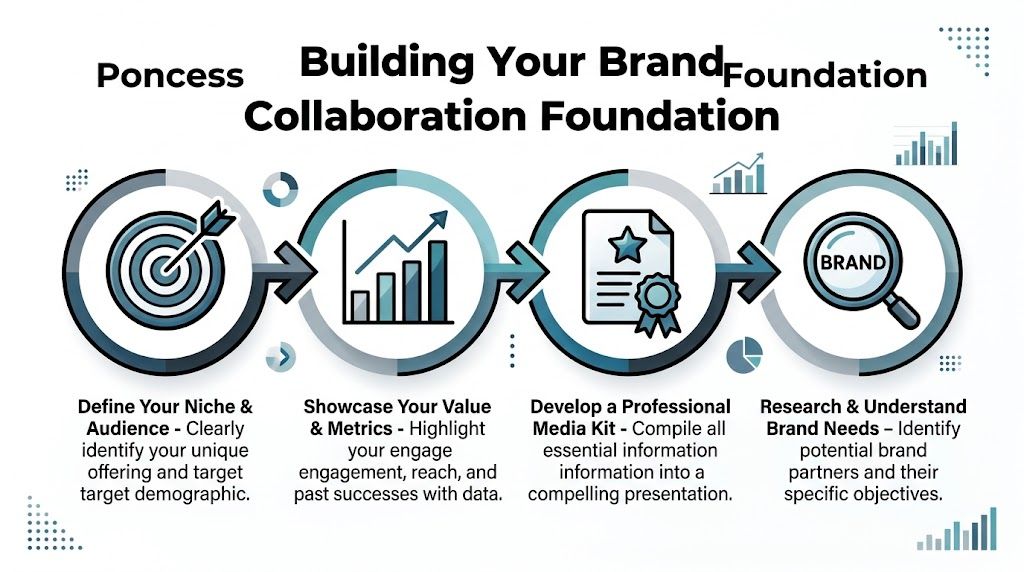
Audit what a brand sees first
A PR manager, partnerships lead, or social coordinator usually checks your public surface area before replying. They don't start by asking whether you're talented. They ask whether you're clear.
Look at your last several posts, your website homepage, your LinkedIn profile, your Instagram bio, your TikTok feed, or your newsroom page. Do they all point to the same market position? If one says “beauty creator,” another says “startup advisor,” and your content jumps between recipes, software demos, and travel clips, you create work for the buyer.
A better setup includes:
- A defined niche: Spell out who you serve and what kind of products, ideas, or causes you naturally cover.
- A visible audience signal: Mention geography, role, industry, interests, or buying stage when relevant.
- Recent proof of fit: Your newest content should support the story you're trying to sell.
- A simple contact path: Email in bio, contact page, or media inquiry line. Don't hide it.
For business accounts, the same logic applies. If you're a nonprofit pitching mission-aligned brands, your recent updates should show community outcomes, event visibility, and partner-friendly storytelling. If you're an agency, your channels should make your specialty obvious.
Build organic evidence before outreach
Cold outreach lands better when it isn't fully cold. One of the easiest ways to warm the ground is to feature brands you already use or support.
That doesn't mean forced tagging. It means relevant mentions, reviews, use cases, or behind-the-scenes content that makes sense for your audience. Creators who consistently feature products can see up to 40% higher response rates from PR teams, and tagged content receives 2.5x more impressions on average, according to eReleases on how to get on PR lists.
Organic tagging does two jobs at once: it shows authentic affinity, and it creates a visible trail that a PR or social team can verify in seconds.
Practical rule: Don't tag brands as a tactic unless the content stands on its own for your audience. Empty tagging looks needy. Useful tagging looks like market alignment.
If you're creator-led, this can look like a Reel showing how you use a product. If you're a B2B company, it can be a thoughtful post about a partner tool in your workflow. If you're a nonprofit, it can be sponsor recognition woven into event coverage or field reporting.
Create a media kit people can skim
Most media kits fail because they read like self-celebration. A useful media kit answers commercial questions fast.
Include the basics in a clean document or page:
| What to include | Why it matters |
|---|---|
| Audience profile | Helps the brand judge fit quickly |
| Reach and engagement snapshot | Shows whether attention is active, not passive |
| Content examples | Lets them picture the collaboration |
| Past brand or partner work | Reduces perceived risk |
| Collaboration formats | Makes next steps easier |
| Contact details | Removes friction |
For creators, audience demographics, reach, impressions, and collaboration results matter most. For businesses and agencies, swap in newsletter audience, website traffic context, webinar attendance patterns, media mentions, or case-study quality. Keep it readable. No bloated PDF with ten pages of decorative fluff.
If you need help sharpening the narrative side, this guide on writing a compelling brand story with examples and templates is useful because a media kit only works when the positioning inside it is coherent.
For social-first creators, Sup Growth's overview of how to get sponsorship for Instagram is also worth reading for platform-specific prep.
Crafting Your Irresistible Pitch
You send a pitch on Tuesday morning. By Friday, nothing. The problem usually is not timing. It is that the email reads like a request for free stuff instead of a partnership idea with a clear business case.
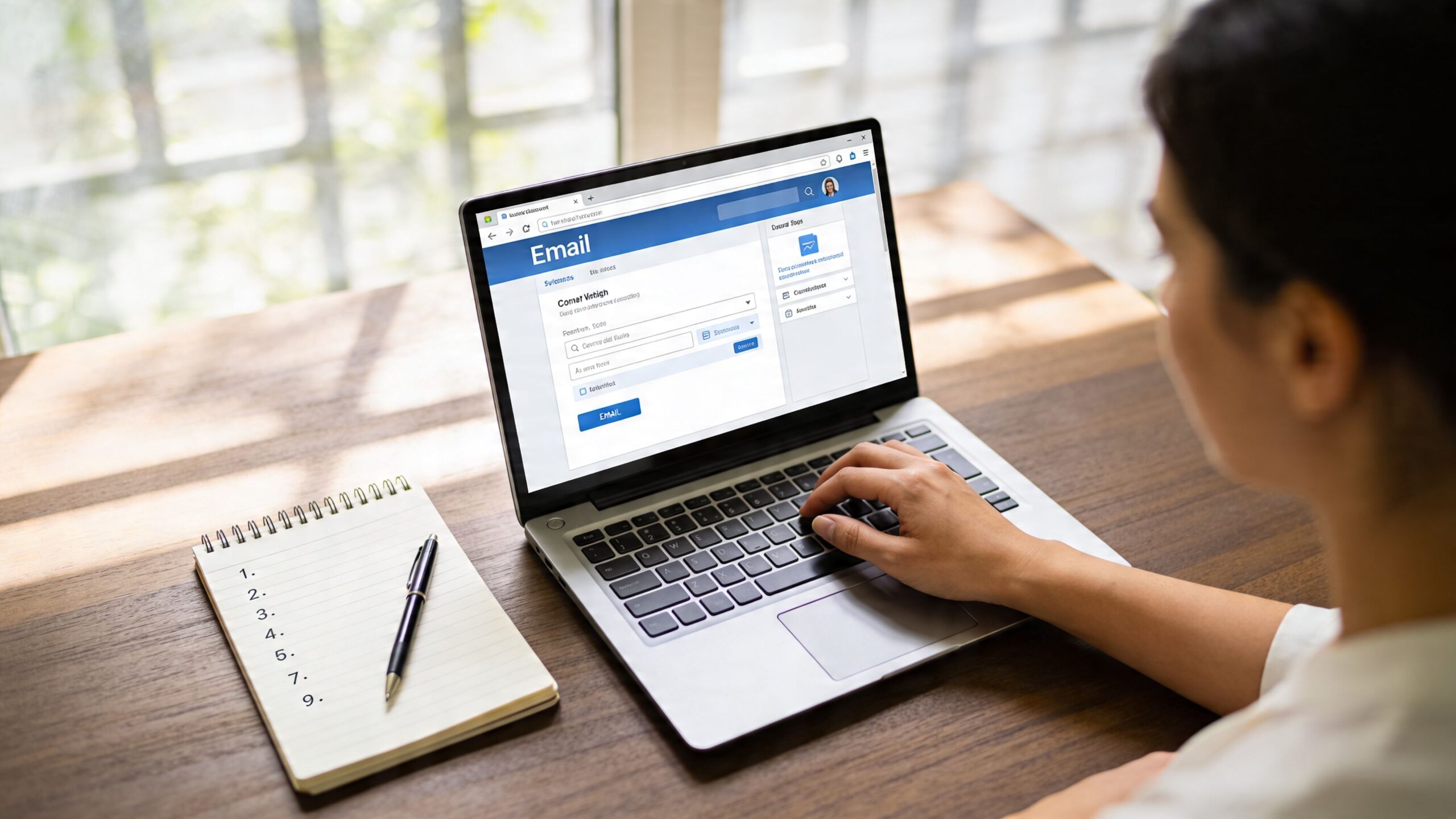
A strong pitch makes the recipient's job easier. It gives them enough context to judge fit, enough proof to take you seriously, and one clear next step. That standard applies whether you are a creator asking for product, a SaaS company proposing a joint webinar, an agency offering co-branded research, or a nonprofit pitching a mission-aligned campaign.
Pick brands with a visible reason to say yes
Start with signals, not wishful thinking.
Look for brands that already feature outside voices, run partner campaigns, guest experts, affiliate programs, customer stories, creator spotlights, or community events. A beauty brand may show this through UGC and ambassador posts. A B2B software company may show it through webinars, integration partners, or joint reports. A nonprofit may show it through sponsors, coalition work, or cause campaigns with corporate partners.
Build a short target list and record four things for each brand:
- What they are promoting now: launch, event, seasonal push, hiring push, advocacy campaign
- Who likely owns the conversation: PR lead, partnerships manager, influencer lead, content marketing manager
- Why your audience or network fits: buyer overlap, shared mission, adjacent use case, geographic relevance
- What you want to propose: product review, webinar, guest article, newsletter feature, co-branded guide, event activation
That last point matters. Brands reply faster when they can picture the asset, the audience, and the outcome.
Use email like a professional operator
DMs can warm up a contact. Email is where serious collaboration gets evaluated, forwarded, and approved.
Your email body should carry the case on its own. Do not force someone to open three attachments just to understand who you are and what you want. Give them the summary first, then link or attach supporting material if they ask for it.
If you are unsure what belongs in the initial pitch versus your supporting collateral, this guide to press kit vs media kit differences and best practices will help you separate the short sales argument from the background material.
Write the pitch for the person who has to sell it internally
A brand contact often is not the final decision-maker. Your message may be forwarded to a director, product marketer, PR lead, or legal reviewer. Write something that survives that handoff.
The email needs to do five jobs fast:
- Show why you are relevant to this brand.
- Prove you know what they are working on.
- Establish audience, market, or mission fit.
- Suggest one specific collaboration.
- Make the reply easy.
Skip vague praise. Skip broad asks like "I'd love to collaborate." Give them a concrete angle they can assess.
Subject: Collaboration idea for [Brand] and [your niche or company]
Hi [Name],
I'm [Your Name], and I work with [audience or customer type] through [content, company, nonprofit, or agency model].
I noticed [specific launch, campaign, initiative, or content series]. There is a strong fit for a partnership around [specific format], especially because [one sentence on audience overlap, buyer relevance, or mission alignment].
We reach [brief audience description], and our recent work on [topic] has produced strong engagement and qualified interest. I can share a short media kit, examples, and past collaboration results if useful.
If you're open to it, I'll send a few specific ideas for [Brand] and a simple outline of how the partnership could work.
Best,
[Name]
[Email]
[Website or portfolio link]
This structure works because it respects the reader's time. It also shifts your position. You are no longer asking to be chosen. You are proposing a credible way to help them hit a goal.
Personalize the idea, not just the greeting
Real personalization shows that your proposal belongs to this brand and this moment.
Good versions sound like this:
- Campaign-aware: “Your back-to-school push fits the content our student audience already responds to.”
- Channel-aware: “Your team has been publishing customer education clips, so a practical demo series would fit better than a polished brand ad.”
- B2B-aware: “Your new integration partner page suggests you are building partner-led demand, which makes a joint webinar or co-authored guide a better fit than a one-off mention.”
- Mission-aware: “Your community investment focus lines up with the employer volunteers and local sponsors we already organize each quarter.”
Weak personalization usually says nothing useful:
- “I love your brand.”
- “We would be a perfect fit.”
- “Let's work together.”
- “I can create great content.”
Those lines create work for the recipient. A strong pitch removes work.
Avoid the mistakes that kill reply rates
Bad outreach usually fails for predictable reasons:
- The ask is generic. There is no angle, no business reason, and no sign you chose this brand on purpose.
- The proof is thin. You mention follower count or traffic, but not the audience quality, buyer relevance, or past results.
- The package is messy. Long PDFs, huge attachments, or a body email with no useful summary.
- The scope is bloated. You ask for product, payment, affiliate terms, event sponsorship, and a referral in the first note.
- The pitch is creator-only when the opportunity is broader. A software company may care more about pipeline, registrations, and authority than a social post. A nonprofit partner may care more about community turnout and sponsor visibility than impressions.
Keep the first message short enough to read on a phone and strong enough to forward without explanation. That is how a pitch moves from inbox clutter to an internal conversation.
Structuring and Negotiating the Partnership
A positive reply isn't the finish line. It's where sloppiness starts costing people deals. If the collaboration structure is fuzzy, timelines drift, content gets revised into oblivion, and both sides leave disappointed.

The first job after a yes is deciding what kind of partnership this is. Many people think only in terms of gifted product or a one-off post. That leaves better options on the table.
Choose the right format for the goal
Different collaboration formats solve different problems. A skincare brand may want authentic social proof. A B2B platform may want borrowed authority. A nonprofit may want a mission-aligned visibility boost.
Here's a simple idea to keep in mind:
| Partnership type | Best for | What to clarify early |
|---|---|---|
| Product feature or review | Social proof and UGC | Deliverables, review boundaries, content rights |
| Joint webinar | Lead generation and authority | Topic, host roles, registration owner, follow-up |
| Guest article or op-ed | Thought leadership | Editorial control, publication home, promotion plan |
| Newsletter swap or feature | Audience access | Copy length, send date, list relevance |
| Podcast guest spot | Trust and education | Theme, talking points, clips, repurposing |
| Cause campaign | Community goodwill and PR | Donation framing, messaging approval, reporting |
A creator may reasonably trade content for product when the brand fit is excellent and usage rights are limited. A business should usually push toward something with audience or authority value, such as a webinar, research piece, or community event. A nonprofit should look hard at sponsor visibility, volunteer tie-ins, and media-ready cause narratives.
Negotiate the details people forget
Most avoid negotiation because they think it sounds combative. Good negotiation is just clarification done early.
Focus on these points:
- Deliverables: What exactly gets made or published?
- Timeline: Draft date, review window, live date, reporting date.
- Approval process: Who signs off, and how many revision rounds are allowed?
- Usage rights: Can the brand repost, whitelist, quote, edit, or use paid amplification?
- Exclusivity: Are you blocked from mentioning competitors for a period?
- Measurement: What counts as success for both sides?
If the collaboration is gifted rather than paid, be even more careful. “Gifted” often gets treated as casual. It shouldn't. Casual arrangements create the most misunderstandings because neither side forces specifics onto paper.
If it matters enough to pitch, it matters enough to document.
For teams that need a practical overview of partnership expectations and communication style, this short video gives a useful frame before finalizing terms:
Think beyond the first deliverable
The best brand collaborations are modular. One webinar can become social clips, a guest article, a newsletter mention, and a press angle. One creator review can become UGC, a quote for a landing page, and a later ambassador discussion.
When you're negotiating, suggest the extended value chain without overloading the initial scope. For example:
- Start with a pilot webinar, then discuss clip licensing later.
- Begin with one review, then offer a quarterly test series if performance is strong.
- Launch a sponsor-backed nonprofit event, then package post-event coverage into a joint impact story.
That moves you from vendor thinking to partner thinking. Brands remember the people who help them see more value in the same effort.
From Collaboration to Lasting Relationships
A lot of people work hard to get the yes and then coast through the campaign. That's backward. The main advantage appears after the collaboration goes live.
Execution is what turns “nice project” into “let's do this again.” Brands don't keep lists of who had the warmest outreach. They keep lists of who was easy to work with, delivered on time, and made internal reporting easier.
Over-deliver in ways that matter
Over-delivering doesn't mean giving away a pile of extra work. It means making the partnership smoother than expected.
That usually looks like this:
- Clean communication: Confirm timeline, deliverables, and approvals in one thread.
- Organized assets: Send files, links, captions, usage notes, and post dates clearly.
- Audience awareness: Tailor the content for your existing audience, not the one you wish you had.
- Professional handling: Raise issues early if something shifts.
The small touches matter. Send a live link when content posts. Flag strong audience comments. Share context around what angle resonated. Those details help your contact justify you internally.
Report performance like a partner
A surprising number of collaborators never send a proper recap. They assume the brand can pull its own numbers or that a thank-you is enough. It isn't.
Following up on Day 3 and Day 7 can lift conversion by 30%, and top creators who want repeat PR often use a tracker for 50+ target brands while sharing performance reports that show ROI, including examples such as a 15% traffic lift for a similar brand, according to White Rabbit Social's guide to approaching brands. The same source ties sustained process discipline to a 70% repeat PR rate for top creators.
For creators, that report can include reach, saves, comments, clicks, story taps, and audience sentiment. For B2B companies or nonprofits, include registration quality, attendee questions, email click response, partner quote usage, and follow-on interest.
A simple report works best:
| Report section | What to include |
|---|---|
| Campaign summary | What ran, when, and in what format |
| Core metrics | Reach, engagement, clicks, traffic, replies, registrations |
| Audience response | Comment themes, DMs, qualitative feedback |
| Asset links | Live posts, recordings, screenshots, recap files |
| Recommendation | A specific next collaboration idea |
Send the recap while the campaign still feels current. Late reporting weakens the momentum you just created.
Use a follow-up rhythm, not random check-ins
Most second deals are lost through silence, not rejection. People finish a campaign, say thanks, and disappear for months.
Use a simple rhythm:
- Short post-launch note: Confirm the content is live and easy to access.
- Performance recap: Share results once enough data has settled.
- Idea-based follow-up: Suggest one next collaboration based on what worked.
- Periodic light-touch updates: Share a relevant win, audience insight, or seasonal idea later.
A spreadsheet or lightweight CRM earns its keep. Track who replied, what was delivered, what performed, and when to re-engage. The point isn't to automate your relationships. It's to avoid relying on memory.
Brands rebook people who reduce workload, generate useful results, and keep showing up with relevant ideas.
Advanced Plays for Businesses and Nonprofits
Most advice about how to get pr from brands stops at creators trying to land gifted product. That's too narrow. Companies, agencies, associations, and nonprofits can win brand PR by offering co-marketing value, expertise, and audience access.
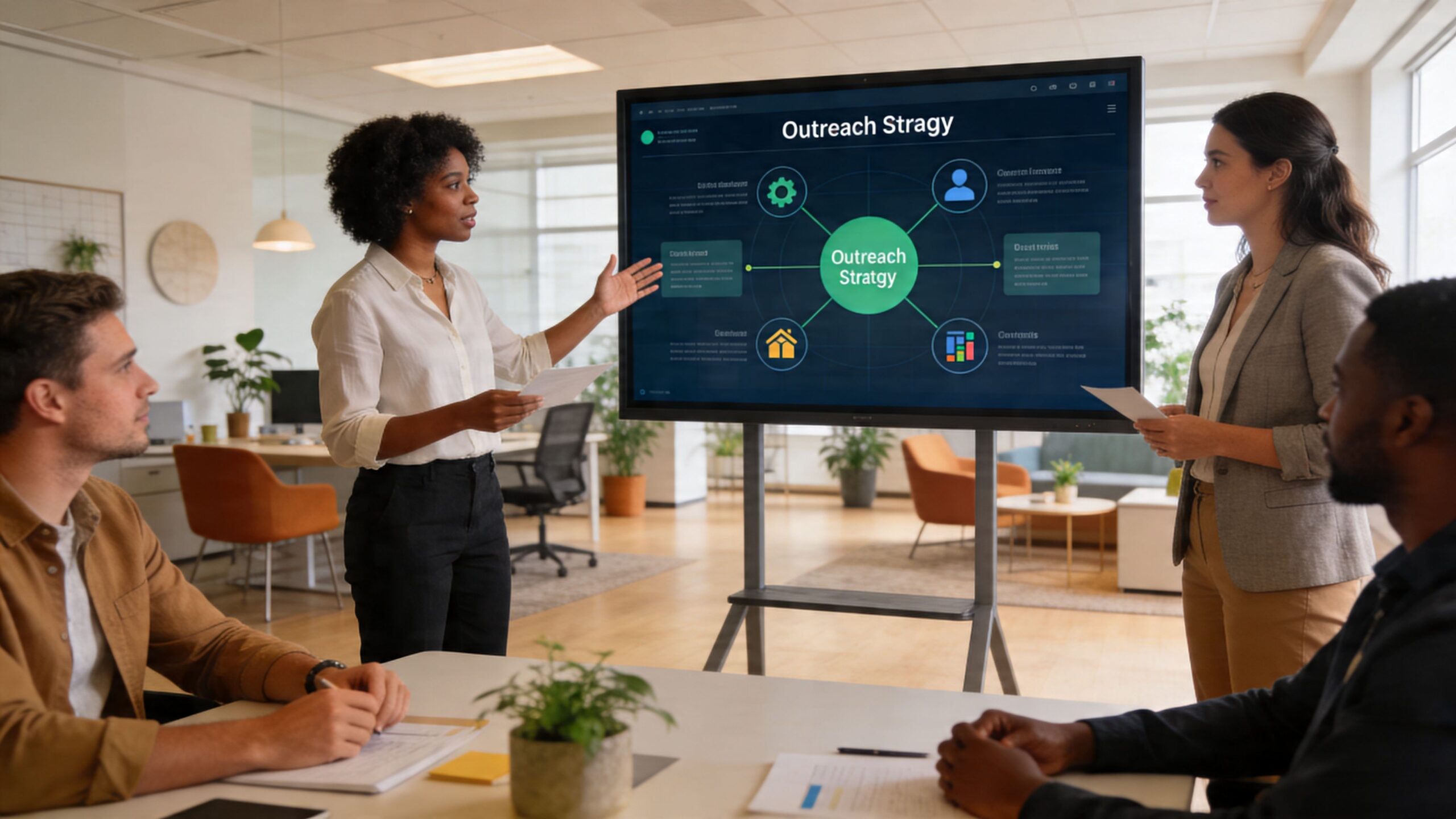
Stop pitching for stuff and start pitching a strategic angle
If you're a business, a weak ask sounds like this: “Would you be open to partnering with us?” A strong ask sounds like this: “We see an opening for a joint report, customer education event, or expert-led media angle tied to your current campaign.”
That approach works because brand teams often need more than exposure. They need fresh content, credible voices, proof points, and stories that media or customers will care about.
Experiential PR rose 30% post-pandemic, podcast appearances can yield 5x ROI, and 65% of SMBs underutilize cause-related marketing even though it can drive 4x engagement when tied to a PR campaign, according to Notably PR's discussion of successful pitch angles. The same source highlights using HARO and #journorequest to become a brand's go-to expert.
That changes the game for organizations that don't fit the influencer mold.
What this looks like in practice
A B2B company can approach a complementary software brand with a joint benchmark report. Each partner contributes perspective, both promote it, and the result becomes sales collateral, thought leadership, and media bait.
A nonprofit can pitch a cause-marketing activation that gives the brand a credible community story rather than a shallow donation mention. The strongest versions tie the brand to a visible event, local participation, or a useful public resource.
An agency can offer a brand's marketing or PR team an expert source. That may mean:
- A podcast guest: Founder, strategist, or client voice with a clear contrarian point of view
- A trend memo: Co-authored commentary around a market shift the brand already discusses
- A customer education session: Webinar, LinkedIn Live, or workshop
- A practical toolkit: Downloadable guide with both brands attached
- A newsroom-ready angle: Data or insight a journalist could plausibly use
Use contrarian framing carefully
Contrarian doesn't mean provocative for its own sake. It means presenting a sharper angle than the standard industry line.
Examples:
- Everyone is talking about awareness. But adoption is the issue.
- Brands keep funding campaigns. They should be funding customer education.
- Most nonprofit sponsorships look ceremonial. The better play is operational visibility and community participation.
- Companies treat partnership content like promotion. Buyers respond better when it solves a live problem.
The best co-marketing pitches don't ask a brand to do you a favor. They show the brand how to tell a better story with you involved.
Reverse the expert-source pipeline
Most organizations use media request tools to chase journalists. There's another move. Use those same environments to become visible to brand PR teams looking for credible outside voices.
When your leaders regularly answer industry questions, comment on market shifts, or publish useful viewpoints, brands start seeing you as a source, not just another company asking for attention. That can lead to invitations for panel discussions, podcast appearances, quotes in branded content, event sponsorships, and co-authored campaigns.
The key is positioning. Be specific about the lane you own. General expertise is forgettable. Specific expertise travels.
For example:
| Organization type | Better positioning |
|---|---|
| Agency | “B2B product launch PR for regulated industries” |
| Nonprofit | “Community workforce outcomes in underserved neighborhoods” |
| SaaS brand | “Operational analytics for multi-location service businesses” |
| Consultancy | “Employer communication during organizational change” |
Brands want partners who help them sound smarter, more useful, and more credible. That's where businesses and nonprofits have an advantage over pure creators. They often hold deeper subject-matter authority.
Frequently Asked Questions About Brand PR
Do I need a huge audience to get PR from brands
No. A huge audience can help, but it isn't the only lever. Brands often care more about fit, clarity, and evidence that your audience pays attention.
That matters for creators, niche publishers, consultants, local businesses, and nonprofit teams. A smaller but focused audience can be easier for a brand to justify if your content, market, or mission lines up cleanly with what they need. Relevance beats randomness.
If you're under the usual visibility threshold, your job is to remove uncertainty. Show clear positioning, recent proof of alignment, and one specific partnership idea.
Should I pitch by DM or email
Use DM as a warm introduction if needed. Use email for the actual pitch.
Email is easier to forward, easier to evaluate with attachments or links, and easier for internal teams to track. A quick DM can work if you're pointing someone to a more complete email, but most serious collaborations move faster once they leave the social inbox.
A useful DM is short. Mention that you've sent a custom note and why the idea fits. Then stop. Don't run the whole pitch in direct messages.
What should I send in a media kit
Only send what helps the buyer make a decision. That usually means audience overview, content examples, collaboration options, and proof that you've done relevant work before.
If you're a business or nonprofit, your version may look different from a creator's. That's fine. Replace influencer-style metrics with the indicators that matter in your world, such as newsletter relevance, webinar participation quality, event attendance patterns, or past partner outcomes described qualitatively.
Keep it skim-friendly. Dense decks slow people down.
What if a brand says yes but stays vague
Bring structure to the conversation quickly. Brands aren't always vague because they're careless. Sometimes they just haven't decided what shape the collaboration should take.
Reply with a short summary that covers:
- the proposed format
- who creates what
- timeline
- approval steps
- usage rights
- how success will be evaluated
That keeps the process moving without sounding rigid.
Is it okay to work for product only
Sometimes. It depends on the brand fit, the value of the exchange, and what rights the brand wants.
If the collaboration gives you strategic value, such as strong portfolio use, category credibility, or a path to a larger relationship, a gifted arrangement can make sense. If the brand wants broad content usage, multiple deliverables, exclusivity, or extensive revisions, product alone is often too thin.
Treat gifted deals like real deals. Document expectations, deadlines, and permissions.
How many times should I follow up
Follow up enough to show professionalism, not desperation. If the initial fit is strong, a thoughtful reminder can be useful because inboxes are crowded and internal discussions take time.
The best follow-ups add value. Mention a fresh campaign idea, a relevant seasonal hook, or a useful content angle. Don't just ask whether they saw your last email.
If a brand stays silent after multiple quality touchpoints, move on gracefully and revisit later only if you have a genuinely better reason to reach back out.
Can B2B companies and nonprofits really get brand PR too
Yes. They just need a different offer.
You're not usually asking for a PR box. You're proposing co-marketing, expert commentary, audience education, event partnership, or cause alignment. Brands often need credible outside voices and partnership stories that feel more substantial than standard promotion.
That gives B2B firms, agencies, and nonprofits a real advantage if they package their expertise well.
Do I need to disclose gifted products or partnerships
Yes. Follow the relevant disclosure rules for your platform, market, and agreement type. If you're receiving product, access, payment, sponsorship support, or some other material benefit, transparency matters.
This protects your audience and reduces headaches for the brand. It also signals that you operate professionally.
Are PR packages or gifted products taxable
They can be, and too many creators overlook that.
A major blind spot for smaller creators is the legal and tax side of gifted products. Creator forum data shows 40% of creators underestimate that PR packages may be treated by the IRS as taxable income at fair market value, according to this discussion of PR package tax implications for creators.
The practical move is simple. Keep records. Track what you received, when you received it, and the stated or fair market value. If you're unsure how the rules apply to your situation, speak with a qualified tax professional in your jurisdiction. The goal isn't to get scared off partnerships. It's to avoid messy surprises later.
What if I don't have past brand collaborations yet
Then use adjacent proof.
That can include audience response to product mentions, strong organic content tied to a category, testimonials, event turnout, webinar engagement, case-study quality, or examples of partner-friendly content you've already published. Early-stage outreach works when you make the future feel believable.
Start with brands where the fit is obvious. Your first few wins often come from the closest alignment, not the biggest logo.
How do I know if a brand is worth pursuing
Ask three questions:
- Does the brand fit my audience or mission naturally?
- Can I picture a collaboration that helps both sides?
- Would I still want this relationship if it doesn't become a paid deal immediately?
If the answer is no across the board, skip it. Chasing mismatched brands wastes time and muddies your positioning.
What's the biggest mistake people make
They pitch themselves as applicants.
Applicants ask to be chosen. Partners show up with evidence, ideas, and a clean path to execution. That difference affects your profile, your email, your negotiation, and your follow-up. It also changes how the brand talks about you internally.
Press Release Zen helps teams turn loose PR ideas into structured, publishable campaigns with practical guides, templates, and execution advice. If you're building outreach, announcements, or co-marketing plans and want a more disciplined PR process, explore Press Release Zen.