A lot of creators start in the same place. The content is improving, the audience is responding, and brand mailers on social media make PR packages look like something that just appears once a creator becomes “big enough.”
That's not how it usually works.
Getting PR packages from brands is less about asking for free products and more about presenting a brand with a low-risk media partnership. A PR manager doesn't need another vague message saying, “Can you send me something?” They need a creator who looks reliable, understands audience fit, and can turn a product into content that supports the brand's goals.
That shift in mindset changes everything. It affects how a profile looks, how a pitch reads, which brands make the shortlist, and how a creator behaves after a package arrives.
Table of Contents
- Build Your Foundation Before You Pitch
- Create a Professional Media Kit and Pitch Template
- Identify and Qualify the Right Brands
- Master the Art of the Pitch and Follow-Up
- From 'Yes' to Success Handling Logistics and Terms
- Delivering Value and Building Long-Term Relationships
- Answering Your Top PR Package Questions
Build Your Foundation Before You Pitch
A brand manager clicks through to your profile after seeing your name in their inbox. In less than a minute, they decide whether you look like a creator worth sending product to, or a risk that will waste budget, inventory, and team time.
That is the fundamental starting point.
Creators who want PR packages often frame the process as getting noticed by brands. Brands frame it differently. They are screening for a partner who can represent the product well, communicate clearly, and fit the audience they want to reach. If your profile does not make that case on its own, the pitch has very little room to recover.
Treat your profile like a brand-facing asset
Before outreach, clean up the public signals a brand will check first. Your bio should explain your niche in plain language. Your recent posts should show a clear pattern. Your visuals should feel consistent enough that a brand can picture its product in your content without having to guess.
For early-stage creators, this matters more than scale. Smaller brands often approve gifting and seeding partnerships quickly, which means they rely heavily on what they can verify at a glance. A focused profile with credible engagement can outperform a larger account that looks scattered.
A helpful standard is simple. A stranger should be able to tell what you cover, who you speak to, and how to contact you within a few seconds. If you want a stronger grasp of how brands evaluate visibility and credibility across different channels, this explanation of what counts as a media outlet gives useful context for how PR teams think.
A practical self-audit usually includes these checks:
- Bio clarity: State the niche, audience, and contact method without vague creator language.
- Recent content fit: Make sure your latest posts reflect the category of products you want to receive.
- Visual consistency: Your grid, thumbnails, or feed should look recognizable from post to post.
- Professional signals: Use a business email, organized highlights, and examples of product-focused content.
For creators whose presentation still feels uneven, AiHeadshots' professional image guide is a useful reference for improving first impressions and positioning your profile more professionally.
Practical rule: If a brand contact cannot understand your niche quickly, your outreach is likely to stall before they read the full pitch.
Prioritize audience quality over vanity metrics
Follower count can help you get onto a shortlist. It rarely closes the deal on its own.
Brands sending PR packages want evidence that the audience pays attention and fits the product category. That shows up in comment quality, topic consistency, posting reliability, and the overall tone of your content. A creator with a smaller but well-defined audience is often easier to place in a gifting program than a larger account with mixed signals.
Keep the foundation simple:
- Choose a clear lane. Broad lifestyle content can work if there is still a visible center, such as clean beauty, budget home finds, or beginner fitness.
- Post on a schedule you can maintain. Reliability matters because brands are judging whether you will follow through after delivery.
- Keep the profile brand-safe. Broken links, incomplete bios, and sloppy captions create doubt.
- Publish sample product content. Unpaid reviews, tutorials, or unboxings show how you handle items in a real-world format.
This work is not glamorous. It is the part that turns a creator from someone asking for free product into someone who looks ready for a professional media partnership.
Create a Professional Media Kit and Pitch Template
A PR contact opens your email between meetings. You have about ten seconds to answer three questions. Who are you, who do you reach, and why would sending product to you make business sense?
That is the job of your media kit and pitch template.
Creators who treat these as partnership tools get better responses than creators who send a casual note asking to be added to a list. Brands are not looking for another inbox request. They are screening for reliable collaborators who can represent the product well, communicate clearly, and produce content that fits the brand.
Many new creators confuse a press kit with a media kit. For a clear breakdown, this guide to press kit vs media kit differences and best practices explains what belongs in each one and why the distinction matters.
What a media kit needs
A media kit is a short sales document. It should help a brand decide whether to continue the conversation.
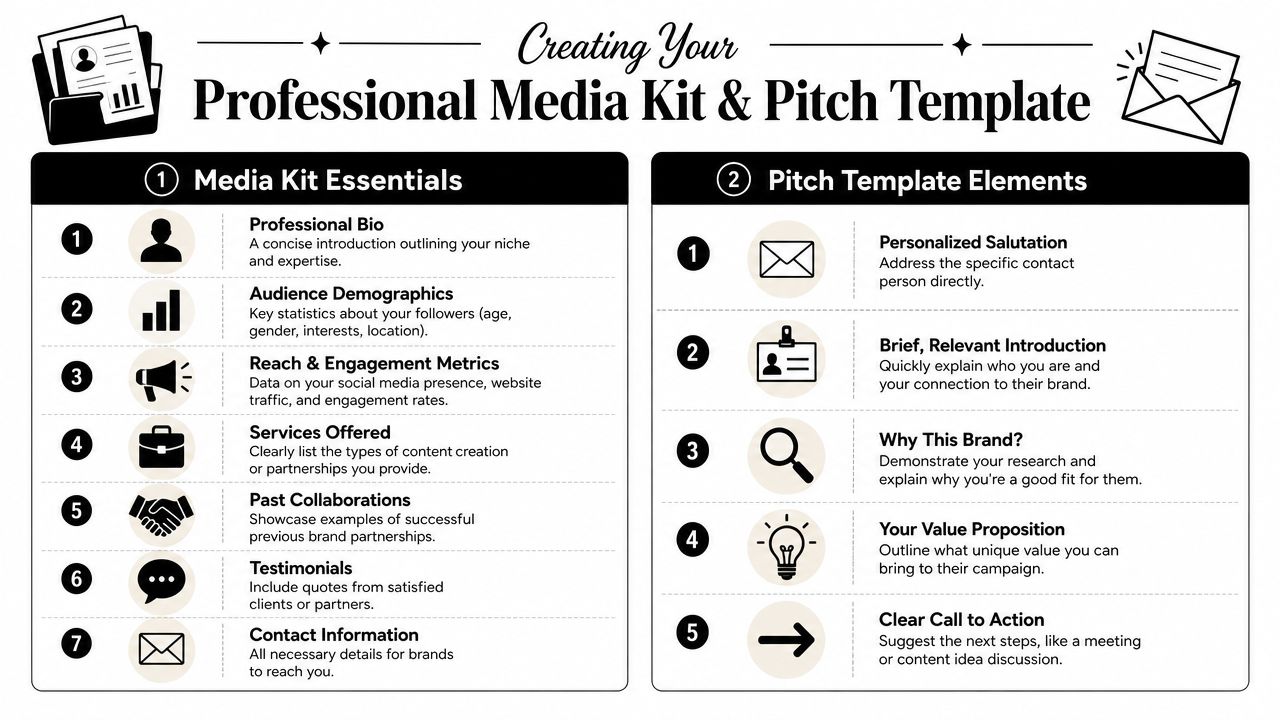
For newer creators, one page is usually enough. Two pages can work if the second page shows strong sample content or platform-specific data. The mistake is trying to prove everything at once. A cluttered kit reads like inexperience.
Include the information a PR or influencer manager checks:
- Professional bio: State your niche, content format, and the kind of audience you reach.
- Audience demographics: Share the location, age ranges, gender split, or other platform data that is relevant to brand fit.
- Engagement and reach: Include metrics such as average views, engagement rate, saves, shares, story views, email list size, or blog traffic if you have them.
- Content offerings: List the formats you can realistically deliver, such as unboxings, tutorials, short-form video, reviews, UGC-style assets, or product photography.
- Past brand work or sample posts: Paid work helps, but strong organic product content also counts.
- Contact details: Put your email in a visible spot and make it easy to copy.
Context matters as much as the numbers. A screenshot with a follower count tells a brand very little. A line that says “average Reel views over the last 30 days,” “story completion rate,” or “top audience countries” gives them something they can evaluate. Shopify's guidance on creating an influencer media kit also recommends presenting audience and performance data clearly so brands can judge fit fast.
Use plain language. If your audience is small but responsive, say that and support it with the right metric. I would rather see a creator show strong saves and thoughtful comments in a tight niche than pad a media kit with vague claims about influence.
If you want another creator-side perspective on approaching product gifting professionally, the HiveHQ free sample guide is a useful companion read.
What the pitch email should do
The pitch email opens the door. The media kit supports the case.
A good pitch makes the brand contact's job easier. It shows you know the brand, understand where your content fits, and can communicate like a professional partner instead of a fan asking for free product.
Keep the structure reusable, but customize the parts that affect relevance:
| Pitch element | What it should accomplish |
|---|---|
| Personalized opening | Show that you chose this brand intentionally |
| Relevant introduction | Explain your niche, platform, and audience in one or two lines |
| Brand-specific rationale | Mention a product line, launch, campaign angle, or audience match |
| Value proposition | State the type of content or exposure you can offer |
| Clear next step | Ask whether they are open to gifting, a media list addition, or a brief discussion |
Short wins here. PR teams do not need your full creator story. They need enough information to decide whether to reply, forward your email internally, or save your details for a future send.
The best pitch templates also leave room for category-specific proof. A beauty brand may care about shade match videos, ingredient literacy, and before-and-after content. A home brand may care more about styling, product placement, and clean photography. Build one base template, then keep a few versions suited to the kinds of brands you plan to approach.
Professionalism is the advantage. A clear kit and a sharp pitch shift the conversation from “Can you send me something?” to “Here is how a collaboration could work.”
Identify and Qualify the Right Brands
Most failed outreach starts with a weak list. The creator sends generic messages to aspirational brands, hears nothing back, then assumes the market is closed.
It usually isn't closed. The list is just poorly built.

Build three tiers of target brands
A useful target list has range. It shouldn't be made only of dream brands, and it shouldn't be filled with random companies that don't fit the creator's audience.
A simple tiered model works well:
- Tier one: Dream brands with strong niche alignment. These are longer-term targets.
- Tier two: Growing brands that already work with creators and may be open to fresh voices.
- Tier three: Smaller, local, or newer brands that can say yes faster and need content support.
Marketplaces can help a creator understand which brands are already active in the collaboration space. JoinBrands is one example creators use to observe campaign formats, product categories, and the kinds of deliverables brands request.
This kind of list-building also helps creators think like media professionals. A brand isn't just a logo. It has audience priorities, category positioning, visual style, and a communication habit. For creators who want a clearer sense of how brands think about exposure channels, this overview of what a media outlet is provides helpful context.
Qualify each brand before outreach
Before sending anything, each brand should pass a short relevance test.
Ask these questions:
- Would this product make sense in existing content?
- Does the brand's visual identity match the creator's platform style?
- Has the brand reposted creator content or worked with micro-creators before?
- Would the creator genuinely use the product enough to speak about it credibly?
Many creators go wrong by chasing brand prestige instead of fit. But fit creates better content, and better content makes the next pitch easier.
A small brand with a strong audience match can be more valuable than a famous brand that doesn't belong on the feed.
Another practical filter is responsiveness. If a brand regularly engages with tagged content, creator mentions, or community comments, outreach has a stronger chance of landing with the right person. Silence across every public touchpoint often signals that the team is overloaded or not prioritizing creator partnerships right now.
Master the Art of the Pitch and Follow-Up
A creator sends a polished media kit, waits a week, then hears nothing. In many cases, the problem is not the content quality. It is the way the pitch framed the relationship.
Brands do not want a vague request for free product. They want to know whether sending inventory could lead to useful exposure, credible content, and a low-maintenance working relationship. Strong outreach makes that answer easy.
Email is usually the right channel because it gives brand teams something they can forward, tag, and review internally. It also signals that the creator understands professional outreach. DMs can support the relationship later, but the pitch itself should read like the start of a media partnership.
Write for a busy brand contact
A good pitch is short, specific, and easy to act on. The reader should understand three things within a few seconds: who the creator is, why the fit makes sense, and what kind of collaboration is being proposed.
Use a structure like this:
- Subject line: Clear and specific. Mention the niche, product category, or PR angle.
- Opening sentence: Identify the creator and connect directly to the brand.
- Middle: Show audience fit, content style, and the kind of coverage the creator can produce.
- Close: Link the media kit and ask a simple question that makes reply easy.
For subject lines, clarity beats creativity. “UGC beauty creator interested in product seeding” works better than a clever line that hides the purpose of the email.
The body should do the same job. Skip flattery, long personal stories, and generic lines about loving the brand. Point to one real reason the partnership makes sense. That could be audience overlap, a content format the creator already does well, or a recent launch the creator can support.
Creators who want another example of how to frame outreach professionally can review HiveHQ free sample guide. For a cleaner breakdown of format and wording, this guide to the perfect PR pitch email is a useful reference.
Email Pitch Do's and Don'ts
| Do | Don't |
|---|---|
| Address a real person or team when possible | Send a message that reads like mass outreach |
| Keep the email brief and easy to scan | Write long personal backstories |
| Show brand fit with one specific observation | Praise the brand in generic terms |
| Attach or link the media kit clearly | Force the reader to search for information |
| Propose a simple next step | End with no clear ask |
| Track outreach and responses | Forget who was contacted and when |
Follow up with discipline
Silence after the first email is common. Brand teams miss messages, route inboxes through shared accounts, or hold requests until the next launch window. A follow-up is part of professional outreach, not an annoyance.
Wait about a week, then send a short reply in the same thread. Keep it to a few lines. Remind them of the original note, restate the fit, and give them an easy way to respond.
A smart follow-up sounds like this:
Checking in on the note below in case PR gifting or product seeding is open this month. Happy to resend my media kit or tailor content ideas around an upcoming launch.
That works because it removes friction. The contact does not need to reread a long pitch or guess what happens next.
Two follow-ups are usually enough. After that, mark the brand for later and move on. Repeated nudges, guilt-heavy language, or jumping into DMs after an unanswered email can make a creator look difficult before any relationship starts.
The standard is simple. Pitch like a professional. Follow up like a professional. Brands remember creators who are clear, relevant, and easy to work with.
From 'Yes' to Success Handling Logistics and Terms
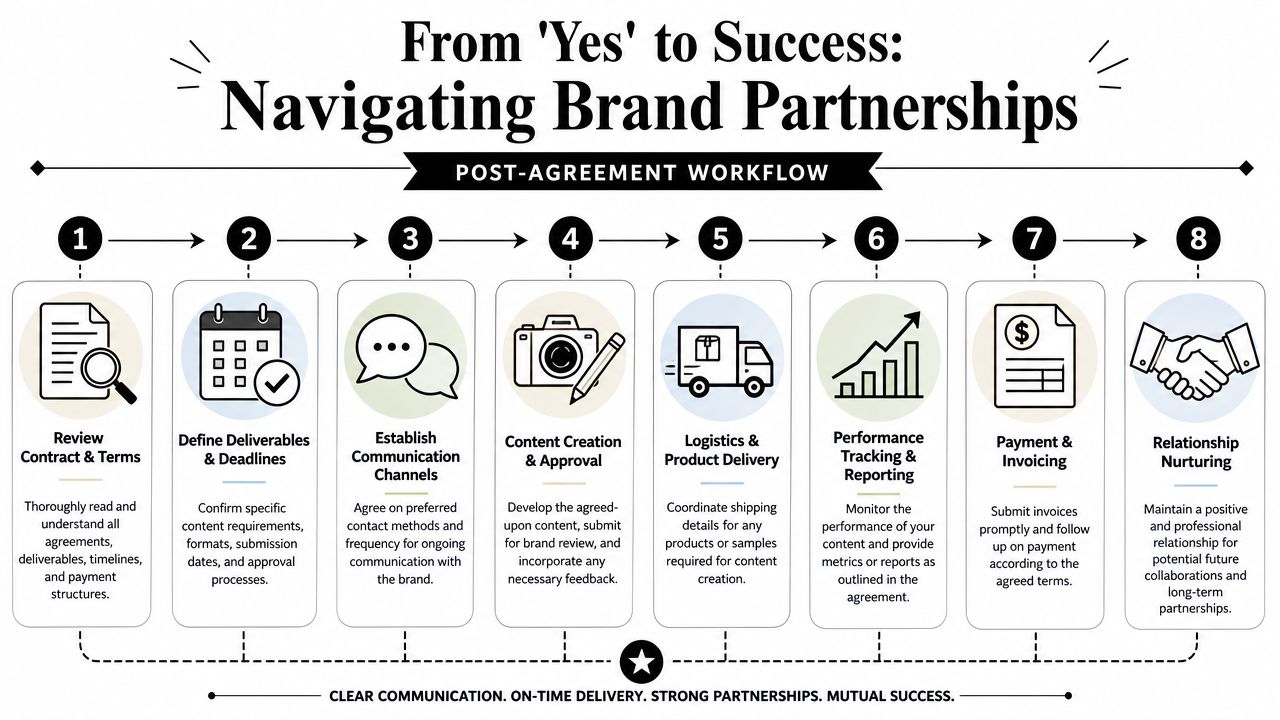
A yes is not the finish line. It's the point where expectations need to become explicit.
Many creator-brand problems happen after approval, not before it. The package gets sent, the creator assumes the ask is casual, the brand expects structured deliverables, and both sides end up disappointed.
Confirm the working terms in writing
Even a gifting arrangement needs written clarity. That doesn't always require a formal legal contract, but it does require agreement on what happens next.
Before giving a shipping address, the creator should confirm:
- What the brand is sending
- Whether the package is pure gifting or tied to expected content
- Which content formats are requested
- When content is expected to go live
- Whether approval is required before posting
- What tags, hashtags, links, or talking points matter
Ambiguity creates friction. A creator who assumes “gifted” means no obligation can damage a relationship if the brand expected a story set, a reel, or launch-day coverage.
Working standard: If a brand mentions timing, captions, exclusivity, review rights, or usage, those details should be confirmed in writing before content production starts.
Handle compliance and logistics professionally
Creators who want repeat opportunities need to treat logistics as part of the partnership.
That means sending shipping details in a clean format, confirming receipt when the package arrives, and flagging any issue early if an item is damaged or delayed. It also means respecting embargoes and launch dates without exception. A creator who posts too early can create real problems for a product rollout.
Disclosure matters too. If content is sponsored or there is a material connection, the creator should use clear disclosure such as #ad or #sponsored where required. A hidden or ambiguous disclosure creates risk for both sides.
A practical post-yes checklist looks like this:
- Save the contact details in one place.
- Store agreed deliverables in writing.
- Log all deadlines in a calendar.
- Prepare caption notes and tag requirements before filming.
- Confirm publication once content is live.
Professionalism here is what separates one-off gifting from the start of a dependable working relationship.
Delivering Value and Building Long-Term Relationships
The question isn't whether a creator can receive one PR package. It's whether the creator can become someone a brand wants to keep on the list.
That comes down to delivered value. Not posted value. Delivered value.
Create content the brand can actually use
A brand-ready post does more than display the product. It places the product in a context that makes sense for the audience.
That usually means content with one of these strengths:
- Demonstration: The audience sees how the product works.
- Use case: The product solves a relevant problem inside the creator's niche.
- Aesthetic fit: The content feels native to the creator's feed and still usable by the brand.
- Credible commentary: The creator's reaction sounds grounded, not scripted.
Creators often make a basic mistake here. They focus on gratitude instead of utility. “Thanks so much to this brand” may be polite, but it rarely makes content more persuasive. The brand benefits more when the creator shows the item in action, explains why it matters, and frames it through audience needs.
A good internal test is simple. If the brand reposted this content, would it look polished enough to support their image? If the answer is no, the relationship stays fragile.
The most useful PR content looks organic to the audience and organized to the brand.
Report outcomes like a professional partner
Once content goes live, the creator should close the loop.
That means sending a short results note with the post links, any relevant platform analytics, and brief observations about audience response. The report doesn't need to be bloated. It just needs to prove that the creator understands accountability.
A clean report can include:
| Reporting item | Why it matters |
|---|---|
| Live links or screenshots | Confirms the work was completed |
| Engagement summary | Shows how the audience interacted |
| Audience sentiment notes | Helps the brand understand response quality |
| Content highlights | Points out what angle seemed to resonate |
| Availability for future sends | Keeps the relationship active |
This is also the right moment to share what the creator learned. If tutorial content drove stronger conversation than a flat lay, note that. If a story sequence prompted more questions than a static post, mention it. Brands value creators who notice patterns.
One thoughtful wrap-up email can do more for future opportunities than the original pitch. It shows the creator can execute, communicate, and think beyond the transaction.
Answering Your Top PR Package Questions
| Question | Answer |
|---|---|
| Can a small creator still get PR packages? | Yes. Smaller creators can still qualify, especially with niche alignment, professional outreach, and strong engagement. |
| Should a creator ask for free products in the first email? | The better approach is to pitch a relevant collaboration opportunity and make product seeding one possible next step. |
| What if the creator doesn't like the product? | Don't force praise. Review the agreement, communicate early, and avoid publishing misleading content. |
| Are DMs enough? | Usually no. Email is the more professional route for most outreach. |
| How often should a creator follow up? | Follow up once in a professional timeframe, then move on if there's no response. |
Press teams, creators, and small brands that want better outreach systems can use Press Release Zen as a practical resource for media kits, PR pitch structure, and communication templates that support cleaner brand outreach.