A press conference is a scheduled media event where an organization makes an announcement and then answers questions from invited journalists. The format became a major political communication tool in the United States when Woodrow Wilson held the first presidential press conference on March 15, 1913, and it later adapted to television, livestreaming, and remote participation.
A founder may begin with a simple problem: a significant announcement is ready, the press release is drafted, and the communications team is unsure whether sending a document is enough. The answer depends on what the announcement requires. If the public needs context, the organization needs to demonstrate accountability, or reporters will have legitimate follow-up questions, a press conference may be appropriate. If the message is narrow and fully explained in writing, an event may create more work without adding value.
The defining feature is the question-and-answer exchange. A press conference gives a newsmaker a prepared platform, but it also creates a controlled setting for direct scrutiny.
Table of Contents
- When and Why Organizations Call One
- How a Press Conference Differs from Releases and Briefings
- Main Types You Can Run
- Roles and a Typical Agenda
- Planning Checklist, Sample Agenda, and Script
- Tips and Common Mistakes for Spokespeople
- Follow-Up, Coverage, and Measuring Success
When and Why Organizations Call One
A founder decides to face the press when a written statement no longer feels sufficient. The announcement might concern a major product launch, a leadership change, a public safety response, or a development complex enough to require explanation. The executive knows a press release can state the facts, but it can't answer the questions already forming in the newsroom.
That tension captures the central choice. A press release delivers a controlled message. A press conference delivers a controlled message and accepts controlled scrutiny. The organization chooses the second format when the value of direct answers outweighs the logistical and reputational risk of appearing before journalists.
The decision starts with stakes
A press conference often makes sense when:
- The announcement affects many people: Employees, customers, residents, investors, or policymakers may need context beyond a short written statement.
- The subject is complicated: Reporters may need clarification about timelines, responsibilities, technical details, or next steps.
- The organization must show accountability: A spokesperson who answers questions can demonstrate that the organization isn't hiding behind prepared language.
- The story has strong visual potential: A new facility, public demonstration, field location, or leadership team may give broadcasters and digital publishers useful material.
- Several journalists are likely to ask related questions: One shared event can establish a common factual record.
A crisis can also justify the format, but only when the spokesperson has verified information and the organization can tolerate unpredictable questions. Teams preparing for that situation may benefit from guidance on how to safeguard your brand during crises, especially before putting an executive in front of cameras.
The modern media environment complicates the decision. The Reuters Institute's 2026 outlook highlights continued pressure on newsrooms and the video-fication of news. A well-run event may produce footage and strong quotations, but attendance alone won't guarantee coverage.
Practical rule: If journalists need to ask questions to understand the news, consider a press conference. If they only need the verified announcement, start with a release.
A briefing may be better when the subject requires background but not a major public moment. A livestreamed announcement can work when speed and broad access matter more than journalist-led discussion. A written statement remains the cleanest tool when accuracy, timing, and message control are the main priorities.
How a Press Conference Differs from Releases and Briefings
A press conference is a prearranged interview or announcement by appointment, built around a prepared statement followed by reporter questions. That structure makes it more formal and event-driven than a routine press briefing, while the Q&A separates it from a one-way press release. The ACE Electoral Knowledge Network's explanation of media events also distinguishes the broader press conference from a routine briefing by emphasizing its use when an organization has more information to convey than a single release can carry.
A press release is written, searchable, and distributed without requiring journalists to attend at a particular time. It gives editors a factual foundation they can quote or adapt. A press conference is spoken and visual, and it creates the possibility of live coverage, recorded clips, follow-up questions, and unexpected exchanges.
Related formats aren't interchangeable
| Format | Main purpose | Question access | Best fit |
|---|---|---|---|
| Press release | Deliver verified information in writing | None unless arranged separately | A focused announcement |
| Press briefing | Explain an issue or provide an update | Usually limited and structured | Ongoing developments |
| Press conference | Announce news and face reporter questions | Central to the event | High-stakes or complex news |
| Media tour | Build repeated contact across markets | Varies by stop | Regional or sector outreach |
| Embargoed media event | Give selected journalists advance access | Usually available under agreed terms | Coordinated, sensitive announcements |
A media tour isn't a single press conference, even though one stop may include one. An embargoed event describes the timing agreement around information, not necessarily the event format itself. A livestreamed town hall may include questions from the public, but it becomes more press-conference-like when invited journalists are present and the event is designed for media coverage.
The line is becoming more flexible
Merriam-Webster's definition of press conference describes a scheduled media event where officials make an announcement and answer questions. Newer practice adds hybrid production, livestreams, replay libraries, and remote audience questions. The format is changing, but the test remains useful: Are journalists invited, is there meaningful Q&A, and is the event designed for simultaneous media coverage rather than general audience marketing?
A practical definition for a communications plan is simple: a press conference is a planned announcement with invited journalists and a genuine opportunity for them to question the newsmaker. Teams comparing the formats can also review press release versus conference differences and examples before choosing the event structure.
Main Types You Can Run
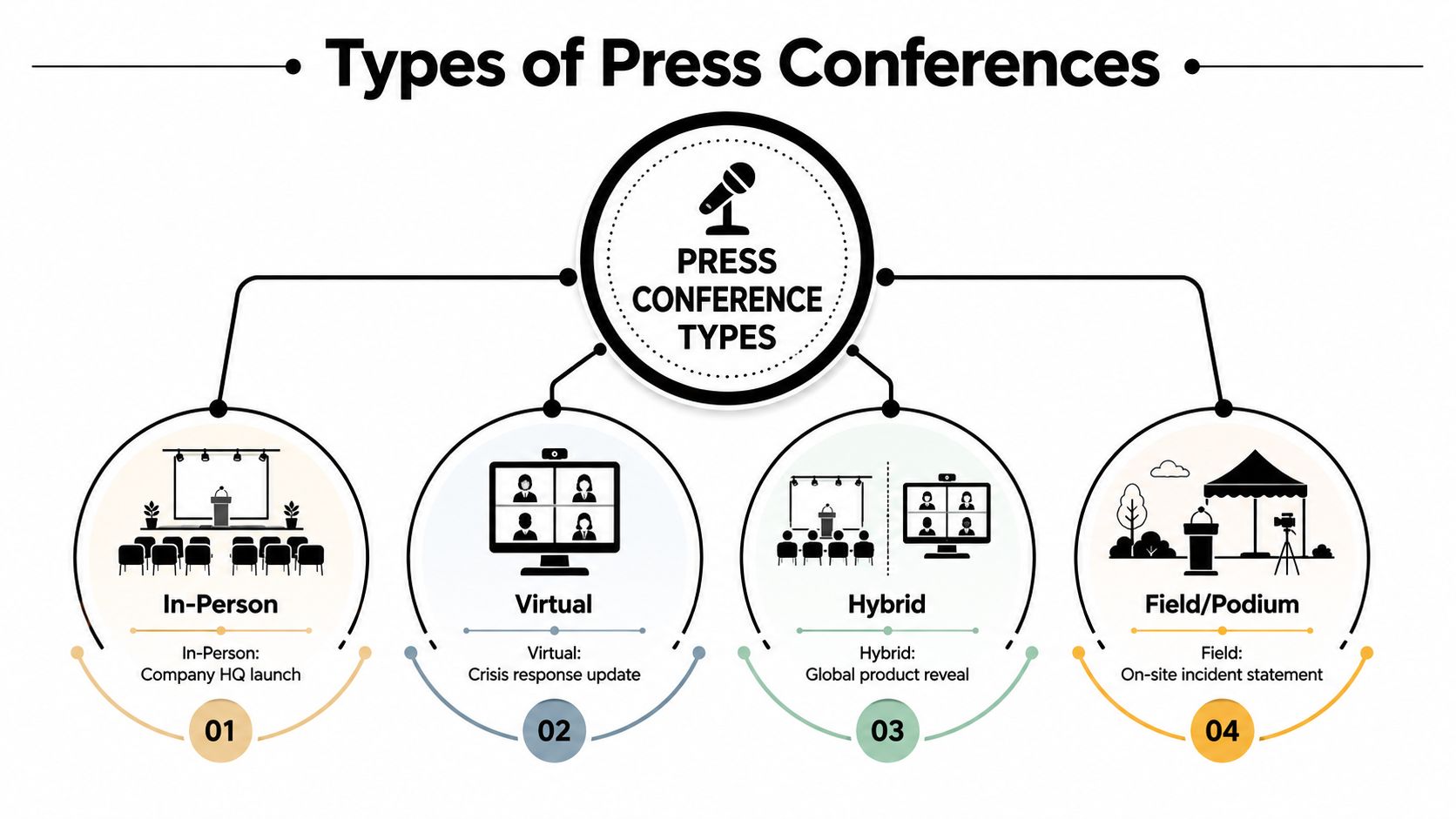
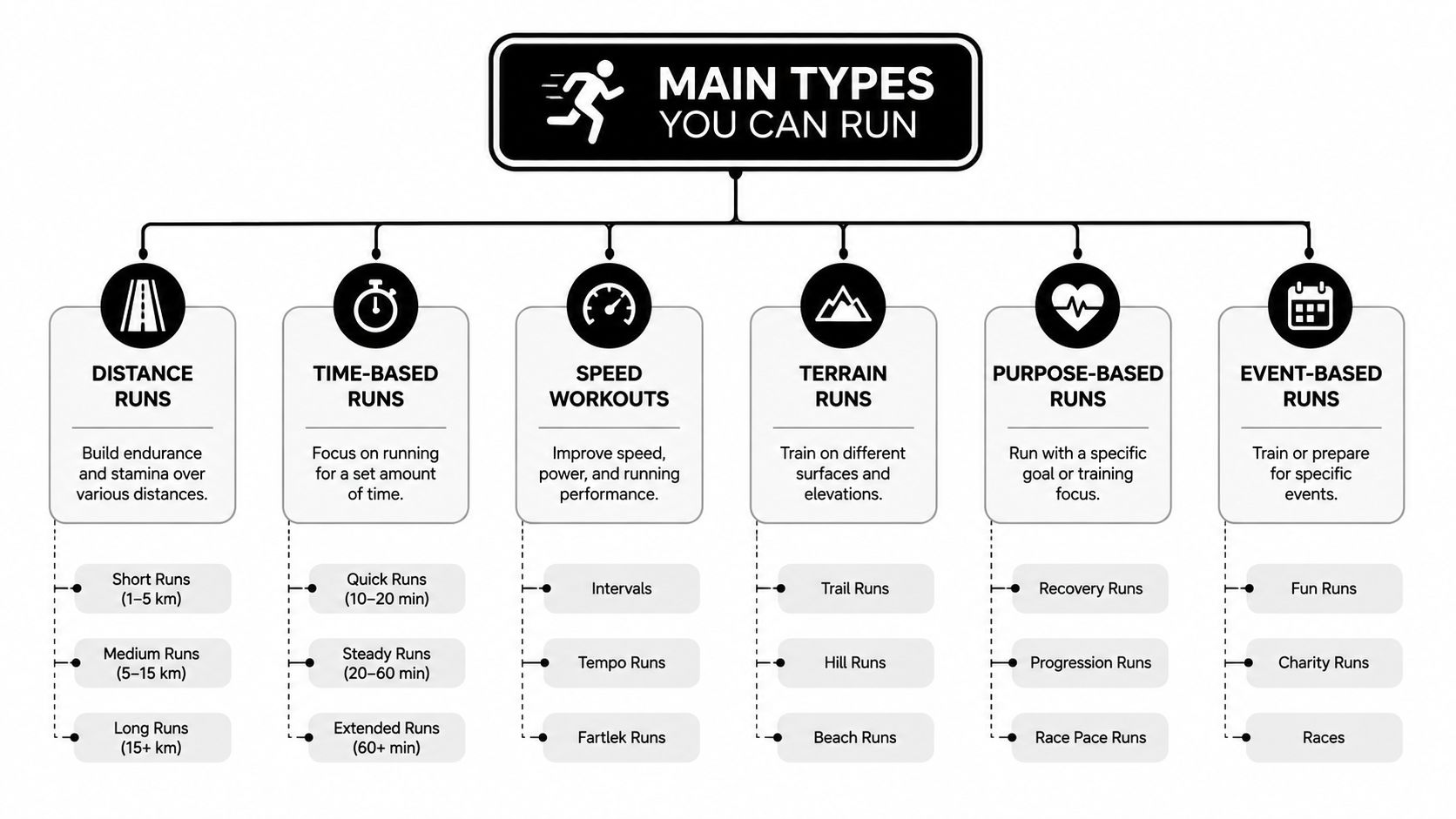
A new facility opening calls for a different setup than an urgent statement delivered from headquarters. Choose the format by matching the news, the audience, and the access journalists need. The event should make reporting easier, not just make the organization appear busy.
In-person events
An in-person press conference puts the spokesperson and journalists in the same room. It suits announcements where body language, physical surroundings, or a live demonstration adds evidence to the story. For a facility opening, reporters could tour the site, hear prepared remarks, ask questions, and see the relevant space firsthand.
The room affects the quality of coverage. Plan audio, sightlines, seating, accessibility, lighting, and paths for camera operators. A poorly arranged space can hide the demonstration or leave remote audiences with unusable sound.
Virtual events
A virtual press conference connects the newsmaker and journalists through a video platform. It can bring together participants in different locations and reduce travel, which helps when an organization needs a quick response. The organizer still has to manage registration, speaker permissions, recording, moderation, and a backup communication channel.
Online access does not guarantee questions. Send a clear advisory, provide concise briefing materials, and have a moderator identify questioners and keep answers moving.
Hybrid events
A hybrid press conference combines a physical room with a livestream and remote questions. It extends access while retaining the visual context of an in-person event, but the two audiences need equal preparation. Remote journalists require a dependable way to request questions, hear every answer, and receive materials. Reporters in the room should not receive all the attention because they are easier to see.
A hybrid production also needs tested audio from the room, a stable stream, and a person monitoring remote participation. A recorded replay can help journalists who could not attend, while a written statement may be more efficient if there is little to demonstrate or discuss.
Embargoed events and media tours
An embargoed press conference gives selected journalists access before public release under agreed timing terms. It can help reporters understand a complicated announcement, provided the conditions are explicit and journalists can decline them.
A media tour takes the story to several outlets, cities, or markets. It fits announcements with strong regional relevance. Interviews, demonstrations, and local briefings can replace one shared session when travel or local context would otherwise limit coverage.
Livestreamed briefings, virtual town halls, and on-demand replays make the boundaries less fixed. The practical choice is clear: select the type that fits the audience's working day, the spokesperson's comfort zone, and the journalists most important to the story. In a video-first, AI-search news cycle, a streamed briefing or written statement may serve the story better than gathering everyone for a formal conference.
Roles and a Typical Agenda
A press conference works best when every person understands the boundary of their job. The newsmaker owns the announcement. The moderator owns the flow. The PR lead owns preparation and media coordination, while the technical team protects the event from avoidable production failures.
The people behind the microphone
- Newsmaker: Delivers the central announcement and establishes the organization's position.
- Moderator: Opens the event, introduces speakers, explains the question process, and closes the session.
- Spokesperson or panel: Answers questions, adds subject expertise, and avoids contradicting the central message.
- Press officer or PR lead: Builds the media list, sends the advisory, coordinates access, and prepares likely questions.
- Technical crew: Handles microphones, lighting, livestream controls, slides, recording, and remote participation.
- Journalists: Test the announcement, seek clarification, and identify what matters to their audiences.
A first-time organizer can strengthen the question plan by studying a step-by-step interview guide. Although a press conference isn't a user interview, the same discipline applies: listen carefully, ask what information is missing, and avoid steering every answer toward a preferred conclusion.
A workable event flow
A typical event may run for 30 to 60 minutes, with the exact length determined by the complexity of the announcement and the number of speakers.
- Opening, about 5 minutes: The moderator welcomes journalists, identifies the subject, explains the Q&A process, and introduces the speakers.
- Prepared statement, about 5 to 10 minutes: The primary spokesperson gives the headline, essential facts, context, and next steps.
- Reporter Q&A, about 15 to 35 minutes: Journalists ask questions. The moderator keeps answers relevant and distributes opportunities fairly.
- Closing remarks, about 2 to 5 minutes: The spokesperson restates the central fact and identifies the next point of contact.
- One-on-one opportunities, if appropriate: Journalists may request follow-up interviews, footage, demonstrations, or additional documents.
Many beginners spend too long on presentations and rush the questions. That weakens the very feature that makes a press conference different from a release. The structure gives the newsmaker control over the opening message while honoring the accountability of direct press scrutiny.
Planning Checklist, Sample Agenda, and Script
Planning begins before the venue is booked. The organizer should be able to state the event's purpose in one sentence, identify the headline in plain language, and explain why journalists need to attend instead of receiving a document.
Pre-event checklist
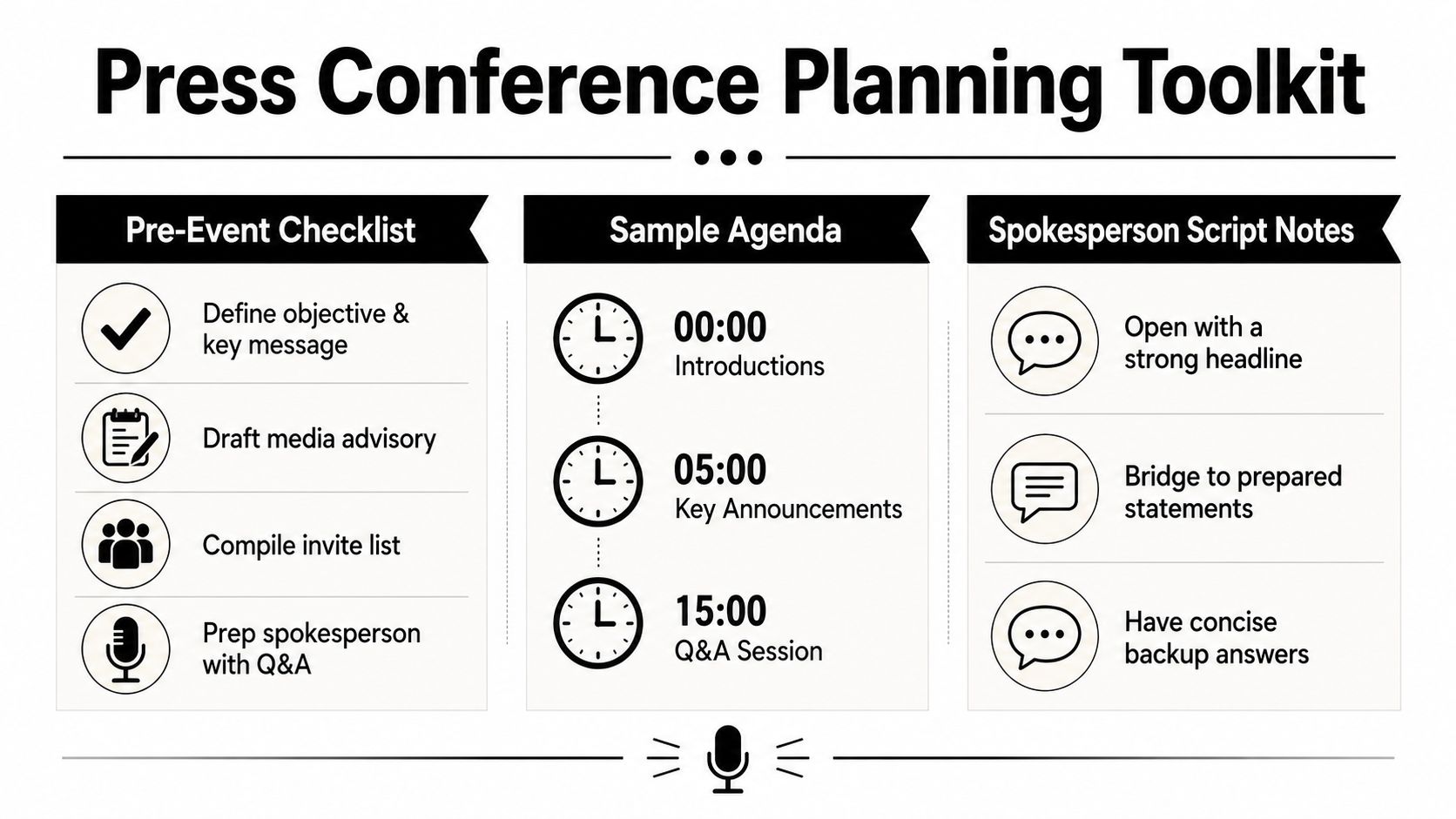
- Define the objective: Decide whether the event must announce, explain, respond, demonstrate, or introduce.
- Choose one headline: Give every speaker the same central fact and supporting language.
- Identify the audience: Separate essential journalists from broad promotional contacts.
- Select the format: Match the room, platform, or hybrid setup to the news.
- Prepare the advisory: Include the subject, date, location or access method, speakers, RSVP route, and media contact.
- Brief the spokesperson: Develop concise answers for expected, skeptical, and sensitive questions.
- Prepare materials: Have a fact sheet, statement, visuals, transcript plan, and follow-up contact ready.
- Test the production: Check microphones, camera framing, slides, recording, livestream access, and remote questions.
- Build the run sheet: Assign owners for every transition, cue, and contingency.
A media advisory template can help teams organize the invitation details journalists need. Physical events also benefit from a layout planner for corporate events, particularly when seating, cameras, podium placement, and movement paths must work together.
Sample run sheet
| Time | Activity | Owner and purpose |
|---|---|---|
| 00:00 | Welcome and introductions | Moderator establishes the format |
| 05:00 | Main announcement | Spokesperson delivers the headline |
| 15:00 | Reporter Q&A | Moderator manages questions and answers |
| 45:00 | Closing statement | Spokesperson reinforces next steps |
| 50:00 | Media follow-ups | PR lead coordinates interviews and materials |
The schedule is scaffolding, not a script to copy word for word. A useful opening might be: “Today, [organization] is announcing [clear news]. [plain-language consequence]. [Spokesperson] will provide the details, followed by questions from journalists.”
A closing can be equally direct: “The central announcement is [headline]. Supporting materials and follow-up contacts are available through [contact], and the team will respond to factual requests after the event.”
The most common planning failures are predictable. An invitation list that's too broad can reduce relevance, a late technical run-through can expose preventable faults, and an unprepared spokesperson may guess when a question requires verification. The checklist turns the decision to hold a press conference into an executable plan.
Tips and Common Mistakes for Spokespeople
Spokesperson coaching is the most impactful preparation a communications team can make because journalists remember what the person at the microphone says, not how polished the invitation looked. A strong executive can make a complex announcement understandable. An unprepared one can create a second story about contradictions, evasions, or corrections.
Five habits that protect clarity
- Lead with the headline. State the news in plain language before offering background. Don't bury the announcement beneath institutional history.
- Answer before bridging. Respond to the question asked, then connect the answer to the organization's verified message. A pivot works only after the reporter receives a relevant answer.
- Protect uncertain facts. Say that a detail requires confirmation and promise a follow-up when necessary. Never fill a gap with a guess.
- Use calm physical signals. Keep an open posture, maintain a steady pace, and pause before answering difficult questions. Rapid speech can make a careful answer sound evasive.
- Mark the endpoint. Finish the answer clearly so the moderator can recognize when the subject is complete. Repeating the same point can create new openings for confusion.
A spokesperson shouldn't fight a question because it is uncomfortable. “That premise is incorrect” may be necessary, but the correction should be followed by the verified fact rather than an argument with the reporter.
Teams can use a focused media training guide to rehearse hostile questions, interruptions, and surprise topics. The rehearsal should include questions outside the prepared list, because a spokesperson who only memorizes approved wording may freeze when the conversation changes.
Difficult-room technique: Pause, answer the factual part, identify what remains unknown, and return to the verified headline.
“Off the record” shouldn't be treated as a magic safety switch. Unless the arrangement is clearly agreed before a conversation, the spokesperson should assume comments may be reported. If an interruption occurs, the moderator can acknowledge the question, set the order, and protect the answer without becoming combative.
Follow-Up, Coverage, and Measuring Success
The event ends when the microphones are packed away, but the communications work continues. A journalist may need a clean transcript, a broadcaster may need a short clip, and an outlet that missed the event may still cover the announcement if the follow-up package makes the story easy to understand.
Turn one event into useful material
A practical post-event workflow includes:
- Publish a transcript: Correct obvious errors, identify speakers, and make the exchange searchable.
- Create short video clips: Select clear answers and strong explanations, not only the opening statement.
- Send a follow-up release: Confirm the headline, correct factual issues, and link to supporting documents.
- Contact journalists personally: Thank attendees and answer specific requests instead of sending identical mass messages.
- Pitch missed outlets: Offer the transcript, clips, visuals, and a concise explanation of the story's relevance.
- Archive the source material: Keep the recording, final statement, fact sheet, and approved answers together for later reference.
These materials let the announcement travel beyond the original room. Clips can support video coverage, transcripts help reporters check wording, and clear written facts give search systems and news organizations information they can quote accurately. The package should also make the organization's central point easy to find without requiring someone to watch the entire event.
Measure the result against the original purpose
Attendance provides context, not a complete result. A communications team can review:
- Media pickups: Which outlets reported the announcement?
- Outlet quality: Did coverage reach the audiences that mattered?
- Headline share of voice: Did reports preserve the intended central fact?
- Follow-up interviews: Did the event create useful next conversations?
- Correction burden: Did unclear answers create avoidable factual repair work?
The review should connect each result to the event's original purpose. If the Q&A produced quotable moments and the visuals travelled well, the format may have earned its place. If coverage depended mainly on the written facts, the next announcement may need a simpler event or no event at all. Comparing the plan with the coverage shows whether direct questioning, context, or written precision served the story best.
For teams that need help with the written side of the decision, Press Release Zen provides practical guides, templates, and planning resources for press releases, media advisories, and conference announcements. Use those resources to prepare the announcement, support the spokesperson, and follow up with journalists after the press conference.