Key Takeaways
- Press releases typically focus on future events or announcements, while news releases cover current or recently completed events.
- The audience for press releases is primarily media outlets, whereas news releases target a broader audience, including the general public.
- Understanding the difference allows organizations to choose the right format based on their communication goals.
- Both formats require a newsworthy angle, clear messaging, and appropriate timing to be effective.
- Multi-format content distribution through AmpiFire removes reliance on journalists’ decisions by transforming a single topic into 8 formats published across 300+ sites, building organic traffic you fully control.
What Is a Press Release?
A press release is a formal announcement issued to media outlets with the primary purpose of generating media coverage of an upcoming event. These communications serve as invitations for journalists to cover upcoming events, product launches, or organizational changes.
Core Purpose & Function
The fundamental purpose of a press release is to announce something newsworthy that will happen or has just happened. It serves as a direct line of communication between organizations and media outlets, designed to entice journalists to report on your news.
Press releases typically focus on a specific announcement, such as a product launch, corporate merger, or executive appointment. They’re crafted to provide journalists with the essential information needed to develop a story, presented in a format that’s easy to understand and repurpose.
Standard Format Elements

An effective press release structure begins with a compelling headline that summarizes the announcement, followed by a dateline indicating when and where the release was issued. The first paragraph (often called the lead) answers the five W’s: who, what, when, where, and why. Subsequent paragraphs provide supporting details, typically including quotes from key stakeholders to add credibility and human interest.
A standard press release also includes contact information for media inquiries, a boilerplate about the company, and often ends with “###” or “-30-” to indicate the end of the content. The entire document is typically limited to one or two pages, maintaining a professional tone throughout and following AP Style guidelines.
Distribution Channels of Press Releases
Press releases are traditionally distributed through wire services that send them directly to newsrooms and journalists. These services include PR Newswire, Business Wire, and specialized distributors such as eReleases that focus on getting your release to targeted media contacts.
Modern distribution also includes direct email outreach to relevant journalists, posting on the company website’s “Press” or “News” section, and sharing through social media channels. The effectiveness of distribution hinges on targeting the right media outlets and journalists who cover your industry or topic.
Why Press Releases Don’t Work Anymore
Smart Businesses Are Moving Beyond Traditional PR
• The Problem: Press releases reach one audience through one channel while your customers are everywhere online. Most get buried within days with poor ROI.
• The Solution: AmpiFire’s AmpCast creates 8 different content formats from one topic and distributes across 300+ high-authority sites including Fox affiliates, Spotify, and YouTube.
What You’ll Learn on PR Zen:
✓ Why multi-channel content delivers 10x better results than press releases
✓ How to amplify your PR efforts across multiple platforms
✓ Real case studies of businesses dominating search, social, video, and podcasts
✓ Cost-effective alternative to expensive PR agencies
Ready to Replace Press Releases? Learn the AmpiFire Method →
What Is a News Release?
A news release is a broader communication tool that reports on events that have already happened or are currently happening. While still intended to generate publicity, news releases tend to be more informational and less promotional in nature than press releases.
Primary Focus & Timing
Unlike press releases, which often announce future happenings, news releases document and share information about events that have already occurred or are currently unfolding. This timing difference is the most fundamental distinction between the two formats.
The emphasis in a news release is on reporting factual information about what has happened, making it more journalistic in style. Organizations use news releases to share company achievements, research findings, financial results, or community involvement after these activities have taken place.
This retrospective approach allows for inclusion of concrete details, outcomes, and impacts that aren’t available when announcing future events.
Content Structure
News releases follow a structure similar to news articles, prioritizing factual information over promotional content. They begin with the most important information and follow an inverted pyramid style, where details become less critical as the release progresses.
This approach ensures that even if readers only consume the first few paragraphs, they capture the essential information. Additionally, while news releases maintain the professional formatting elements of press releases (headline, dateline, boilerplate), they typically include more concrete details, statistics, and factual reporting.
Target Audience
The audience for news releases extends beyond traditional media outlets to include industry analysts, stakeholders, customers, and the general public. While press releases primarily target journalists to earn media coverage, news releases serve a dual purpose: informing the media and directly communicating with multiple audiences.
This broader audience focus means news releases are often distributed through a wider range of channels, including company websites, social media platforms, email newsletters, and industry publications. The content is crafted to be immediately helpful and informative to all recipients, not just as a starting point for journalists to develop their own stories.
Press Releases vs News Releases: Comparison Table
| Feature | Press Release | News Release |
| Timing | Announces future events or recent developments | Reports on events that have already occurred |
| Primary Audience | Journalists and media outlets | Media, stakeholders, customers, general public |
| Tone | More promotional, forward-looking | More factual, retrospective |
| Content Focus | What will happen and why it matters | What happened and what it means |
| Call to Action | Often includes event details, availability dates | Typically provides context and outcomes |
| Distribution Strategy | Targeted to relevant media contacts | Broader distribution across multiple channels |
The distinction becomes especially important when planning communication strategies for various types of announcements.
Organizations with media-focused goals tend to use press releases, while those seeking to inform multiple stakeholders directly prefer news releases. Many organizations develop templates for both formats to ensure consistency in their communications.
Good Examples That Clarify the Difference
Press Release Example: Product Launch
A technology company planning to release a new software platform would issue a press release to build anticipation and media coverage before the launch. The release would emphasize the upcoming release date, highlight key features, and include quotes from executives about how the product will transform the industry.
It might contain details about pricing, availability, and pre-order information, all designed to generate excitement and media coverage leading up to the launch.
The language would be forward-looking, with phrases such as “will revolutionize,” “coming soon,” and “planned features.” Media contacts would be encouraged to request demos or interviews with product developers, creating opportunities for pre-launch coverage.
The distribution would target technology journalists, industry publications, and media outlets that cover innovation and product announcements.
News Release Example: Company Achievement
A manufacturing company that has just received an industry certification for sustainability would issue a news release to announce this achievement.
The release would focus on the certification awarded, the process the company went through to earn it, and quotes from leadership on what this means for their environmental commitment. It would include specific details about how the certification was earned and the criteria that were met.
The language would be factual and retrospective, using phrases such as “has achieved,” “was recognized,” and “demonstrates our ongoing commitment.” Since the achievement has already occurred, the release would provide concrete information about the certification’s significance and its impact on the company’s operations and market position.
Distribution would extend beyond media to include customers, partners, employees, industry associations, and environmental groups, as well as other stakeholders who might be interested in the company’s sustainability practices.
Amplify Your Announcement Release With Ampifire
Traditional press releases face a fundamental problem. You craft the perfect announcement, distribute it through wire services, and then wait for media outlets to decide whether your story is worth covering. Your message reaches audiences only if journalists choose to write about it.
This single-format approach leaves your visibility entirely in someone else’s hands. That’s where news releases have an edge over traditional press releases; however, why wait until you have accomplished something significant before sending out your announcement?
AmpiFire’s innovative multichannel distribution strategy transforms a single announcement into 8 content formats, eliminating the uncertainty of traditional press release distribution.
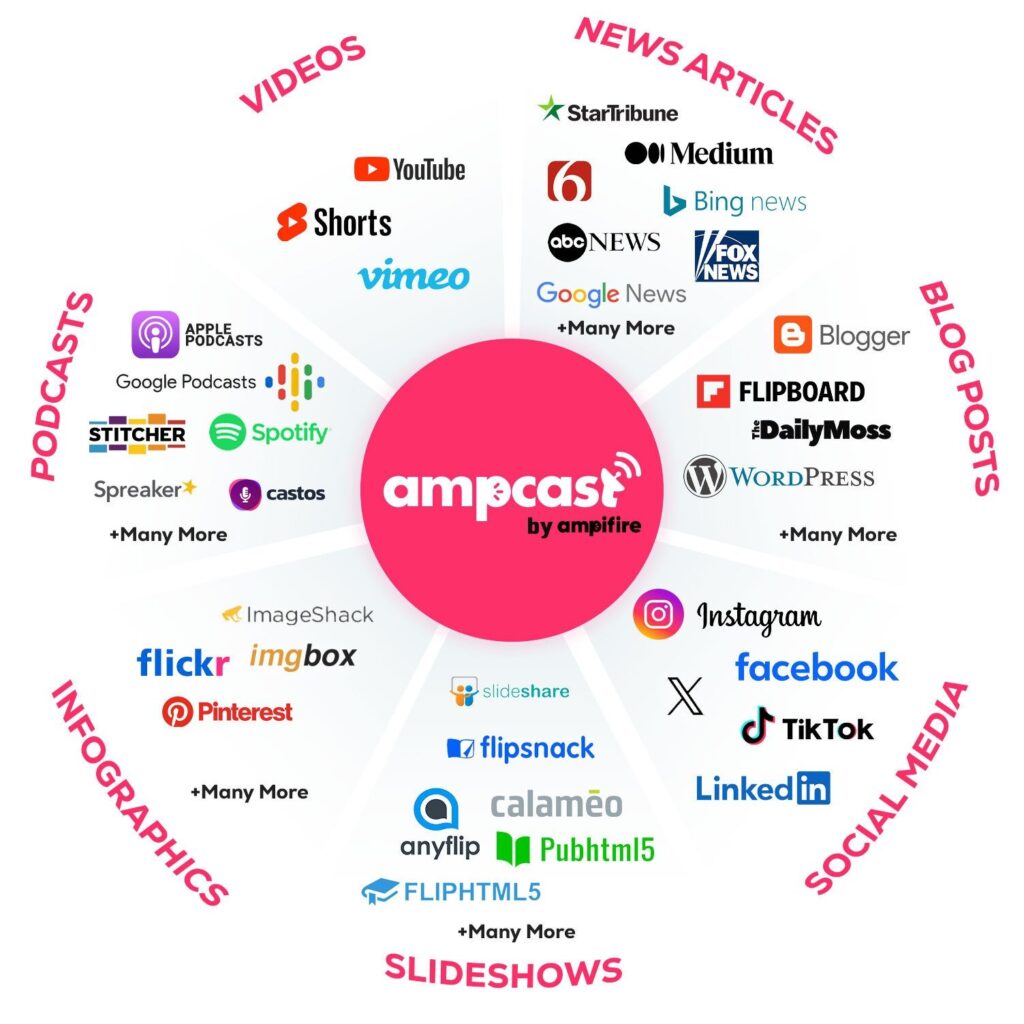
Instead of creating a single news article and hoping for coverage, AmpiFire transforms your topic into news articles, blog posts, interview podcasts, long-form and short-form videos, infographics, slideshows, and social posts. Then it automatically publishes all of this content across 300+ sites, including Google News, YouTube, Spotify, Pinterest, and FOX affiliate sites.
This means your announcement appears simultaneously on video platforms, podcast directories, image sites, news outlets, and social channels, reaching audiences wherever they spend time online.
While others debate whether to use a press release or news release format, AmpiFire users are building organic traffic from search, social media, video, and podcast platforms. This multi-channel presence creates lasting visibility that continues driving results long after initial publication.
Ready to Replace Press Releases? Try the AmpiFire Method →
Frequently Asked Questions (FAQs)
What is the main difference between a press release and a news release?
The primary difference is timing. Press releases announce future events or upcoming developments to generate anticipation and media coverage. News releases report on events that have already occurred, focusing on factual information about achievements, results, or completed milestones. Press releases use forward-looking language while news releases take a retrospective, journalistic approach.
When should I use a press release instead of a news release?
Use a press release to announce events, such as product launches, upcoming events, executive appointments, or corporate changes. The goal is to generate media interest before the event occurs. Use a news release when reporting achievements, research findings, financial results, or completed milestones where you’re sharing factual outcomes rather than building anticipation.
How long should a press or news release be?
Both formats should be concise, typically 400–600 words or one to two pages. Place the most critical information in the first paragraph, with supporting details following in descending order of importance. This inverted-pyramid structure respects journalists’ time constraints and ensures readers capture essential information, even if they read only the opening paragraphs.
Do multimedia elements improve the performance of press and news releases?
Yes, releases with images, videos, or infographics receive significantly more views and generate more media coverage than text-only versions. Include high-quality product images, event photos, executive headshots, charts, or demonstration videos. Provide multiple format options and ensure assets are easily downloadable for media use.
How does AmpiFire compare to traditional press release distribution?
AmpiFire transforms one topic into 8 content formats and then publishes them directly to 300+ sites, including Google News, YouTube, and Spotify. Unlike traditional distribution that relies on journalists’ decisions, AmpiFire builds organic traffic across multiple channels simultaneously.