Key Takeaways
- A well-crafted communication plan increases project success rates by ensuring all stakeholders receive the right information at the right time.
- The most effective communication plans include clear objectives, audience analysis, key messages, channel selection, and evaluation metrics.
- Customizing your communication approach based on stakeholder needs and preferences leads to higher engagement rates and better outcomes.
- AmpiFire helps organizations amplify their communication reach by using AI-powered technology to create 8 different content formats and distribute them across 300+ channels simultaneously.
What Makes a Communication Plan Essential for Success
A communication plan is a strategic framework that guides all information exchange within a project or organization. When properly executed, it aligns teams, manages expectations, prevents miscommunication, and builds trust with stakeholders.
Communication plans provide structure and consistency in your messaging. They ensure all team members understand what information to share, with whom, when, and how. This eliminates guesswork and reduces the risk of important information slipping through the cracks.
This guide walks you through building a communication plan from scratch. You’ll learn the core components every plan needs, a step-by-step process for creating your own, and how tools like AmpiFire’s Ampcast technology can simplify the process.
Why Press Releases Don’t Work Anymore
Smart Businesses Are Moving Beyond Traditional PR
• The Problem: Press releases reach one audience through one channel, while your customers are everywhere online. Most get buried within days with poor ROI.
• The Solution: AmpiFire’s AmpCast creates 8 content formats (news articles, blog posts, interview podcasts, longer informational videos, reels/shorts, infographics, flipbooks/slideshows, and social posts) from a single topic and distributes them across 300+ high-authority sites, including Fox affiliates, Spotify, and YouTube.
What You’ll Learn on PR Zen:
✓ Why multi-channel content delivers 10x better results than press releases
✓ How to amplify your PR efforts across multiple platforms
✓ Real case studies of businesses dominating search, social, video, and podcasts
✓ Cost-effective alternative to expensive PR agencies
Ready to Replace Press Releases? Learn the AmpiFire Method →
Key Components of an Effective Communication Plan
Clear Objectives & Goals
Every effective communication plan begins with well-defined objectives. These should be SMART (Specific, Measurable, Achievable, Relevant, Time-bound) and directly tied to your broader project or organizational goals.
Clear objectives might include increasing employee awareness of a new policy by 90% within two months, securing media coverage in at least three industry publications for a product launch, or reducing customer support inquiries by 30% through improved documentation.
Target Audience Analysis
A comprehensive audience analysis identifies all stakeholder groups, their information needs, preferred communication styles, existing knowledge levels, and potential concerns. This analysis should go beyond basic demographics to include psychographic factors such as values, attitudes, and pain points.
Effective audience segmentation allows you to tailor your approach for maximum impact. For example, executive stakeholders may require high-level summaries with business impact information, while technical teams need detailed specifications and implementation guidance.
Key Messages & Talking Points
The heart of your communication plan lies in its core messages. These messages should directly support your communication objectives while addressing the specific needs and interests of each audience segment. Effective key messages are concise, memorable, and designed to drive desired attitudes, beliefs, or actions.
Beyond primary messages, develop supporting talking points that provide additional context, evidence, and examples. For complex initiatives, consider creating a message hierarchy that distinguishes between must-know information, should-know details, and nice-to-know background.
Communication Channels
Different channels have different strengths. Your channel selection should match both your message characteristics and your audience preferences.
A multi-channel approach typically yields the best results, as it allows for message reinforcement across platforms while accommodating different audience communication preferences.
Organizations that leverage AmpiFire’s content amplification platform can simultaneously distribute their key messages across multiple channels, increasing reach and impact. AmpiFire uses its proprietary AI technology to analyze the core message in your communication plan and transform it into 8 distinct content formats.
These formats include blog posts, news articles, podcasts, infographics, slideshows, videos (long and short form), and social media posts. The platform then distributes them simultaneously across a robust network of 300+ high-traffic sites, which greatly amplifies your reach and the visibility of your communication plan.
Timeline & Schedule
A well-structured timeline ensures your communications are properly sequenced and appropriately timed for maximum impact. Your communication schedule should specify exactly when each message will be delivered, through which channels, by whom, and to which audience segments.
This prevents information overload while ensuring stakeholders receive information when it’s most relevant and actionable for them.
Budget & Resources
Clearly outline the budget, personnel, tools, and technologies required for implementation. Realistic resource allocation prevents bottlenecks and ensures your plan can be executed effectively without unexpected shortfalls.
Consider both direct costs (design services, paid media, printing) and indirect costs (staff time, training). If resources are limited, prioritize activities that align most closely with your primary objectives.
Step-by-Step Guide to Creating Your Communication Plan

While these steps are presented sequentially, communication planning is often iterative. You may find yourself revisiting earlier steps as you gain new insights or as circumstances change.
- Define Your Purpose and Objectives: Begin by clearly articulating why you’re creating this communication plan and what you hope to achieve. Align your objectives with broader organizational goals to ensure your communication efforts support the company’s mission and brand strategies.
- Document Objectives: Document both primary and secondary objectives, ensuring they are specific and measurable. For instance, a primary objective might be “To ensure 90% of employees understand the new health benefits program within two months,” while a secondary objective could be “To reduce questions to HR about benefits by 50% compared to the previous program launch.”
- Identify and Analyze Your Stakeholders: Conduct a thorough stakeholder analysis to identify everyone who needs to receive your communications or should be involved in them. For each stakeholder group, determine their current knowledge level, attitudes, concerns, and information needs. High-influence, high-interest stakeholders typically require more detailed and frequent communication than those with lower levels of influence or interest.
- Craft Your Core Messages: Start by identifying 3–5 main points that support your objectives and resonate with your audience. Each message should be concise, memorable, and focused on audience benefits rather than features.
- Select the Right Communication Channels: Choose communication channels that align with both your message type and your audience preferences. Use multi-format content amplification platforms such as AmpiFire’s AmpCast to ensure your message reaches your target audience on their preferred channels.
- Assign Roles and Responsibilities: Clearly define who is responsible for each aspect of your communication plan. At a minimum, identify who will create content, approve messages, distribute information, and collect feedback. The RACI matrix (Responsible, Accountable, Consulted, Informed) provides an excellent framework for clarifying these responsibilities.
- Develop Feedback Mechanisms: Build multiple feedback pathways into your plan, including surveys, focus groups, Q&A sessions, and informal check-ins. The most successful communication plans emphasise listening as much as broadcasting, dedicating significant resources to feedback mechanisms and stakeholder input.
- Build in Evaluation Metrics: Establish clear success metrics that align with your communication objectives. These might include message comprehension rates, attitude shifts, behavior changes, participation levels, or business outcomes.
Real-World Communication Plan Examples
Product Launch Communication Example
When Apple launched the first iPhone, its communication plan masterfully built anticipation while controlling information flow. It began with a carefully orchestrated announcement by Steve Jobs that revealed enough features to generate excitement while withholding specific details to maintain intrigue.
The plan included precisely timed information releases to tech journalists, controlled product demonstrations, and strategic advertising that highlighted the product’s revolutionary nature. This phased approach created enormous demand before the product was even available, resulting in long lines at stores on launch day and extensive media coverage that amplified its messaging.
Organizational Change Communication Example
When Microsoft underwent its major reorganization under CEO Satya Nadella, its communication plan addressed the anxiety and uncertainty that typically accompany structural changes.
The plan began with Nadella sharing a compelling vision for the company’s future, explaining why change was necessary. Leadership then conducted a series of town halls, team meetings, and one-on-one conversations to address specific concerns and gather feedback.
Microsoft created dedicated intranet resources with FAQ sections, progress updates, and success stories highlighting early wins. It established multiple feedback channels, including anonymous submission forms, to quickly identify and address emerging concerns.
This transparent, multi-layered approach helped transform potential resistance into active support for the new direction, significantly smoothing the transition period.
Crisis Response Communication Example
Johnson & Johnson’s handling of the 1982 Tylenol poisoning crisis remains a gold standard in crisis communication. Its plan prioritized public safety above all else, with immediate, transparent communication about the situation.
The company immediately recalled all products (at considerable cost), established a dedicated hotline for consumer questions, and kept the media regularly updated as the investigation progressed.
Its communication emphasized its core values and commitment to customer safety, helping maintain trust during a potentially devastating situation. This approach not only managed the immediate crisis but ultimately strengthened their reputation for corporate responsibility.
Amplify Your Content with AmpiFire’s Multi-Format Distribution
Even the most brilliantly crafted communication plan faces a significant challenge in today’s fragmented media landscape: reaching your target audience where they actually consume information.
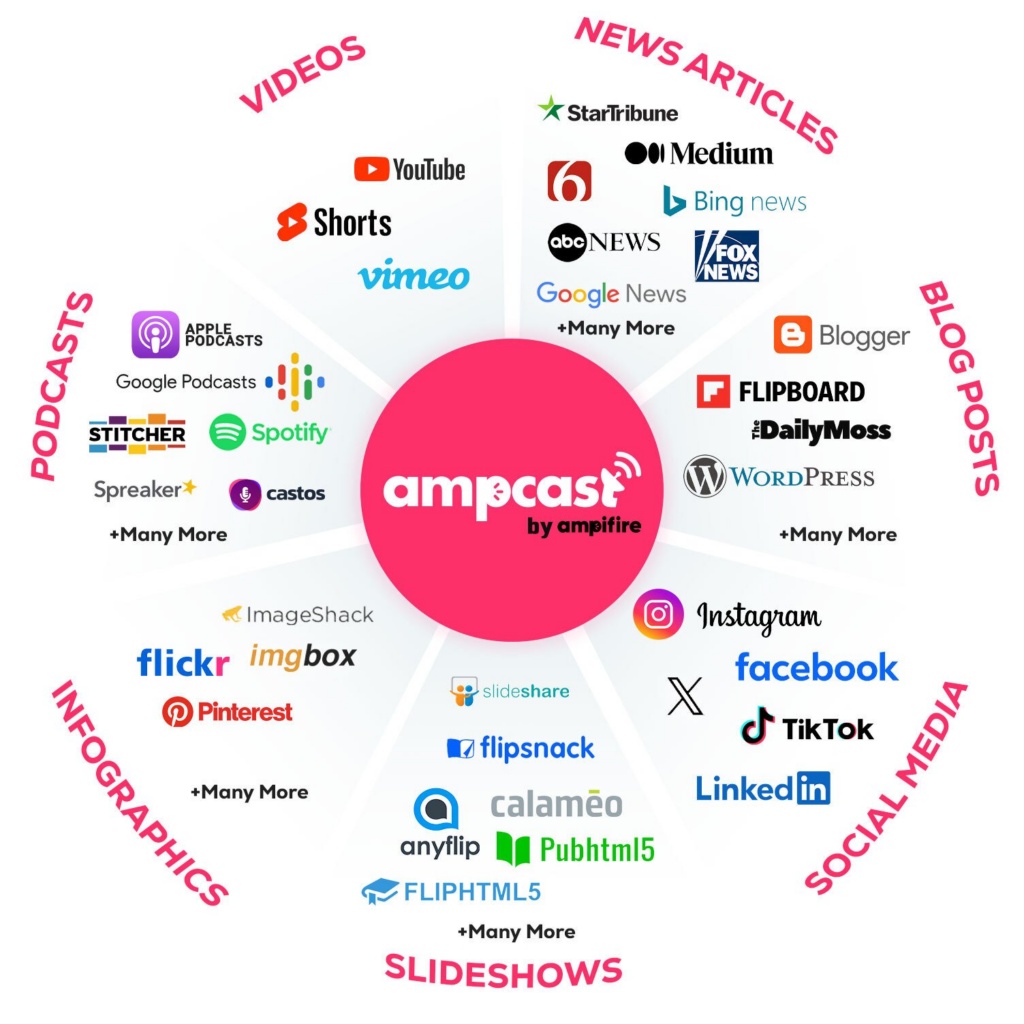
AmpiFire solves this problem through its multi-format content distribution platform. It uses AmpCast, its AI-powered technology, to transform your core messages into eight content formats: news articles, videos, podcasts, infographics, slideshows, social media content, and blog posts, then distributes this content across 300+ sites, including relevant news sites, blogs, video platforms, and social media channels.
For communication professionals, this means you can maintain message consistency while maximizing reach – a critical factor in ensuring communications actually drive the intended outcomes. It also eliminates the labor-intensive process of reformatting and manually distributing content across different platforms.
Ready to Go Multi-Channel? Try the AmpiFire Method →
Frequently Asked Questions (FAQs)
How long should a communication plan be?
The length of a communication plan should match its purpose and complexity rather than following a predetermined format. For straightforward initiatives, a 2–3 page document outlining key messages, audiences, channels, and timing may suffice.
More complex situations, such as organizational transformations, major product launches, or crisis preparations, may require 10–15 pages to adequately address all stakeholders and scenarios.
Can I use the same communication plan for different projects?
While maintaining a consistent template structure across projects increases efficiency, the specific content of your communication plan should be tailored to each initiative. That said, you can create a master communication framework that includes your organization’s standard channels, messaging principles, and approval processes.
This template can then be tailored for specific projects by adjusting audience segments, key messages, timing, and success metrics.
What’s the difference between a communication plan and a communication strategy?
A communication strategy is the overarching approach that guides all organizational communications over an extended period, typically 1–3 years. It establishes broad principles, voice and tone guidelines, key themes, and communication objectives that align with business goals.
A communication plan, by contrast, is a tactical document that implements the strategy for a specific initiative, project, or time period. It details the practical elements: specific messages, channels, timing, responsibilities, and metrics for a particular purpose.
How can AmpiFire help me amplify my content reach?
AmpiFire uses AmpCast to transform your communication plan from theory into wide-reaching practice by addressing one of the biggest challenges in modern communications: fragmented audience attention.
The platform automatically converts your core message into eight content formats and distributes them across a diverse network of channels, including news sites, blogs, video platforms, and podcast directories.
*Disclaimer:Results may vary based on individual circumstances, business type, and content strategy. The time savings and outcomes mentioned are based on typical user experiences and are not guaranteed. For specific pricing and service details, please visit AmpiFire.