Key Takeaways
- Owned media includes any marketing channel your business controls, such as your website, blog, email list, and social media profiles.
- It differs from earned media (press coverage, reviews) and paid media (ads), giving you full control over messaging and long-term value.
- Common use cases include brand storytelling, lead generation, and building audience trust through consistent publishing.
- A multi-channel owned media strategy delivers stronger results than relying on a single platform or content format.
- AmpiFire helps businesses create and distribute owned content in 8 formats across 300+ high-authority sites to maximize reach.
What is Owned Media in Marketing?
Owned media refers to content properties that belong to your business. You decide what gets published, how it looks, and where it appears. The most familiar example is a company website, but owned media extends far beyond that.
A blog on your domain is owned media. So is your YouTube channel, your email list, your podcast, and your company’s Instagram or LinkedIn profile. The defining feature is control: you own the platform or account, and you set the editorial direction. There are no gatekeepers deciding if your content gets published, and no ad spend required to make it visible to your existing audience.
Owned media works best as a long-term investment. A single blog post can rank in search results and drive traffic for years. An email list lets you reach subscribers directly without relying on an algorithm. A podcast episode stays available indefinitely, continuing to attract listeners over time.

Why Press Releases Don’t Work Anymore
Smart Businesses Are Moving Beyond Traditional PR
• The Problem: Press releases reach one audience through one channel, while your customers are everywhere online. Most get buried within days with poor ROI.
• The Solution: AmpiFire’s AmpCast creates 8 content formats (news articles, blog posts, interview podcasts, longer informational videos, reels/shorts, infographics, flipbooks/slideshows, and social posts) from a single topic and distributes them across 300+ high-authority sites, including Fox affiliates, Spotify, and YouTube.
What You’ll Learn on PR Zen:
✓ Why multi-channel content delivers 10x better results than press releases
✓ How to amplify your PR efforts across multiple platforms
✓ Real case studies of businesses dominating search, social, video, and podcasts
✓ Cost-effective alternative to expensive PR agencies
Ready to Replace Press Releases? Learn the AmpiFire Method →
5 Common Examples of Owned Media
1. Company Website & Blog
Your website is the central hub of your online presence. Blog content helps attract organic search traffic and positions your brand as a knowledgeable resource in your industry. A well-maintained blog can generate leads for years with no additional spending.
2. Email Newsletters
Email gives you direct access to subscribers without relying on social media algorithms. It consistently delivers one of the highest returns on investment of any marketing channel, and it keeps your audience engaged between purchases.
3. Social Media Profiles
Your business accounts on platforms like LinkedIn, Instagram, YouTube, Facebook, and X (formerly Twitter) are owned media. While the platforms themselves are third-party, the profile and content you publish belong to you, and you control the posting schedule and messaging.
4. Podcasts & Video Channels
Audio and video content on platforms like YouTube, Spotify, and Apple Podcasts allow businesses to build deeper relationships with their audience. Long-form and short-form content both serve different purposes in keeping your brand visible.
5. Infographics & Slideshows
Visual content published on your website or shared through your channels counts as owned media. These formats tend to earn high engagement and shares, extending your reach beyond your immediate audience.
Owned Media Use Cases for Business Growth
Building Brand Authority
Publishing consistent, high-quality content on your blog or video channel positions your business as a trusted resource. Over time, audiences start associating your brand with reliable, helpful information, which makes them more likely to choose you over competitors. The key here is consistency: regular publishing signals to both your audience and search engines that your brand is active and credible.
Generating Leads
Owned media channels like blogs and landing pages attract visitors through search engines. Pairing that content with email capture forms turns casual readers into subscribers and, eventually, customers. The content keeps working long after you publish it, making it a much more efficient lead generation method than paid campaigns that require ongoing spend.
Supporting Customer Retention
Email newsletters and social media content help you stay connected with existing customers. Regular updates, tips, and educational content keep your brand top of mind and encourage repeat purchases. Retention-focused owned media often costs far less than acquiring new customers through paid channels.
Expanding Reach Across Multiple Platforms
A single piece of owned content can be repurposed into multiple formats and distributed across many channels. A blog post can become a video script, a podcast episode, an infographic, and several social media posts. This multi-format approach helps you reach different audience segments where they already spend their time online.

Why Multi-Channel Distribution Maximizes Owned Media Results
The biggest mistake businesses make with owned media is treating it as a single-channel effort. Publishing blog posts alone or posting only on Instagram limits your reach to one audience on one platform. Your potential customers are spread across search engines, social media feeds, video platforms, podcast apps, and news sites.
A multi-channel content strategy takes a single topic and creates content in multiple formats, then distributes those pieces across many platforms. This approach dramatically increases the number of touchpoints where potential customers can find your brand. Instead of hoping someone stumbles onto your blog, you meet them on YouTube, Spotify, LinkedIn, and dozens of other sites.
AI-powered tools have made this kind of multi-format content creation practical for businesses of any size. What used to require a large in-house team or an expensive agency can now be done faster and at a fraction of the cost. The speed and quality that AI brings to content creation is what makes a true multi-channel strategy achievable for small and mid-sized businesses.
How AmpiFire Strengthens Your Owned Media Strategy
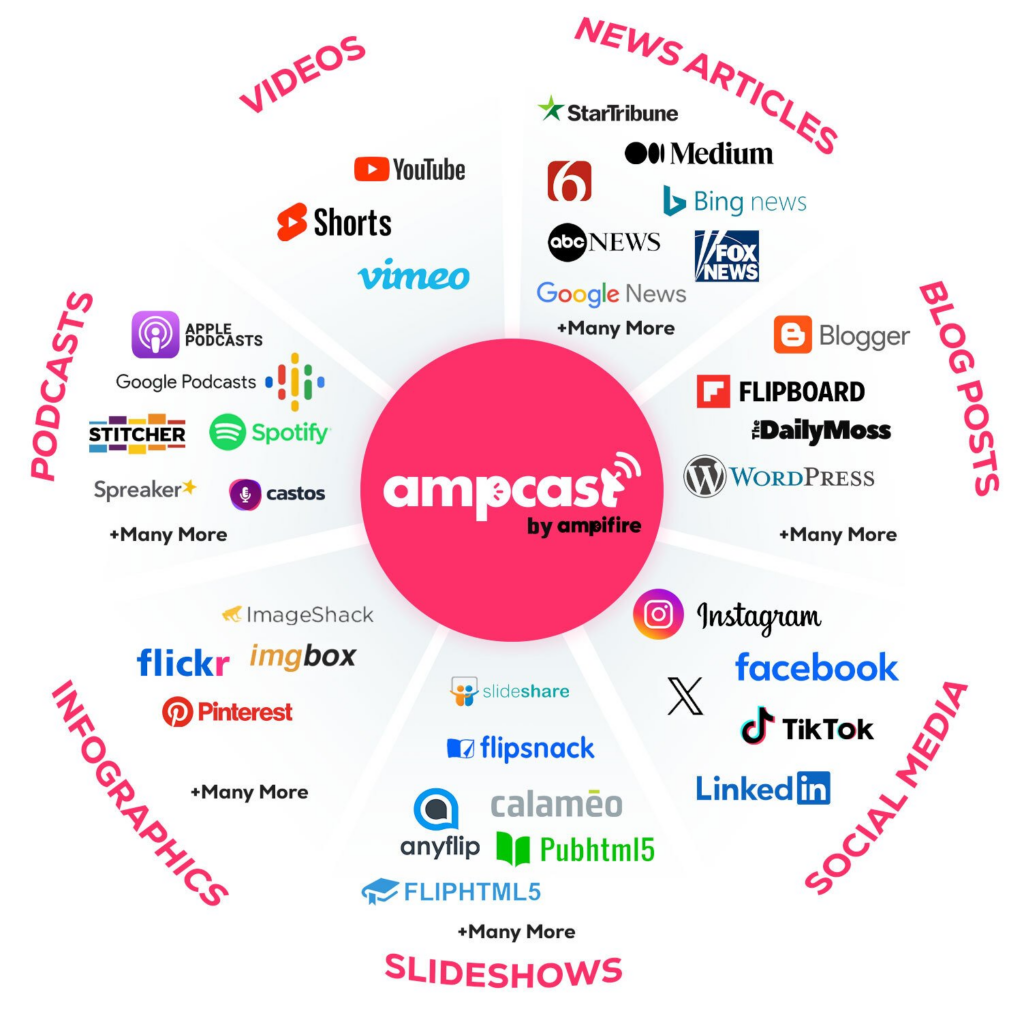
AmpiFire is designed to solve the biggest challenge with owned media: getting your content in front of more people across more channels without needing a massive team or budget. It all follows a straightforward three-step process:
- Research the topics your potential customers are searching for across Google, YouTube, social media, and other platforms.
- Create high-quality content in eight different formats from a single topic: news articles, blog posts, slideshows, infographics, long-form videos, short-form videos (for Reels and Shorts), interview-style podcasts with realistic AI voices, and social posts.
- Distribute that content across 300+ high-authority sites, including Fox affiliate sites, Spotify, Apple Music, YouTube, Pinterest, and your own social media profiles.
Traditional press releases reach one audience through one channel and often get buried within days. AmpiFire’s approach puts your brand across search, social, video, AI recommendations, and audio platforms simultaneously, building a compounding library of owned content that keeps driving results over time.
For businesses ready to move beyond single-channel marketing, AmpCast AI technology is a cost-effective alternative to hiring a full in-house content team or working with separate PR and marketing agencies.
Frequently Asked Questions (FAQs)
Is social media considered owned media?
Yes. Your business social media profiles and the content you publish on them count as owned media. While the platforms are third-party, you control what you post, how often, and the messaging you share with your followers.
How is owned media different from content marketing?
Content marketing is a strategy, while owned media refers to the channels where that content lives. Content marketing uses owned media channels like blogs, email, and video to attract and retain customers through valuable, relevant content.
Can small businesses benefit from owned media?
Absolutely. Owned media is one of the most cost-effective marketing approaches for small businesses because it builds long-term value. A well-written blog post or a helpful video can generate leads for months without ongoing ad spend.
How long does owned media take to show results?
Most owned media strategies take three to six months of consistent publishing before generating measurable traffic and leads. Results compound over time, so businesses that maintain their content strategy for a year or more tend to see the strongest returns.
What makes AmpiFire different from other content distribution platforms?
AmpiFire creates content in eight distinct formats from a single topic and distributes it across 300+ high-authority sites. The multi-channel approach at AmpiFire covers search, social, video, podcast platforms, and other channels simultaneously, giving businesses a much broader reach than platforms focused on a single content type or channel.
*Note: Pricing and/or product availability mentioned in this post are subject to change. Please check the retailer’s website for current pricing and stock information before making a purchase.