So, what exactly is a media outlet?
At its heart, a media outlet is just a storyteller for the public. It can be any channel that shares news, information, or entertainment with an audience—from a global giant like CNN to your favorite niche industry blog.
If it broadcasts content to people, it’s a media outlet.
Unpacking The Role Of A Media Outlet
Think of it this way: you have something important to share, like a major company milestone or a new product that solves a real problem. A media outlet is the megaphone that blasts your message far beyond your own circle of followers.
Without them, your news might just echo within your own network. With their help, it can reach an entire city, an industry, or even the world. It’s the critical bridge connecting your story to the people who need to hear it.
The Evolution From Print To Pixels
This concept isn't new. For centuries, town criers and newspapers played this role. What’s changed is the delivery system. The journey from the old printing press to the internet has created a vibrant, and sometimes chaotic, environment where information moves at lightning speed.
Today, media outlets are more diverse than ever. They include:
- Traditional Giants: Big names like The New York Times or NBC News. They started in print and broadcast but have built massive digital empires.
- Digital Natives: Publications like BuzzFeed or TechCrunch that were born online. They built their audiences with web-first content and know how to make things go viral.
- Individual Creators: Influential YouTubers, podcasters, and Substack writers who have become go-to sources for highly specific communities.
This shift means PR pros have to think way beyond just newspapers and TV. Your target audience might get their daily news from a TikTok creator, a morning email newsletter, or an industry-focused podcast.
Understanding this landscape is key. It helps you distinguish between the third-party platforms you want to earn coverage on and your own promotional channels. Speaking of which, you can learn more by reading our guide on what is owned media in marketing.
The Three Core Functions
No matter the format, nearly every media outlet boils down to three core functions. When you understand what drives them, you can frame your story to align with their goals—and dramatically boost your chances of getting noticed.
The goal of any PR outreach is to offer a story that helps a media outlet fulfill one of its core missions. Your "news" must also be their "content."
The table below gives you a quick summary of these essential functions, helping you see exactly where your press release might fit into their world.
Core Functions of a Media Outlet
This table summarizes the primary roles a media outlet plays in society, helping you quickly grasp their purpose and impact.
| Function | Description | Example for PR |
|---|---|---|
| To Inform | Delivering factual news and updates about current events, discoveries, and important announcements. | A press release announcing a company's new C-suite hire or quarterly earnings report. |
| To Entertain | Providing content designed for enjoyment, such as feature stories, human-interest pieces, and reviews. | Pitching a story about your unique company culture or an interesting behind-the-scenes look at a product. |
| To Influence | Shaping public opinion through editorials, opinion pieces, and investigative journalism. | Writing an op-ed from your CEO about an important industry trend or policy change. |
By tailoring your pitch to one of these three pillars—informing, entertaining, or influencing—you show journalists and editors that you understand what they do and are offering something of genuine value to their audience.
The Shift from Traditional to Digital Media
The media world has gone through a massive shake-up, moving from the ink-stained pages of newspapers to the glowing screens in our pockets. If you're hoping to get any media attention, you have to understand this change. The basic idea of what is a media outlet is the same—it’s a platform for telling stories—but the platforms themselves couldn't be more different.
Not long ago, a handful of giants ran the show. Print titans like The Wall Street Journal set the day's business agenda, while broadcast networks like CNN beamed the news into our living rooms. These were the main channels for reaching a huge audience, and PR strategies were built entirely around them.
Then the internet came along and flipped the whole table. Today, a digital-native outlet like TechCrunch can break a story that hits millions of readers in minutes, completely bypassing the old gatekeepers. This isn’t just a small tweak; it's a total rewiring of how news travels, and it directly affects where your audience is looking for information.
The Numbers Behind the News
The data tells a pretty stark story. Back in 2000, daily print newspapers in the U.S. had a circulation of 55 million. Fast forward to 2023, and that number has cratered to under 20 million—a jaw-dropping 64% drop.
Meanwhile, the number of major digital news sites has exploded, with over 1,300 of them worldwide. A 2021 Pew survey drove this point home, showing that while a whopping 84% of adults get news from digital devices, only 10% "often" get it from print.
This isn’t a trend that’s slowing down, either. Audiences, especially younger ones, are all-in on social media, podcasts, and video streams for their daily news fix.
The image below gives you a clear picture of this evolution from print to our digital-first world.
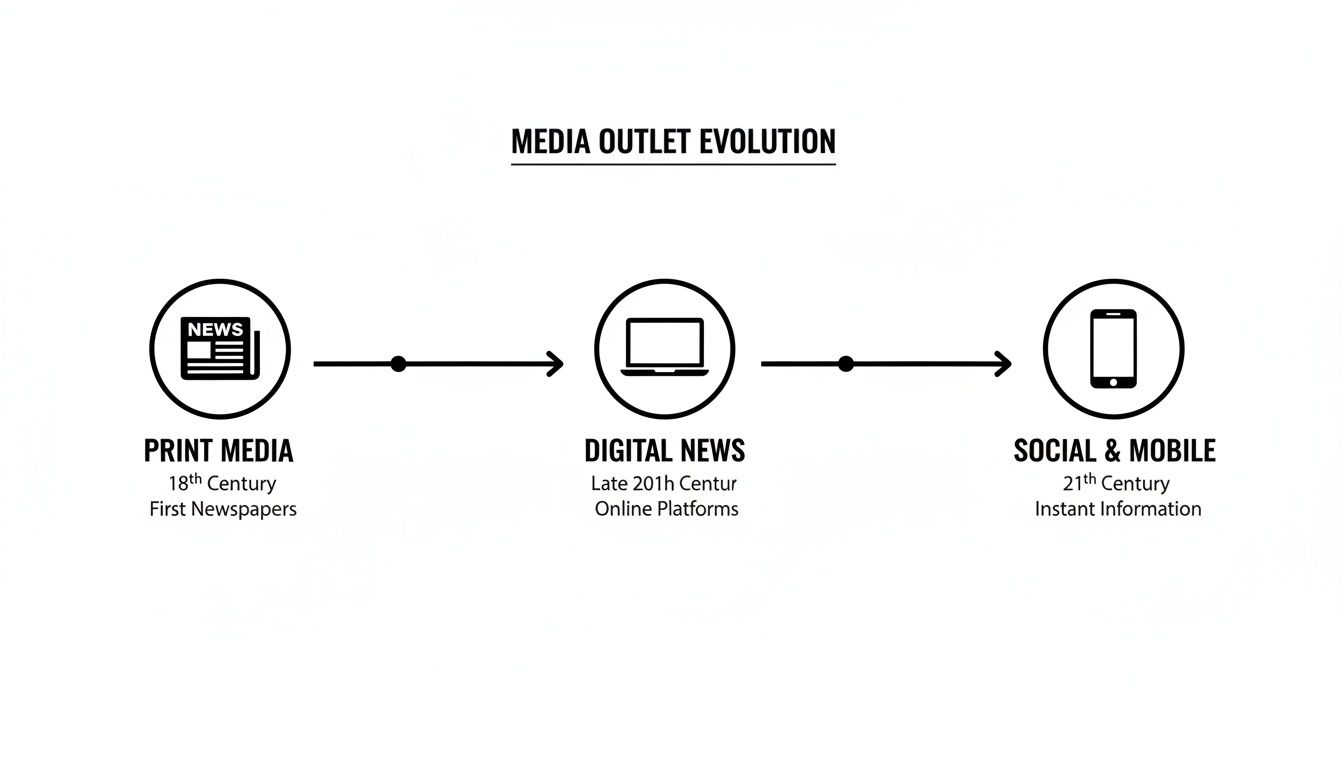
As you can see, the jump from physical paper to mobile-first content has been incredibly fast, completely changing how and where we consume stories.
Why This Shift Matters for Your Press Release
So, what does all this mean for your PR game? Simple: a digital-first approach isn't just a nice-to-have; it's essential for getting any real visibility in 2026. Sure, a mention in a legacy newspaper is still a great get, but its website and social media channels will likely drive far more immediate buzz.
Your strategy has to be built for this new reality.
- Audience Location: Your customers are online. They’re reading articles shared on social media, subscribing to newsletters from their favorite creators, and following industry blogs. Your news needs to meet them where they are.
- Speed and Shareability: Digital content is made to move fast. One well-placed story on a popular blog can be shared thousands of times, creating momentum that print just can't compete with.
- Search Engine Visibility: Getting your story on a respected digital outlet earns you a high-authority backlink. This is a huge thumbs-up to search engines like Google, which helps your website rank higher and makes it easier for new customers to find you organically.
The goal of a press release today isn't just to be printed; it's to be clicked, shared, and indexed. Success is now measured in online visibility and digital engagement.
This shift has also blurred the lines between different media types. Take a local TV news station, for example. It now runs a website, a YouTube channel, a podcast, and multiple social media profiles. Each one is its own media outlet with a unique content style and audience. To get a feel for how different outlets produce content, it can be helpful to explore various newscast script formats used in broadcasting and streaming.
Ultimately, adopting this digital-first mindset is about giving your story the best possible chance to succeed. By targeting the right online publications, podcasts, and influencers, you're setting your news up to travel further, faster, and connect with the people who truly matter to your business. The "press" in "press release" now refers to the digital press more than ever before.
Finding Power in Niche and Specialized Outlets

Everyone dreams of getting featured in a national newspaper, but the real magic often happens in smaller, more focused ponds. It’s the classic “big fish” scenario. Sure, a fleeting mention on a major news network might reach millions, but how many of them are actually your potential customers?
This is where the strategic power of niche and specialized media outlets really shines. These outlets cater to specific industries, communities, or interest groups with an authority that broad publications just can't touch. Whether you're a tech startup, a real estate agency, or a local non-profit, relevance almost always trumps sheer reach.
The Impact of Trade and Local Media
Let’s get specific. Two categories of specialized outlets offer huge value: trade publications and local media. Getting what these outlets are about is your key to unlocking truly targeted PR success.
Trade Publications: These are the magazines, websites, and newsletters that live and breathe a single industry. Think Automotive News for the car world or Women's Wear Daily for fashion. A feature here positions you as a serious player in front of peers, competitors, and high-value customers who are already dialed in.
Local Media: These are your hometown heroes—the newspapers, TV stations, and radio shows serving a specific city or region, like The Miami Herald or a popular local podcast. For any business with a physical storefront or a community-first mission, local media is a direct line to the people who can literally walk through your door.
Getting covered by one of these outlets doesn't just inform; it validates. It sends a powerful signal to a highly relevant audience that you matter. That credibility creates a ripple effect, driving qualified leads and building your brand reputation where it counts the most. For a great example of this kind of niche targeting in action, check out our guide to the top AI publications and journalists.
Creators and Podcasters as the New Media Outlets
The very definition of a media outlet is expanding to include a powerful new group: individual creators. Influential bloggers, podcasters, and YouTubers are no longer just personalities; they are highly specialized media channels with incredibly loyal audiences.
These creators have built entire communities around shared interests, from sustainable living to cryptocurrency. Their followers don't just see their content—they trust their recommendations. In fact, a recent study shows that over half of TikTok users (55%) now say they regularly get news on the platform. That’s a massive jump from just 22% in 2020.
For many brands, a single mention from a respected creator can be more impactful than a traditional press clipping. It’s a direct, authentic endorsement delivered to an audience that is primed to listen.
This means your media list can't just be journalists anymore. You need to be identifying the key voices and influencers in your space. A positive review on a popular YouTube channel or a feature on an industry podcast can drive immediate traffic and sales from a pre-qualified audience.
The Value of Relevance Over Reach
Ultimately, choosing the right media outlet comes down to one simple question: where does my target audience place their trust? A small construction firm will gain far more from a story in Construction Executive than from a brief mention on a national morning show. The first speaks directly to potential clients and partners; the second speaks to everyone and no one at the same time.
For most businesses, the goal isn't just to be seen—it's to be seen by the right people. By focusing your efforts on niche, trade, local, and creator-led outlets, you aren't just throwing your message into the wind. You're placing it directly into the hands of an audience that is ready and willing to act on it.
Why Media Outlets Are Your Most Critical PR Asset
So you know what media outlets are and the different types out there. That’s step one. Now, let’s connect that knowledge to your actual PR goals.
The relationship between your company and a media outlet is a two-way street. They have pages and airtime to fill, and you have news to share. Your press release isn't an annoying interruption—it's the exact content that busy journalists and creators need to do their jobs.
When an outlet picks up your story, it does way more than just get your name out there. It kicks off a chain reaction of benefits you could never get from paid advertising alone. This is the heart of earned media: earning your spot in the public eye because your story is newsworthy, not because your wallet is big.
The Power of Third-Party Validation
One of the biggest wins from media coverage is the instant credibility it gives you.
Think of it like a trusted friend recommending a new restaurant. You're far more likely to try it based on their word than you would from seeing a flashy ad. A media outlet acts as that trusted friend for your brand.
When an independent journalist or publication features your story, they’re lending you their authority. Their audience trusts them to sift through the noise and highlight what’s important. This third-party validation tells everyone your news is legitimate and worth paying attention to.
A paid advertisement says, "We're a great company." A story in a respected media outlet says, "An expert thinks this company is great." That distinction is the foundation of powerful public relations.
This borrowed credibility is priceless. It can sway potential customers, catch the eye of investors, and build a positive reputation more effectively than any ad campaign ever could.
Reaching New and Engaged Audiences
No matter how big your social media following or email list is, you're mostly talking to people who already know you. It's a closed loop.
A media outlet, on the other hand, gives you a direct line to an established audience that may have never heard of you. A single feature can introduce your brand to thousands—or even millions—of new people.
It’s not just about the numbers; it’s about the quality of that audience. Readers of an industry-specific magazine or viewers of a niche YouTube channel are already deeply interested in that topic. When your story appears there, you're not just reaching a broad audience, but a pre-qualified and engaged one.
For any business looking to get the most out of their PR, understanding concepts like earned media value is key to measuring the real impact of your outreach. It helps you put a number on what that exposure is truly worth.
Boosting Your Digital Footprint and SEO
In our digital world, every piece of online coverage leaves a valuable footprint. When a reputable digital media outlet writes about your company and links back to your website, it creates a high-authority backlink. Search engines like Google see these links as votes of confidence.
Here’s a simple breakdown of the SEO benefits:
- Increased Authority: High-quality backlinks tell Google that your site is a credible source, which can improve your overall domain authority.
- Higher Rankings: More authority often leads to better search engine rankings for your target keywords, making it easier for new customers to find you organically.
- Referral Traffic: That link in an article doesn't just help with SEO; it drives real people directly to your website, ready to learn more.
A Startup's Journey to Success
Let’s look at a realistic scenario. Imagine "AeroLaunch," a small startup with an innovative drone delivery service for local businesses. They put together a press release announcing a successful pilot program in their city, highlighting how it helped three small businesses triple their delivery efficiency.
Instead of a generic blast, they targeted a key industry outlet, "Drone Dynamics," and their local city business journal. An editor at Drone Dynamics saw the hard data and real-world impact and ran a feature story.
The results were immediate and measurable:
- Website traffic surged by 400% in the 48 hours after the article went live, driven by engaged readers from the publication.
- They received three inbound inquiries from angel investors who followed the drone industry and saw the feature.
- The local business journal picked up the story, which led to ten new local businesses signing up for their service.
This example takes the vague idea of "getting press" and turns it into a concrete, repeatable strategy. By giving newsworthy content to the right media outlet, AeroLaunch didn't just get a mention—they created a launchpad for real business growth.
How to Find and Pitch the Right Media Outlets

Knowing what media outlets are and why they matter is a great start. But now comes the real work: getting their attention. Finding the right outlets and pitching them your story is part detective work and part art form. It’s all about research, personalization, and respecting a journalist’s time.
Think of it this way: one thoughtful, well-researched pitch sent to the right journalist is worth more than a generic email blasted to 500 wrong ones. Let's walk through how to build a killer list and craft a pitch that actually gets read.
Identifying Your Target Media Outlets
Before you even think about writing your pitch, you need a targeted media list. This isn't just a spreadsheet of big-name publications. It’s a strategic directory of the specific journalists, editors, and creators who live and breathe your industry.
Your goal is to find the people whose audience is a mirror image of the people you want to reach. Here are a few proven ways to do just that:
Use smarter Google searches. Forget just typing “tech blogs.” Get specific. Use search strings like
"your keyword" + inurl:blog,"your industry" + "contributing writer", or"your competitor" + "as seen in". This helps you find outlets that are actively covering your topic right now.Do some competitor recon. Who’s giving your competitors airtime? Make a list of companies in your space and see where they're getting press. Every article is a clue, showing you which outlets are already interested in your niche.
Monitor social media and hashtags. Journalists are all over platforms like X (formerly Twitter) and LinkedIn. Follow industry hashtags (like #FinTech or #FutureOfWork) and see who is leading the conversations. This is a fantastic way to find individual writers, not just the publications they work for.
This research phase is absolutely critical. A brilliant pitch sent to the wrong person is just spam. Sending your new app launch to a food critic is a one-way ticket to the delete folder.
The Anatomy of a Perfect Pitch
Once you have your hit list of journalists, it’s time to craft your pitch. Remember, reporters get buried under dozens, if not hundreds, of pitches every single day. Yours has to cut through the noise by being clear, concise, and instantly relevant.
A great pitch proves you’ve done your homework. It’s not just about your news; it’s about why their audience will care about your news.
A successful pitch is a conversation starter, not a monologue. It should be personalized, demonstrate that you understand the journalist's work, and clearly explain why your story is a good fit for their readers.
Feeling overwhelmed? Don't be. The checklist below gives you a simple, repeatable framework to follow as you pinpoint the best outlets for your announcement.
Media Outlet Identification Checklist
This step-by-step checklist will help you identify the most relevant and impactful media outlets for your news.
| Step | Action Item | Why It Matters |
|---|---|---|
| 1. Define Your Audience | Clearly describe who you want to reach with your news. | This focuses your search on outlets whose readership matches your target demographic. |
| 2. Identify Relevant Beats | Find the specific topics or industries your story fits into (e.g., "AI in healthcare"). | This narrows your search to journalists who are subject matter experts and actively seeking stories like yours. |
| 3. Analyze Competitor Coverage | Research where your competitors are getting press. | This provides a proven list of outlets already interested in your niche. |
| 4. Vet the Outlet's Authority | Check the outlet's engagement, readership, and reputation. | This ensures you're targeting outlets that will provide genuine value and credibility. |
| 5. Find the Right Journalist | Identify the specific writer at the outlet who covers your beat. | Pitching a named journalist instead of a generic "editor" email address dramatically increases your chances of being read. |
By following these steps, you’ll move beyond a general understanding of media outlets to building a practical, actionable list of contacts. This methodical approach turns media outreach from a shot in the dark into a reliable process for securing meaningful press coverage.
How to Measure Your Media Outreach Success
So you’ve sent your press release out into the world. Job done, right? Not even close.
Sending the release is just step one. If you aren’t measuring what happens next, you’re basically flying blind. Proving your PR efforts are actually working means you have to look past just counting how many times you got mentioned and focus on the numbers that really move the needle for your business.
Think of it like any other marketing campaign. You wouldn't just throw money at ads without tracking clicks, leads, and sales. Your media outreach is no different—it needs clear key performance indicators (KPIs) to prove its worth.
Key Metrics for Tracking Success
Measuring success doesn't have to be complicated. It really just boils down to tracking a few simple metrics that tie your outreach directly to your business goals. These are the numbers that tell the real story of your campaign’s impact.
Here are the essential metrics you should be monitoring:
Number of Article Pickups: This is the most straightforward metric. Simply count how many different media outlets published your story. Each pickup is a win—a successful pitch and a brand new audience you've reached.
Estimated Audience Reach: For every publication that ran your story, look up their monthly unique visitors (for digital) or circulation numbers (for print). This gives you a solid estimate of how many people were potentially exposed to your news.
Referral Traffic: This one is huge. Using a tool like Google Analytics, you can see exactly how many people clicked a link in an article and landed on your website. This is a concrete way to measure how media coverage is driving direct engagement.
These initial data points give you a clear, high-level picture of how your campaign is doing. They’re the foundation for showing the real return on your PR investment. For a deeper dive, check out our detailed guide on tracking and measuring the success of your press releases.
The goal isn’t just to get mentioned; it’s to understand what that mention achieved. Did it drive traffic? Did it improve your search visibility? Did it lead to new business?
Connecting Coverage to Business Results
The most powerful metric you can track is the one that draws a straight line from your media coverage to your bottom line. Did that feature in an industry publication lead to a new sales call? Did that local news segment bring more foot traffic to your store?
Another critical area to watch is your website's SEO performance. When a high-authority media outlet links back to your site, it’s like a vote of confidence that can significantly boost your search engine rankings for your most important keywords. Always monitor your rankings before and after a big PR push to see the lift.
This kind of improved visibility is a long-term benefit that keeps on giving, long after the initial buzz has died down.
By tracking pickups, reach, traffic, and the SEO impact, you close the loop on your PR strategy. You stop just doing PR and start proving its tangible value, turning your media outreach from a cost center into a measurable engine for growth.
Frequently Asked Questions About Media Outlets
As you get ready to put all this into practice, a few common questions always seem to pop up. Let's tackle them head-on so you can move forward with confidence.
What Is the Difference Between a Media Outlet and a News Agency?
This is a great question, and the distinction is crucial. Think of a news agency, like the Associated Press (AP) or Reuters, as a news wholesaler. They have reporters all over the world gathering stories, photos, and videos, which they then sell to thousands of other publications.
A media outlet—say, your local TV station or a national news website—is the retailer. They buy content from the agencies, mix it with their own original reporting, and then package it all for their audience. Your press release might get picked up by an agency and then show up in hundreds of "retail" outlets as a result.
Is a Company Blog Considered a Media Outlet?
Yes, absolutely. But it’s a special kind known as an "owned" media outlet. This is your home turf. You control the platform, the message, and the timing, making it a fantastic tool for speaking directly to your customers and supporters.
The catch? It doesn't offer the third-party credibility you get from "earned" media—when an independent journalist at a respected publication decides your story is worth covering. A smart PR strategy uses both. You use your blog to build a direct relationship with your audience and earned media to build trust and external validation.
A winning PR plan blends the controlled messaging of your owned media with the powerful validation of earned media coverage. They work hand-in-hand to build a complete and trusted brand presence.
How Many Media Outlets Should I Pitch for One Press Release?
Here’s a golden rule to live by: quality over quantity. It’s tempting to blast your press release to a massive list of contacts, but this "spray and pray" approach just looks like spam and almost never works.
Instead, your goal should be to build a small, highly-targeted list of 10-20 relevant outlets. A single, well-researched, personalized pitch sent to the right journalist will always beat a hundred generic emails. This focused method shows you respect their work and dramatically increases your odds of landing meaningful coverage.
At Press Release Zen, we provide the guides, templates, and insights you need to turn your news into valuable media coverage. Explore our resources to master your PR strategy at https://pressreleasezen.com.