Key Takeaways
- Press releases are protected by copyright law, but facts and information within them can be used when properly attributed.
- Direct copying of press releases without permission constitutes plagiarism and potential copyright infringement, which can damage your professional reputation.
- Some press releases include explicit permission for republication but still require proper attribution to the original source.
- Communication professionals can protect their own releases while ethically using others’ by understanding the legal boundaries of press release content usage.
- Multi-format content distribution through AmpiFire bypasses traditional press release limitations entirely, transforming one topic into 8 formats published across 300+ sites to build organic traffic you fully control.
Press Release Copying: The Legal Truth You Need to Know
The question of whether press releases can be copied isn’t as straightforward as you might think. While these documents are created specifically to spread information, that doesn’t mean they’re free for unlimited reproduction.
Understanding the nuances of press release use can help you avoid potential plagiarism accusations and copyright infringement claims that could damage your reputation or result in legal action.
Why Press Releases Don’t Work Anymore
Smart Businesses Are Moving Beyond Traditional PR
• The Problem: Press releases reach one audience through one channel while your customers are everywhere online. Most get buried within days with poor ROI.
• The Solution: AmpiFire’s AmpCast creates 8 different content formats from one topic and distributes across 300+ high-authority sites including Fox affiliates, Spotify, and YouTube.
What You’ll Learn on PR Zen:
✓ Why multi-channel content delivers 10x better results than press releases
✓ How to amplify your PR efforts across multiple platforms
✓ Real case studies of businesses dominating search, social, video, and podcasts
✓ Cost-effective alternative to expensive PR agencies
Ready to Replace Press Releases? Learn the AmpiFire Method →
Press Release Copyright Status: Facts vs. Protected Content

While the creative expression and specific wording in press releases are protected under copyright law, the underlying facts, data, and information they contain are not. This distinction forms the foundation of how you can legally and ethically use press release content.
The moment a press release is created and fixed in a tangible medium (whether digital or print), it automatically receives copyright protection under U.S. law and in many international jurisdictions. This protection applies to the unique arrangement of words, the specific expression of ideas, and any original creative elements, even without a formal copyright registration or notice.
Who Owns the Copyright to a Press Release?
Copyright ownership of a press release typically belongs to whoever created it or commissioned its creation. In most corporate settings, press releases created by employees fall under the “work for hire” doctrine, meaning the company owns the copyright. When external PR agencies or freelance writers create releases, ownership depends on the contract terms, but typically transfers to the client company.
Press release distribution services generally don’t claim ownership of your content; they merely license it for distribution purposes. However, it’s always worth checking the specific terms of service before using any distribution platform. Some services may include clauses granting them certain rights to your content, so reading the fine print is essential to protect your intellectual property.
What Elements Are Actually Protected by Copyright
Various elements of a press release are protected by copyright law. They include:
- The specific wording, phrasing, and structure of the press release.
- Creative descriptions and narrative elements.
- Unique arrangements of information.
- Original quotes from company representatives.
- Custom graphics, logos, or visual elements included in the release.
The copyright protection extends to the creative expression in the press release, rather than to the information itself.
This means you cannot simply copy the exact wording of a press release without permission, even if you provide attribution. Rewording the information in your own voice, however, while citing the source of the facts, is generally an acceptable practice.
The Facts & Data Exception: What You Can Use Freely
The copyright law is clear that facts, data, and information cannot be copyrighted; only the specific expression of those facts can be copyrighted. This creates what many call the “facts exception” in copyright law, which is particularly relevant for press releases.
The announcement that “Company X has launched Product Y with features Z” is a fact that cannot be protected by copyright, even though the specific way the press release describes this fact is protected.
This means journalists, bloggers, and other content creators can freely report on the factual information contained in press releases without permission, as long as they use their own words to describe those facts.
This is why you’ll often see multiple news outlets reporting on the same press release but using different language to convey the same core information.
When Copying Press Releases Crosses the Legal Line

While press releases are created for distribution, that doesn’t grant an unlimited license to reproduce their content verbatim without consideration of copyright principles. Journalists and content creators often receive dozens of press releases daily, making it tempting to simply copy portions into articles.
However, this convenience comes with risks that extend beyond legal concerns into professional ethics territory. Your reputation as a communicator depends on maintaining original work that respects intellectual property boundaries.
Direct Copying Without Attribution: Clear Plagiarism
The most straightforward violation occurs when someone copies substantial portions of a press release word-for-word without any attribution.
This constitutes both plagiarism and copyright infringement, representing dual ethical and legal breaches. Such direct copying without acknowledgment misrepresents someone else’s work as your own, violating fundamental principles of journalistic integrity and academic honesty.
Copying With Attribution: Still Problematic
Many mistakenly believe that simply crediting the source of copied content makes reproduction legal, but this is a dangerous misconception. While attribution addresses the plagiarism concern by acknowledging the original creator, it does not resolve the copyright infringement issue.
Copyright law grants copyright holders exclusive rights to reproduce and distribute their work, and proper attribution alone doesn’t provide legal permission to copy substantial portions of content. Even when you cite the source correctly, verbatim copying of significant portions of a press release without permission typically exceeds what’s permitted under copyright law.
The copyright owner still maintains the exclusive right to determine how their creative expression is reproduced and distributed. This is why journalistic best practices involve rewriting information in your own words while citing the source of facts.
Fair Use Guidelines for Press Release Content
The “fair use” doctrine provides limited exceptions to copyright protection, allowing specific uses of copyrighted material without permission for purposes such as criticism, comment, news reporting, teaching, scholarship, or research.
When determining whether usage qualifies as fair use, courts consider four primary factors: the purpose of the use, the nature of the copyrighted work, the amount used relative to the whole, and the effect on the potential market for the original work.
For press releases specifically, news reporting offers the most relevant fair use application. Journalists can typically quote limited portions of press releases when reporting on the news they contain. However, this doesn’t permit wholesale reproduction.
Generally, quoting a few sentences with proper attribution, while adding substantial original reporting or commentary, would likely qualify as fair use, whereas copying entire paragraphs or the majority of a release would exceed fair use boundaries.
Best Practices for Press Release Creation & Distribution
Creating Original Content That Stands Out
The best defense against plagiarism concerns is creating genuinely original press releases that showcase your unique brand voice.
Cookie-cutter press releases that mimic competitors not only risk copyright issues but also fail to differentiate your brand in a crowded media landscape. Investing in distinctive, high-quality content pays dividends in both legal protection and marketing effectiveness.
Proper Citation Methods for External Information
When your press release references external information, proper citation is non-negotiable. Begin by clearly distinguishing between your original content and third-party information through explicit attribution phrases like “According to [Source]” or “Research from [Organization] indicates.” This transparent approach protects you legally while adding credibility to your claims.
For statistical data or research findings, include complete source information, including organization name, report title, publication date, and, where possible, a link to the original source. This level of detail demonstrates thoroughness and respect for intellectual property.
How to Protect Your Own Press Releases
Protecting your press releases starts with consistent copyright notices that clearly communicate ownership. Include a standard copyright line (© 2026 [Company Name]. All Rights Reserved.) along with specific republication terms that outline permitted uses.
Consider creating a dedicated media resources page on your website that states your republication policies, making permissions and restrictions transparent to journalists and other potential users of your content.
Why AmpiFire’s Multi-Format Distribution Beats Traditional Press Release Strategies
Understanding press release copyright rules matters, but there’s a bigger question: why limit yourself to a single format that may or may not get picked up by journalists? Traditional press releases face an uphill battle. Even when you craft the perfect announcement and manage all the copyright complexities, you’re still relying on journalists to rewrite your content and hoping publications decide your news is worth covering.
This single-format approach puts your message at the mercy of editorial decisions you can’t control. AmpiFire takes a completely different approach. Instead of creating a single news article and crossing your fingers, AmpiFire transforms your topic into 8 content formats: news articles, blog posts, interview podcasts, long-form videos, short-form videos, infographics, slideshows, and social posts.
Then it automatically publishes all of this content across 300+ sites, including Google News, YouTube, Spotify, Pinterest, and FOX affiliate sites. This multi-channel strategy removes the copyright concerns that come with relying on others to share your content. You own all the formats, and they’re published directly to platforms where your audience is already searching.
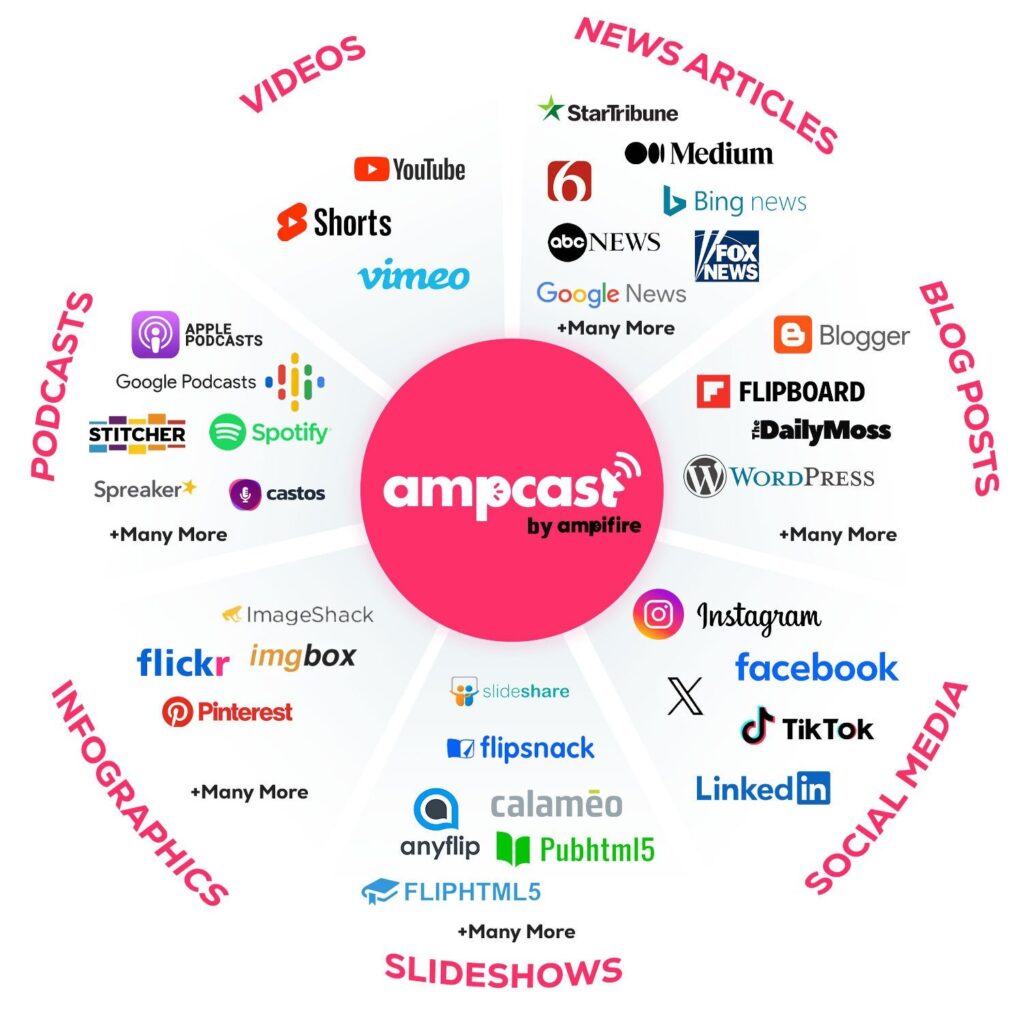
While others worry about whether their announcements are being flagged for copyright infringement, AmpiFire users are simultaneously building organic traffic from search, social media, video platforms, and podcast directories. This creates lasting visibility that continues driving results long after the initial publication.
Ready to Replace Press Releases? Try the AmpiFire Method →
Frequently Asked Questions (FAQs)
Can I copy an entire press release if I include proper attribution?
No, attribution addresses plagiarism but not copyright infringement. The copyright holder maintains exclusive reproduction rights regardless of whether you credit them. You can freely report on the facts and quote brief portions with attribution, but copying entire releases or substantial sections requires explicit permission from the copyright owner.
What parts of a press release are not protected by copyright?
Facts, data, and information within press releases cannot be copyrighted—only the specific expression of those facts. The announcement that a company has launched a product is a fact anyone can report. However, the particular wording, creative descriptions, and unique arrangement of information in the release are protected elements.
How much of a press release can I quote under fair use?
There’s no fixed word limit for fair use. Courts evaluate each situation based on purpose, nature of the work, amount used, and market effect. Generally, one or two sentences with proper attribution for news reporting fall within fair use. Multiple paragraphs verbatim typically exceed acceptable limits without explicit permission.
What should I do if someone copies my press release without permission?
Document the infringement with screenshots first. Then contact the publisher professionally to request attribution, removal, or licensing. If ignored, send a formal cease-and-desist letter. For persistent commercial infringement, consult an intellectual property attorney about DMCA takedown notices or legal claims.
How does AmpiFire help avoid press release distribution limitations?
AmpiFire eliminates reliance on third-party journalists by transforming your content into 8 formats: news articles, videos, podcasts, infographics, slideshows, blog posts, and social content, then publishing directly to 300+ sites. You maintain full ownership while simultaneously building organic traffic from search, social, and video platforms.
*Note: This article provides general information about copyright and plagiarism related to press releases and should not be considered legal advice. Copyright laws vary by jurisdiction, and specific situations may require consultation with a qualified intellectual property attorney. For legal guidance specific to your situation, please consult with a licensed attorney or legal professional.