Key Takeaways
- A press release dateline establishes credibility by showing exactly where and when your news originated, following a specific format.
- Based on AP Style guidelines, major cities like NEW YORK, LOS ANGELES, and CHICAGO stand alone without state names, while smaller locations require proper state abbreviations (not postal codes).
- Correctly formatting your dateline signals to journalists that you understand media conventions, increasing the likelihood your release will be taken seriously.
- While dateline formatting is essential, even the most professionally formatted release won’t succeed if your distribution strategy is poor.
- AmpiFire transforms your announcement into 8 content formats and publishes it across 300+ platforms, ensuring it reaches the relevant audience at the right time.
What Exactly Is a Press Release Dateline?
A dateline is the specific line at the beginning of a press release that identifies where and when the news originated. It serves as a timestamp and a geographical marker, providing context for the information that follows.
Traditionally used in journalism to indicate where a reporter was located when gathering news, datelines have become standard practice in public relations to establish credibility and provide essential reference information.
The format follows strict conventions established by the Associated Press (AP) Stylebook, which most media outlets consider the gold standard. A properly formatted dateline signals to journalists that you understand media conventions and take your communication seriously. This small detail can significantly impact how news organizations receive your release, determining whether your announcement gets coverage.
While digital communication has changed many aspects of press release distribution, the dateline remains a cornerstone element that helps journalists quickly assess the source and timing of your news. For PR professionals, mastering this formatting detail demonstrates attention to professional standards and respect for journalists’ time and workflows.
Why Press Releases Don’t Work Anymore
Smart Businesses Are Moving Beyond Traditional PR
• The Problem: Press releases reach one audience through one channel while your customers are everywhere online. Most get buried within days with poor ROI.
• The Solution: AmpiFire’s AmpCast creates 8 different content formats from one topic and distributes across 300+ high-authority sites including Fox affiliates, Spotify, and YouTube.
What You’ll Learn on PR Zen:
✓ Why multi-channel content delivers 10x better results than press releases
✓ How to amplify your PR efforts across multiple platforms
✓ Real case studies of businesses dominating search, social, video, and podcasts
✓ Cost-effective alternative to expensive PR agencies
Ready to Replace Press Releases? Learn the AmpiFire Method →
The Essential Components of a Professional Dateline

City Names in ALL CAPS
The first element of any dateline is the city name, which must always be written in ALL CAPITAL LETTERS. This visual distinction helps separate the dateline from the body of your press release and follows longstanding journalistic convention. For example, you would write “NEW YORK” rather than “New York” or “New york.” This capitalization rule applies regardless of the city’s size or prominence.
State Abbreviations (When Required)
After the city name, you’ll typically include the state, territory, or province—but not always. The AP Stylebook specifies certain major U.S. cities that stand alone without state identification because they’re widely recognized. These cities include Atlanta, Baltimore, Boston, Chicago, Cincinnati, Cleveland, Dallas, Denver, Detroit, Honolulu, Houston, Indianapolis, Las Vegas, Los Angeles, Miami, Milwaukee, Minneapolis, New Orleans, New York, Oklahoma City, Philadelphia, Phoenix, Pittsburgh, St. Louis, Salt Lake City, San Antonio, San Diego, San Francisco, Seattle, and Washington.
For all other U.S. cities, you must include the state name after a comma and space. Importantly, AP Style uses specific state abbreviations that differ from postal codes. For example, California is “Calif.” not “CA,” and Florida is “Fla.” not “FL.” This distinction is crucial for maintaining professional standards in your press release.
Date Formatting Options
Following the location information, the date appears in parentheses. The standard format is Month Day, Year, using the full month name for dates in the body text, but AP Style permits abbreviating certain months in datelines. When abbreviating, remember that March, April, May, June, and July are never abbreviated, while others follow specific conventions: Jan., Feb., Aug., Sept., Oct., Nov., and Dec.
The Dash That Separates Dateline From Content
The final component of a press release dateline is the em dash (—) that follows the date. This punctuation mark creates a clear visual separation between the dateline information and the beginning of your press release body copy.
In many word processing programs, you can create an em dash by typing three hyphens together (—), which often auto-converts, or by using the special character insertion feature. Some PR professionals also use two spaces after the dash for additional clarity, though this is a stylistic choice rather than an AP requirement.
Where to Place Your Dateline for Maximum Impact
The Exact Position in Your Press Release
The dateline appears as the very first line of your press release document, preceding everything else, including your headline and subheadline. In a properly structured press release, the sequence should be: dateline, headline, subheadline (if used), and then the body copy beginning with a strong lead paragraph.
This structure remains consistent regardless of whether you’re distributing your release via email, wire service, or through your company’s online newsroom.
Visual Examples of Properly Formatted Datelines
To illustrate correct dateline formatting, consider these examples that demonstrate proper implementation across various scenarios.
- For a major city: “NEW YORK (Sept. 15, 2023) —” followed by your headline and copy.
- For a smaller city requiring state identification: “DURHAM, N.C. (Oct. 3, 2023) —” where the state abbreviation follows AP Style guidelines.
- For international locations: “LONDON (Nov. 21, 2023) —” where widely recognized global cities stand alone.
- Less familiar international locations would include country names: “BORDEAUX, France (Dec. 8, 2023) —” to provide necessary context for media recipients.
Why Your Dateline Is Not Enough to Boost Your Press Release
While mastering press release dateline formatting demonstrates professionalism, the truth is that even perfectly formatted press releases face an uphill battle in today’s fragmented media industry.
Media professionals receive hundreds of releases daily, making the race to get your press release picked up very tough. You can follow every AP Style rule, craft compelling headlines, and distribute your release to hundreds of journalists, yet still struggle to gain meaningful coverage.
The fundamental problem isn’t your formatting; it’s that the entire press release model is outdated. While traditional PR relies on journalists choosing your story, and SEO focuses only on search rankings, multi-channel content distribution through platforms like AmpiFire puts your message directly in front of audiences across search, social, video, podcasts, and more.
The dateline sets the professional tone, but your content and distribution strategy determine whether your news article will get the attention it deserves.
Beyond Perfect Formatting: Try AmpiFire’s Multi-Channel Distribution Technology
Modern buyers don’t just search Google—they watch YouTube videos, listen to podcasts, browse Pinterest, and scroll social media. Creating professional content in all these formats manually would require an expensive team and months of work. AmpiFire’s AI technology enables you to be everywhere your customers are, automatically and affordably.
AmpiFire takes a single topic, including your carefully crafted dateline, and transforms it into eight different content formats: news articles, blog posts, interview podcasts, long-form videos, short-form videos (reels), infographics, slideshows, and social posts.
This content is then automatically published to over 300 high-authority sites (trusted, well-established platforms that search engines and users respect), including Google News, YouTube, Spotify, Pinterest, FOX affiliate sites, MSN, and major blog networks.
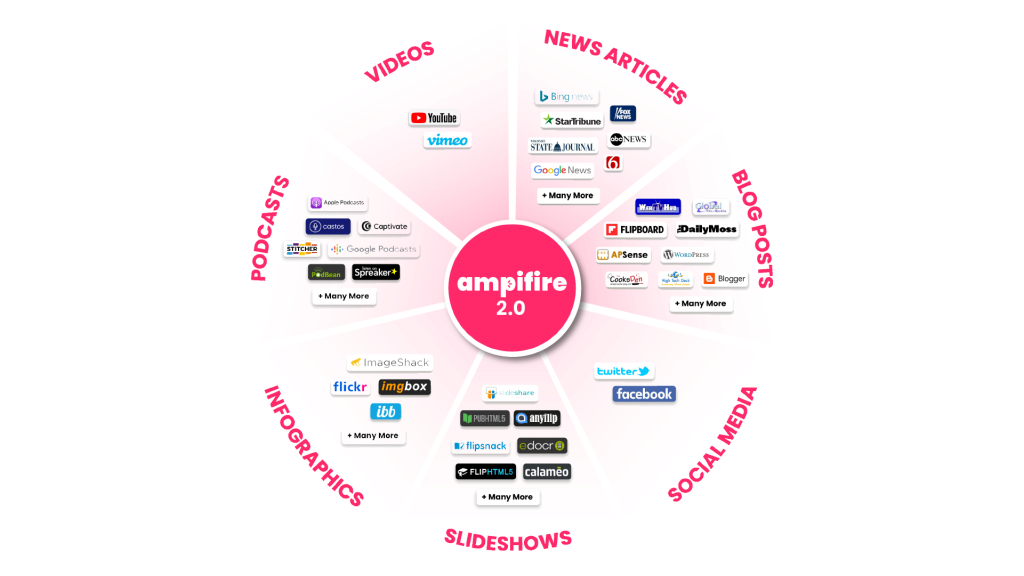
When your content appears on Google News, YouTube videos rank on page 1, podcasts reach listeners on Spotify, and blog posts attract readers—that’s the widespread presence that signals authority and trustworthiness to both potential customers and search algorithms. Each piece of content reinforces your brand message and creates multiple pathways for buyers to discover you.
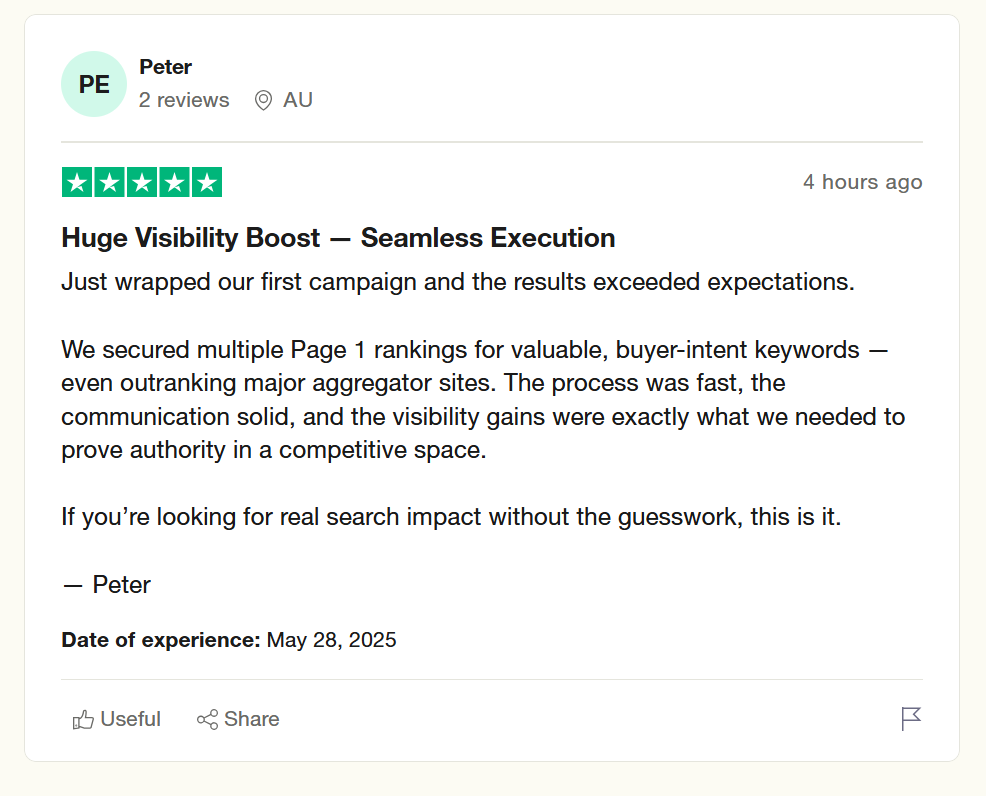
Also, multi-channel organic content consistently delivers returns that traditional PR simply cannot match. Consider this customer review from AmpiFire: After running a campaign using AmpiFire’s multichannel distribution strategy, they secured multiple page 1 rankings.
Traditional press releases might get you one article that generates temporary traffic. Generic SEO might help you rank one blog post for a limited set of keywords. But neither approach creates the omnipresent digital footprint that modern buyers expect from credible brands.
Whether buyers search on Google, browse social media, watch videos, listen to podcasts, or look for visual content, they find you. The real power of AmpiFire’s approach emerges over time. Each campaign builds on previous ones, creating a compounding effect that strengthens your brand presence and organic traffic month after month, unlike one-off press releases that fade quickly.
Ready to Replace Press Releases? Try the AmpiFire Method →
Frequently Asked Questions (FAQs)
Do I need a dateline for every type of press release?
Yes, virtually all press releases distributed to the media should include a properly formatted dateline. The only exceptions are internal announcements not intended for media or for specific digital-only formats, such as blog posts. Even for virtual events or digital product launches, use your company headquarters or primary spokesperson’s location as the dateline city.
What if my company is based in a small town that isn’t on the AP Style standalone cities list?
Include both the city name in all caps, followed by the properly abbreviated state name, such as “GREENVILLE, S.C. (Oct. 15, 2023) —”. Alternatively, consider using a nearby central metropolitan area if it increases media relevance, or strategically dateline from your most recognizable office location regardless of headquarters placement.
Should I include time zones in my press release dateline?
No, standard AP Style datelines do not include time zones, only dates. For time-sensitive announcements like earnings calls or product launches, include the time and time zone in the first paragraph after the dateline, rather than in the dateline itself, e.g., “Company X will host its earnings call today at 2:00 p.m. ET…”
Can I use a dateline for embargoed press releases?
Yes, embargoed releases should include datelines using the embargo lift date rather than the distribution date—clearly mark “EMBARGOED UNTIL: [Date and Time]” above the dateline. Reiterate the embargo terms in your email subject line, and send only to trusted media contacts who respect such professional courtesies.
How does AmpiFire’s distribution strategy differ from traditional press release services?
AmpiFire transforms your announcement into eight content formats and publishes across 300+ platforms, including Google News, YouTube, Spotify, and FOX affiliates. Whether buyers search on Google, browse social media, watch videos, listen to podcasts, or look for visual content, they find you.