Let's get one thing straight: PR stands for Public Relations. But that’s just the textbook answer. In the real world, PR is the art of managing your company's story—shaping how people see, talk about, and trust your brand.
Think of it as your reputation’s guardian angel.
What PR Really Means for Your Business Today
At its heart, Public Relations is all about strategic communication. It’s the constant effort to build and maintain a positive relationship between your company and the public—your customers, investors, employees, and the media.
But here’s the key difference that separates PR from advertising: you can’t just buy it. Advertising is paying for a billboard on the highway. PR is earning a feature story in a top industry magazine. One is a paid ad; the other is a stamp of approval.
This distinction is what gives PR its power. When a neutral third party, like a journalist or a respected influencer, chooses to talk about your business, their endorsement carries immense weight. That’s the magic of what is earned media coverage, and it's the foundation of any solid PR strategy.
PR is about earning recognition, not just buying ads. In today's market, a strong PR strategy is essential for standing out, building lasting relationships, and protecting your brand's value.
This isn’t just a nice-to-have function anymore; it’s critical. The numbers don't lie. The global public relations market hit $105.12 billion in 2025 and is on track to reach $110.35 billion in 2026. Forecasts show it soaring to $141.22 billion by 2030, proving that smart companies are doubling down on managing their reputation.
So, what does PR stand for in business? It stands for a long-term investment in your brand’s reputation. It’s the proactive work you do to control the conversation about your company. This boils down to a few core goals:
- Building deep trust and credibility with the people who matter most.
- Managing your brand’s reputation through the good times and the bad.
- Creating a positive public image that directly supports your business objectives.
The Pillars of a Modern PR Strategy
A solid public relations strategy isn’t just one thing—it’s a mix of different efforts all working together. To really get what PR stands for in business, you have to look at the pieces that make it tick. These pillars are what hold your brand’s reputation up, protecting it from all sides.
Think of these as the core functions of your PR machine. Each one targets a different audience and has a unique goal, but they all share the same mission: to make your company look good and earn public trust.
The 4 Key Functions of Public Relations
Most effective PR plans are built on four primary pillars. When they work in harmony, they create a powerful and consistent brand story.
Media Relations: This is what most people think of when they hear "PR." It’s all about building solid relationships with journalists, bloggers, and influencers to get positive coverage you don't pay for—what we call earned media. A glowing feature in an industry magazine or a great review on a popular blog? That's a media relations win.
Crisis Communications: When things go wrong—and they sometimes do—this is your game plan. Whether it’s a product recall or a wave of negative comments on social media, crisis communications is the strategy for navigating the storm. A fast, honest response is the gold standard here, as it helps protect your reputation and keep the public's trust.
This diagram nails the core ideas that drive every good PR plan.
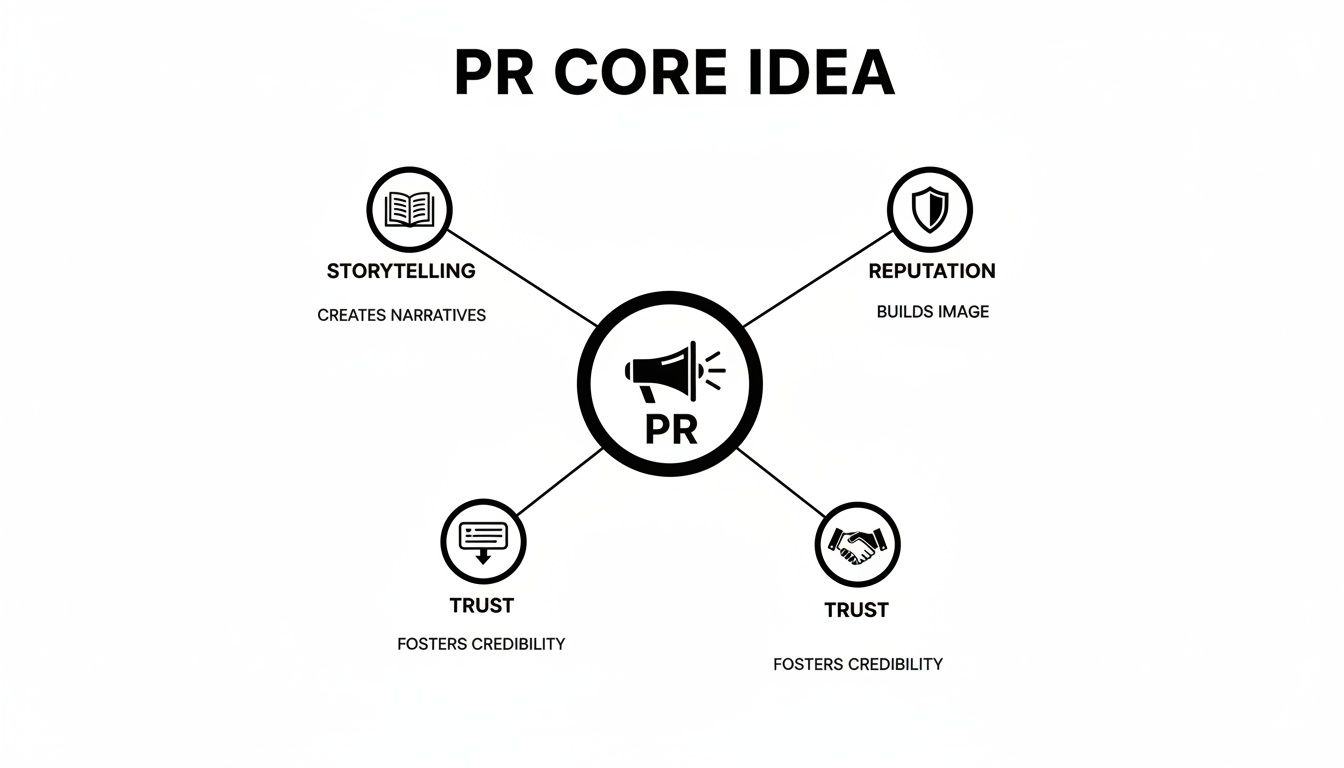
It perfectly shows how PR uses powerful storytelling to build a reputation that people genuinely trust and find credible.
Expanding Your Influence
Great PR doesn't stop with the media. It also extends to your local community and, just as importantly, inside your own company. These last two pillars are vital for building a brand that lasts.
- Community Engagement: This is about creating goodwill right where you operate. Sponsoring a local charity run, having your team volunteer for a good cause, or partnering with other local businesses are all smart ways to build a positive presence in your community. It shows you care about more than just profits.
Internal Communications: Never forget that your employees are your number one brand ambassadors. This pillar focuses on making sure your own team is kept in the loop, feels engaged, and is totally on board with the company’s mission. When your team genuinely believes in the brand, that passion shines through to your customers and the public.
By weaving these four pillars together, you’re not just sending out messages. You're building a strong, cohesive story that creates real public support and makes your brand resilient, no matter what comes its way.
PR vs. Marketing: Untangling the Two
It's a question I hear all the time: isn't PR just a fancier name for marketing? While they're often lumped together and both aim to grow a business, their playbooks, and primary goals are fundamentally different.
Getting this distinction right is crucial. It shapes your entire strategy, your budget, and ultimately, your results.

The best way to slice through the confusion is with a simple, powerful rule of thumb.
Marketing pays for attention, while Public Relations earns it.
Marketing is all about direct promotion to drive sales. It uses paid channels like digital ads, TV commercials, and email campaigns to put a product or service right in front of potential customers. Think of it like buying a billboard—you pay for the space, and you control the exact message.
PR, on the other hand, is playing the long game. It's focused on building rock-solid trust and credibility for your brand over time. The goal is to secure positive, unpaid endorsements from third parties. This is what we call "earned media"—things like news articles, glowing reviews, or an industry leader mentioning your brand without you paying them for it.
Public Relations vs. Marketing Key Differences
Because their core functions are so different, PR and marketing operate on separate timelines and measure success with entirely different yardsticks. Marketing often chases short-term sales spikes, while PR methodically builds brand authority that pays dividends for years.
This table breaks down exactly how they stack up head-to-head.
| Aspect | Public Relations (PR) | Marketing |
|---|---|---|
| Primary Goal | Build trust and manage brand reputation. | Drive direct sales and acquire customers. |
| Key Tactics | Media relations, press releases, crisis management. | Advertising, email campaigns, SEO, promotions. |
| Cost Model | Earned (story placement is not paid for). | Paid (ad space, clicks, and impressions are bought). |
| Message Control | Low; the media controls the final story. | High; you control the exact ad creative. |
| Longevity | Builds long-term credibility and trust. | Often focuses on short-term sales goals. |
So, are they rivals? Not at all.
While distinct, PR and marketing are most powerful when they work in sync. A great PR story can be amplified across marketing channels, and a brilliant marketing campaign can generate the kind of buzz that PR can turn into a major news story. A unified strategy drives both reputation and revenue, creating a stronger, more resilient brand.
How a Press Release Powers Your PR Strategy
If Public Relations is the big-picture strategy for shaping your brand's reputation, then the press release is one of the most vital tools in your kit. Think of your PR plan as the war room strategy; the press release is the official dispatch from the front lines, making sure your message is clear, consistent, and actually newsworthy.
It’s the formal vehicle you use to get significant news out to the media.

Announcing What Matters
A press release isn't for your company's everyday updates. It's reserved for genuine milestones—the kind of stuff journalists and your audience would actually find interesting. Knowing when to issue one is half the battle.
Key moments that call for a press release include:
- Product Launches: Announcing a brand-new or updated product to get the market buzzing.
- Major Partnerships: Highlighting a strategic team-up that gives your company more clout.
- Key Hires: Introducing a new executive or influential team member to signal growth and expertise.
- Company Milestones: Celebrating big wins like securing a funding round, opening a new office, or landing a major award.
A well-crafted press release does more than just announce something; it frames the narrative. It gives you first-mover advantage on the story before anyone else can spin it, handing journalists a factual, approved source to build their own articles from.
But a modern press release is more than just a memo to the media; it's a powerful digital asset in its own right. When you distribute one online, it can drive serious SEO benefits by creating high-quality backlinks and boosting your search engine rankings. It helps your big news show up in Google News, putting your brand right in front of people actively looking for updates in your industry.
To get a better feel for packaging your message, looking at well-put-together materials like these musician press kit examples can offer some great ideas. For a deeper dive, check out our guide on how to get a press release picked up by the media for some actionable tips.
Measuring the Real Impact of Your PR Efforts
So, how do you actually know if your PR efforts are paying off? The real answer means pushing past surface-level numbers like impressions and digging into what really matters: tangible business results. In today’s world, proving the financial value of PR isn't just a nice-to-have; it's the entire point.
Measuring modern PR success boils down to tracking the right key performance indicators (KPIs). These are the metrics that connect your work directly to your company’s bottom line, showing exactly how your efforts are driving growth. This data-driven approach is the new standard.
Key Metrics to Track PR Success
To get a true sense of your impact, you need to focus on a few core metrics that tell a clear story about your brand's reputation and influence.
- Share of Voice (SoV): Think of this as your slice of the conversation pie. It measures your brand's visibility against your competitors. A bigger slice means you're dominating the discussion in your industry.
- Sentiment Analysis: This one is all about the vibe. It tracks the tone of your media mentions—are they positive, neutral, or negative? A rising tide of positive sentiment is a huge indicator of growing brand trust.
- Website Referral Traffic: This metric draws a straight line from your PR hits to potential customers. It shows you exactly how many people are clicking through to your website from articles and other media coverage.
- Backlink Acquisition: When a reputable website links back to yours, it’s a massive win for your SEO. These backlinks are a direct result of solid PR work and can significantly boost your search engine rankings.
Integrating PR into your core strategy isn't just about getting good press; it's about measurable growth. Businesses that embed PR early in their campaign planning can see revenue increases of up to 20%. Today, 76% of companies are using analytics to track PR-driven conversions.
To really get a handle on your impact, understanding and tracking AI brand mentions is quickly becoming essential.
For a deeper dive into this topic, check out our complete guide on the essential press release KPIs and how to measure performance.
Frequently Asked Questions About PR
Getting your head around the strategy and tools is one thing, but the real questions pop up when you start thinking about actually doing PR. Let's tackle some of the common things that trip up business owners and clear the path so you can get started.
When Should a Small Business Start Doing PR
Forget the idea that you need a huge budget or a massive team to get started. The perfect time to start PR is simply when you have a story worth telling.
This could be your official launch, a new round of funding, a product that solves a real problem, or a key partnership. PR is a long game, and you build your reputation one milestone at a time.
The ideal time to begin PR is when you have a newsworthy story to tell. You don't need a huge budget to start; early-stage PR can involve building relationships with local journalists and engaging in your community.
Can I Do PR Myself or Do I Need to Hire an Agency
You can absolutely start with a DIY approach. In fact, many successful businesses do. It’s a fantastic way to learn the fundamentals firsthand—things like nailing down your key messages, building a list of target journalists, and writing a solid press release.
As you scale, or if you run into something tricky like a brand crisis, bringing in a PR freelancer or agency is a smart move. They come with expertise and established media connections that can really pour fuel on the fire. The right answer for you boils down to your budget, time, and what you’re trying to achieve.
What Is the Difference Between a Press Release and a Media Release
Honestly, in today's world, there isn't one. The terms “press release” and “media release” are used interchangeably. Both are official statements you send to the media to share information or make an announcement.
"Press release" is the old-school term from the days when newspapers were king. "Media release" is the more modern equivalent, reflecting a world that includes online news, TV, radio, and podcasts. For all intents and purposes, they’re the exact same thing.
How Does Social Media Fit into a Modern PR Strategy
Social media isn't just a side dish to PR anymore—it’s a main course. It's a powerful, two-way channel that's absolutely vital to any modern strategy.
Here’s how it all connects:
- Direct Communication: You get to talk directly with your audience, no media filter required.
- Sentiment Monitoring: It’s your real-time dashboard for what people are saying and feeling about your brand.
- Content Amplification: It’s the perfect megaphone to blast out any positive news coverage you get.
- Journalist Engagement: Social media is where you can build real relationships with the journalists, influencers, and industry voices that matter.
A smart PR plan doesn't just "use" social media; it's completely woven into it. This is how you build a community, protect your reputation, and get your message out to the world, fast.
Ready to create a press release that gets noticed? Press Release Zen offers free, easy-to-use templates and step-by-step guides to help you craft the perfect announcement. Visit https://pressreleasezen.com to get started.