Key Takeaways
- “Today announced” is the traditional and widely accepted phrasing for formal press releases because it follows AP style conventions, emphasizes immediacy, and aligns with newsroom expectations.
- “Announced today” is grammatically correct and often better suited for blogs, emails, and social media, where a more natural, conversational tone fits the platform and audience.
- The key rule is to match your phrasing to the platform: use “today announced” for formal press releases and “announced today” for digital-first or informal channels.
- While word order matters for professionalism, larger issues (such as burying the news, using overly promotional language, writing long sentences, or relying solely on press releases instead of multi-channel distribution) have a far greater impact on results.
- AmpiFire helps businesses move beyond press releases by creating eight content formats and distributing them across 300+ high-authority platforms.
Why Word Order in Press Releases Causes So Much Confusion
If you’ve ever written a press release, you’ve probably paused over a deceptively simple question: should you write “today announced” or “announced today”? Business owners, marketers, and even experienced PR professionals get stuck on this detail more often than you’d expect.
The short answer is that “today announced” is the traditional and widely accepted format for press releases. But the reality is less rigid. Understanding why this convention exists, and when the alternative phrasing works just as well, can help you write more polished announcements. More importantly, it’s worth asking whether fine-tuning press release phrasing is really the most productive use of your marketing time and budget in 2026.
Why Press Releases Don’t Work Anymore
Smart Businesses Are Moving Beyond Traditional PR
• The Problem: Press releases reach one audience through one channel, while your customers are everywhere online. Most get buried within days with poor ROI.
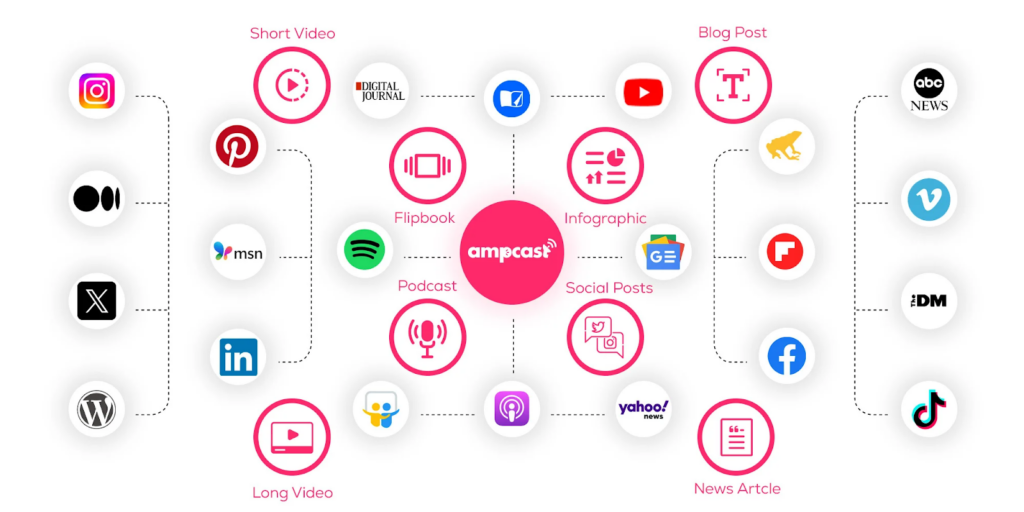
• The Solution: AmpiFire’s AmpCast creates 8 content formats (news articles, blog posts, interview podcasts, longer informational videos, reels/shorts, infographics, flipbooks/slideshows, and social posts) from a single topic and distributes them across 300+ high-authority sites, including Fox affiliates, Spotify, and YouTube.
What You’ll Learn on PR Zen:
✓ Why multi-channel content delivers 10x better results than press releases
✓ How to amplify your PR efforts across multiple platforms
✓ Real case studies of businesses dominating search, social, video, and podcasts
✓ Cost-effective alternative to expensive PR agencies
Ready to Replace Press Releases? Learn the AmpiFire Method →
What’s the Difference Between “Today Announced” and “Announced Today”?
Both phrases communicate the same basic fact: a company made an announcement on the current day. The difference comes down to word order and where the emphasis falls.
“Today announced” uses an inverted structure that places the time element before the verb. In a typical press release, it reads like this: “XYZ Corp. today announced the launch of its new platform.” This format front-loads the timeliness of the news, which is a hallmark of press release writing. It immediately signals to editors and journalists that the information is current and newsworthy.
“Announced today,” on the other hand, follows standard English sentence order. “XYZ Corp. announced today the launch of its new platform.” This version sounds more conversational and natural. It reads the way most people actually speak, which makes it a better fit for blog posts, social media updates, or other digital-first content.
Neither version is grammatically wrong. The right choice depends on your context, your audience, and the platform where your content will appear.
Why “Today Announced” Is the Standard Format

The “today announced” structure has been the default in press releases for decades, and there are solid practical reasons behind it.
It follows the conventions of AP (Associated Press) style, which most newsrooms and PR professionals rely on as their formatting guide. AP style favors placing time references early in a sentence to establish immediacy. Since press releases are designed to mimic the tone of news reporting, this structure helps your release sound professional and credible.
Placing “today” before the verb also draws immediate attention to the freshness of your news. Journalists scanning through dozens of releases each day want to know right away that something just happened. Leading with “today” answers that question before they finish reading the sentence.
Consistency also plays a role. If you review press releases from major companies and PR wire services, you’ll notice that “today announced” appears far more frequently than the alternative. Sticking with this convention keeps your release from standing out for the wrong reasons or looking amateurish to seasoned editors.
When Is “Announced Today” the Better Choice?
Despite the strong industry preference for “today announced,” there are situations where flipping the word order makes more sense.
If you’re writing for a blog, social media post, email newsletter, or any casual channel, “announced today” will sound more natural to your readers. The inverted press release structure can feel stiff and overly formal outside of a news context. In these formats, your goal is to sound approachable rather than mimicking a wire service dispatch.
“Announced today” also works well when you want to emphasize the action rather than the timing. If the announcement itself is highly anticipated, leading with the verb creates stronger impact. “The company announced today that it will double its workforce” puts the weight squarely on the news, which may be exactly the effect you’re going for.
The practical rule is simple: match your phrasing to your platform. Formal press releases call for “today announced.” Blogs, emails, and social posts give you more flexibility to use “announced today.”
Common Press Release Phrasing Mistakes to Avoid
While word order is worth getting right, there are bigger phrasing problems that can undermine your press release entirely.
Burying the news is one of the most common mistakes. Your opening sentence should state exactly what happened and why it matters. Background information and company history belong in the second or third paragraph. Editors will not dig through filler to find your actual news.
Overly promotional language is another frequent issue. Words like “revolutionary,” “game-changing,” or “industry-leading” make your release read like an advertisement instead of a news item. Clear, factual language is more persuasive and more likely to earn media pickup.
Writing long, complex sentences hurts readability as well. Press releases should be easy to scan quickly. Keep sentences concise and paragraphs short. If a sentence needs more than one comma, it probably works better as two sentences.
Forgetting to include a clear call to action at the end of your release is a missed opportunity too. Always tell readers where to go for more information, whether that’s a landing page, a product page, or a contact form.

Why Press Releases Alone Won’t Get Your News Noticed
Here’s the bigger question that most formatting guides skip entirely: even a perfectly written press release has serious limitations in 2026.
A traditional press release reaches one audience through one channel. It gets published, maybe gets picked up by a handful of outlets, and then fades within days. The return on investment for most single press releases is poor because they simply don’t generate lasting, multi-channel exposure.
Your potential customers aren’t just reading news wires. They’re watching YouTube, scrolling through social media feeds, listening to podcasts, and typing questions into Google. A single press release, no matter how perfectly phrased, cannot reach people across all those platforms simultaneously.
This is exactly the gap that a multi-channel content strategy fills. Instead of pouring your effort into one format for one channel, you create multiple types of content around the same topic and distribute them widely. The result is significantly broader reach, more engagement, and more traffic flowing back to your business over a longer period of time.
How AmpiFire Helps Businesses Move Beyond Press Releases
At AmpiFire, we built our platform because we saw how limited traditional press releases had become. Businesses were spending real time and money crafting the perfect release, only to watch it vanish within a week with almost nothing to show for it.
Our approach works differently. With AmpiFire’s AmpCast AI, we take a single topic and produce eight distinct content formats: news articles, blog posts, interview-style podcasts, long-form videos, short-form reels, infographics, slideshows, and social posts. We then distribute all of that content across 300+ high-authority sites, including Fox affiliate sites, Spotify, Apple Music, YouTube, and Pinterest.
AI is what makes this approach practical. Creating eight content formats manually would require a large in-house team or expensive agency fees. AmpiFire handles the heavy lifting, making multi-format content creation faster and far more affordable. That’s why it works for small businesses and solo entrepreneurs, not only corporations with large marketing budgets.
Perfecting your press release phrasing is a fine detail to get right. But the real question is whether a press release alone is enough to give your business the attention it deserves. We believe it isn’t, and AmpiFire exists to give you a better path forward.
Frequently Asked Questions (FAQs)
Is “today announced” grammatically correct?
Yes, “today announced” is grammatically correct. It uses an inverted sentence structure that is standard in journalistic and press release writing. It is widely accepted under AP style guidelines.
Can I use “announced today” in a press release?
You can, and it won’t cause your release to be rejected. However, “today announced” is the more conventional and expected choice. Using “announced today” may make your release feel slightly less polished to experienced editors.
How long should a press release be?
Most effective press releases fall between 300 and 500 words. This length gives you enough room to cover the key facts, include a supporting quote, and add a clear call to action without overwhelming the reader.
Does press release formatting really affect media pickup?
Formatting helps your release look professional, but distribution reach matters far more. A well-formatted release sent to a narrow audience will underperform compared to content that is distributed across multiple channels and platforms.
How does AmpiFire compare to traditional press release distribution services?
AmpiFire goes well beyond standard press release distribution. We create eight content formats from a single topic and distribute them across 300+ high-authority platforms, delivering multi-channel exposure that a single press release simply cannot provide.