Key Takeaways
- Press releases are factual, neutral announcements used primarily to share news, while op-eds are opinion-based pieces intended to persuade readers on specific viewpoints.
- Press releases use neutral third-person language, whereas op-eds employ a persuasive first-person perspective to build credibility and influence readers.
- Press releases follow a structured format, featuring headlines, datelines, and boilerplates, whereas op-eds employ persuasive writing with clear thesis statements and supporting evidence.
- The right choice between press release and op-ed depends on your objectives: choose press releases for announcements and op-eds for thought leadership and public discourse.
- AmpiFire’s AI-powered AmpCast outperforms press releases and op-eds by converting a single topic into eight distinct content formats and distributing them across over 300 high-authority platforms for maximum exposure.
Press Releases vs. Op-Eds: Which Format Will Amplify Your Message?
Properly formatting and positioning your message often determines whether you make headlines or get ignored. Press releases and op-eds represent two distinct pathways to media visibility, each with specific purposes, formats, and outcomes. Understanding when to use each format is about strategic messaging that achieves specific objectives.
As communications channels continue to evolve, these traditional formats remain powerful tools for businesses, organizations, and individuals seeking to share information or influence public opinion.
Before crafting either format, you need to understand its core differences and strategic applications. This knowledge ensures your message not only reaches your target audience but also achieves your desired outcome, whether that’s announcing news, shifting perspectives, or establishing thought leadership.
Why Press Releases Don’t Work Anymore
Smart Businesses Are Moving Beyond Traditional PR
• The Problem: Press releases reach one audience through one channel while your customers are everywhere online. Most get buried within days with poor ROI.
• The Solution: AmpiFire’s AmpCast creates 8 different content formats from one topic and distributes across 300+ high-authority sites including Fox affiliates, Spotify, and YouTube.
What You’ll Learn on PR Zen:
✓ Why multi-channel content delivers 10x better results than press releases
✓ How to amplify your PR efforts across multiple platforms
✓ Real case studies of businesses dominating search, social, video, and podcasts
✓ Cost-effective alternative to expensive PR agencies
Ready to Replace Press Releases? Learn the AmpiFire Method →
What Is a Press Release? The Official Announcement Format

A press release is a standardized communication tool used to announce something newsworthy to journalists and media outlets. These formal written statements are designed to share factual information about specific developments such as product launches, executive appointments, company milestones, or upcoming events. The primary goal is to inform the media about news they might want to cover, providing them with the essential facts needed to develop their own stories.
Core Elements of an Effective Press Release
Every well-crafted press release contains specific structural elements that journalists expect to find. These elements include an attention-grabbing headline, a dateline indicating the date and location of the news’s origin, an informative lead paragraph that captures the essence of the announcement, supporting paragraphs with relevant details, quotes from key stakeholders, and a boilerplate description of the issuing organization. Contact information for media inquiries is always provided, offering journalists a direct channel for follow-up questions or interview requests.
The Inverted Pyramid Structure
Press releases follow the inverted pyramid writing structure, placing the most crucial information at the beginning and proceeding to less essential details. The first paragraph typically contains the most newsworthy aspects of the announcement, answering the key journalistic questions. Supporting paragraphs provide context, background information, and additional details in descending order of importance.
What Is an Op-Ed? The Opinion Platform That Shapes Perspectives

An op-ed (short for “opposite the editorial page”) is a persuasive essay that presents a writer’s informed opinion on a timely, relevant issue. Unlike the neutral stance of press releases, op-eds deliberately take positions, advocate for specific viewpoints, and aim to influence public discourse through compelling arguments.
Essential Components of Persuasive Op-Eds
Effective op-eds begin with a clear, compelling thesis statement that establishes the author’s position and frames the discussion. Unlike press releases, op-eds are bylined pieces written in first-person perspective, establishing the writer’s credibility through relevant expertise, experience, or unique insights related to the topic.
Argument-Driven Structure
Op-eds employ an argument-driven structure designed to persuade readers through logical progression. They typically open with a hook that captures attention before introducing the central thesis.
Op-eds build momentum throughout, with each paragraph advancing the argument toward a clear conclusion that reinforces the main thesis and leaves readers with meaningful takeaways.
5 Critical Differences Between Press Releases and Op-Eds
1. Purpose and Intent
Press releases aim to inform journalists and the public about newsworthy developments in a factual, unbiased manner. Their primary purpose is announcement—sharing objective information about specific events, developments, or milestones that warrant media coverage.
Op-eds, by contrast, explicitly aim to persuade readers by presenting reasoned arguments supporting specific viewpoints. Their purpose is to influence public opinion, shape discourse around important issues, and advocate for particular perspectives or solutions.
2. Voice and Perspective
Press releases employ a neutral, third-person voice that presents information objectively. They maintain a journalistic tone that emphasizes factual reporting over personal perspective.
Op-eds often employ a first-person perspective, showcasing the author’s unique voice, personal experiences, and distinct viewpoint. They establish the writer as an authority with relevant expertise and a legitimate perspective on the topic.
3. Format and Length
Press releases follow a standardized format with specific structural elements including headlines, datelines, contact information, and boilerplates. They typically range from 400–800 words, providing enough detail for journalists to understand the news value without overwhelming them with excessive information.
Op-eds offer more flexibility in structure while adhering to the basic elements of persuasive writing. They generally run between 600–1200 words, providing sufficient space to develop complex arguments while remaining concise enough for publication.
4. Distribution Channels
Press releases are distributed through specialized services, such as PR Newswire, Business Wire, or GlobeNewswire, which maintain established relationships with media outlets. The digital transformation has expanded distribution to include company newsrooms, social media channels, and email newsletters.
Op-eds follow a different distribution process, typically submitted directly to specific publications for editorial consideration. This submission process varies by outlet, with each publication maintaining its own guidelines, word count requirements, and exclusive submission policies.
5. Editorial Control
With press releases, the issuing organization maintains complete control over messaging, content, and timing. While journalists may use press release content selectively or adapt it for their stories, the original document remains unchanged.
On the other hand, op-eds sacrifice some control in exchange for credibility and reach. Publications typically retain editorial discretion over which submissions they accept and may request revisions to content, structure, or tone before publication.
Press Release Example
Event Announcement Press Release
The Coachella Valley Music and Arts Festival effectively promotes its events through press releases that generate anticipation and garner media coverage. Their lineup announcement releases typically begin with the headline featuring the year and key headliners, followed immediately by the essential event details: dates, location, and ticket information. The body highlights featured performers across various stages while emphasizing new elements or special attractions for the upcoming festival.
This press release works because it combines several essential elements, including a clear dateline establishing time and location, complete event logistics including dates, times, venue, quotes, and access information.
Op-Ed Example
Policy Position Op-Ed
Starbucks CEO Howard Schultz published a New York Times op-ed titled “America Deserves a Servant Leader” in August 2015, responding to speculation about a potential presidential run while making a broader case for transformational political leadership.
The piece combined his business credibility with a call for bipartisan cooperation, criticizing what he described as a field of candidates unable to rise above petty politics. Schultz strategically used his platform as a successful CEO to advocate for servant leadership values while announcing he would remain focused on Starbucks, demonstrating how op-eds can leverage business authority to shape political discourse without directly entering the electoral arena.
How to Choose Between Press Release and Op-Ed
Message Objective Assessment
Begin by clearly defining what you want to accomplish with your communication. Press releases excel at announcing concrete developments, such as product launches, executive appointments, financial results, event notifications, and other factual news. If your primary goal is informing the public about something that has happened or will happen, the structured press release format provides an efficient vehicle for conveying that information to media outlets.
Op-eds serve different objectives, including influencing public opinion, contributing to ongoing debates, establishing thought leadership, and advocating for specific perspectives or policies. If your goal involves persuading readers to reconsider their views, deepening understanding of complex issues, or positioning yourself as a thought leader, the opinion-driven format of op-eds offers the necessary platform for developing nuanced arguments and personal perspective.
Audience Consideration Matrix
Press releases primarily target journalists and media outlets who serve as gatekeepers, potentially translating your announcement into news stories that reach broader audiences. This indirect path to your ultimate audience is effective when your goal is to achieve widespread factual coverage across multiple outlets.
Op-eds directly address readers of specific publications, bypassing journalistic interpretation to establish direct communication with your audience. This approach is particularly effective when targeting specific communities, industry sectors, or demographic groups through publications they trust and regularly read.
Content Authority Factors
Assess your organization’s positioning and authority relative to your message. Press releases work best when you possess clear legitimacy to make announcements: your own products, services, events, partnerships, or organizational developments.
Op-eds require different forms of authority, including subject matter expertise, a unique perspective, professional experience, or a personal connection to the topic. When your authority stems from knowledge, insight, or a specialized perspective rather than organizational position, op-eds provide the platform to establish credibility through reasoned arguments and demonstrated expertise.
Timing Considerations
Press releases are most effective for time-sensitive announcements with specific dates, immediate relevance, or breaking developments. Their structured format ensures quick comprehension of essential information, making them ideal for time-critical communications requiring immediate media attention.
Op-eds excel with evergreen topics or issues requiring deeper context and analysis. They can address ongoing debates, emerging trends, or long-term challenges that benefit from thoughtful exploration rather than immediate announcement.
Press Release vs Op-Ed: Comparison Table
| Feature | Press Release | Op-Ed |
| Primary Purpose | Announce news and factual developments | Persuade readers and influence opinion |
| Voice/Perspective | Neutral, third-person | Personal, first-person |
| Typical Length | 400–800 words | 600–1200 words |
| Distribution Method | Wire services, media lists, newsrooms | Direct submission to publications |
| Editorial Control | Complete organizational control | Subject to publication editorial process |
| Primary Audience | Journalists as intermediaries | Readers directly |
AmpiFire’s Multi-Format Approach: Beyond Press Releases & Op-Eds
Traditional content distribution methods, such as press releases and op-eds represent only a fraction of the channels where your potential customers spend their time. AmpiFire takes a broader view, distributing your content across multiple formats and platforms to maximize visibility and engagement in ways that conventional approaches simply cannot match.
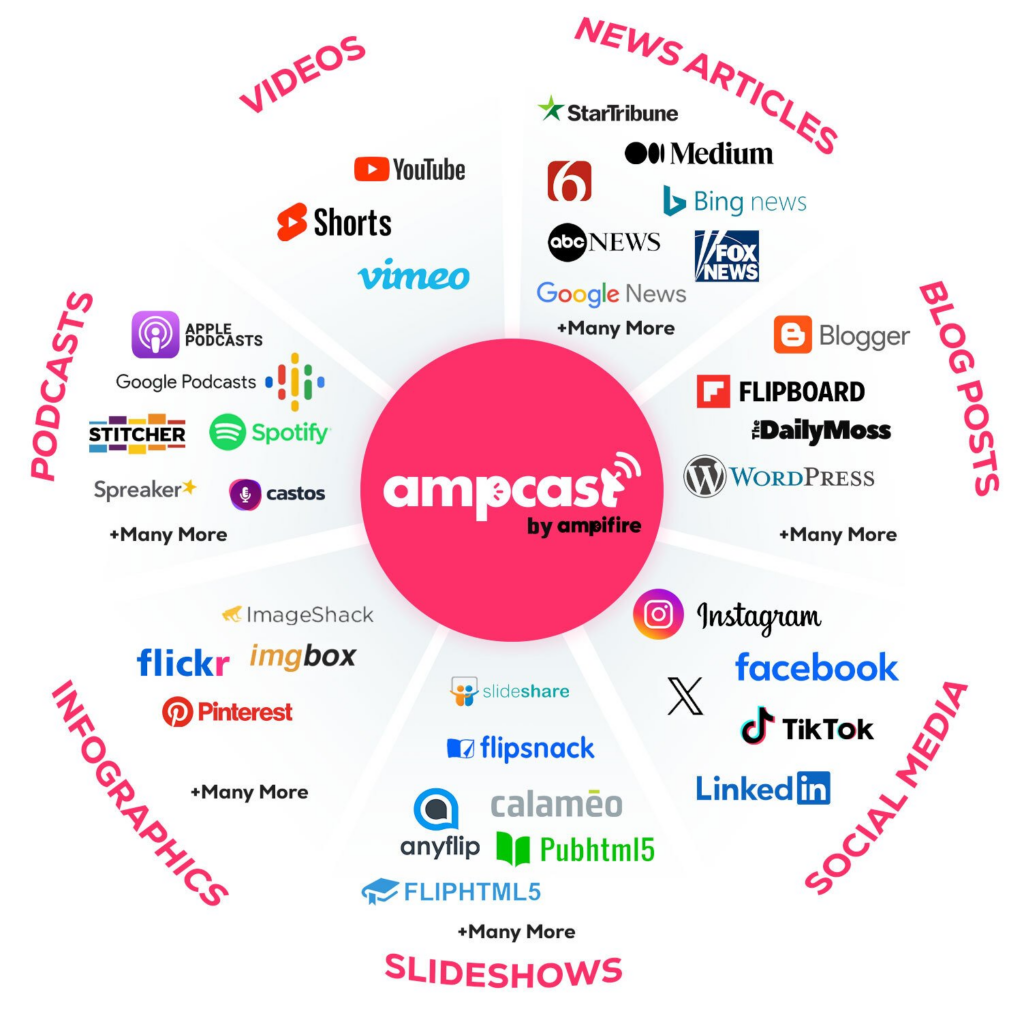
Here’s How AmpiFire Works
AmpiFire’s process begins with your core content, whether that’s a product announcement, company milestone, or industry perspective. AmpCast, its proprietary AI-powered platform, then analyzes this content to identify key messages and adapt them to format-specific requirements across the digital ecosystem.
Rather than simply duplicating the same content, the system intelligently reformats your message to meet the expectations and requirements of each distribution channel while maintaining brand voice and core messaging.
Once transformed into multiple formats, your content is distributed across an extensive network of 300+ high-traffic platforms, including news sites, blogs, podcasts, video platforms, slideshows, infographics, and social media posts. This ensures your content reaches audiences through their preferred channels of content consumption.
This multi-pronged approach results in comprehensive digital coverage that’s more effective than press releases and op-eds, all from a single content creation effort.
AmpiFire: Your Cost-Effective Alternative To Traditional PR
Traditional distribution methods come with high costs and uncertain returns. Mid-tier PR and SEO agencies typically charge thousands of dollars for content creation, distribution, or optimization, yet they offer no guarantee of coverage or sustained traffic.
Hiring your own dedicated content team drives expenses even higher, with salaries, tools, and operational costs pushing annual budgets past thousands of dollars annually.
AmpiFire changes the equation entirely. For a one-time DIY credit of $397 or an enhanced AI AmpCast credit starting at $495, you gain access to a robust multi-channel distribution platform that surpasses what agencies deliver at many times the price. A $27 monthly maintenance fee ensures everything runs smoothly and provides unlimited AI-powered content generation, syndication, and placement across various platforms.
This pricing model eliminates the unpredictability of agency retainers and the burden of building internal resources, enabling businesses of any size to launch professional-grade campaigns that would otherwise require an enterprise-level budget.
The Long-Term Effectiveness of AmpiFire
While traditional press releases typically generate a brief spike in attention followed by a rapid decline, and op-eds offer momentary influence when published, AmpiFire creates lasting digital assets that continue to work for your brand.
The diverse content formats distributed through the platform remain permanently published across multiple domains, creating an expanding digital footprint that enhances search visibility, strengthens your website’s credibility and search presence over time, and generates ongoing discovery opportunities. This evergreen approach transforms your media investment from temporary visibility to permanent digital equity that compounds in value over time.
Results That Speak For Themselves
AmpCast delivers real, measurable impact by pushing your content across multiple formats and platforms simultaneously. Here’s what some customers had to say about their experience with the platform:
“AmpCast made launching our AI-generated, interview-style podcast a breeze, along with all the other 7 media elements created at the push of a few buttons! The support team (special shout out to Jairo!) helped us clear every obstacle, and now we can focus on great conversions without any tech headaches!” – Review by Jim and MaryEllen from Vooomy.com.
Ready to Replace Press Releases? Try AmpiFire →
Frequently Asked Questions (FAQs)
What is an op-ed in journalism?
An op-ed is an opinion piece published in a newspaper or online publication that expresses the author’s viewpoint on a particular topic. The term “op-ed” stands for “opposite the editorial page,” referring to its traditional placement across from a publication’s editorial section.
Unlike news articles that report facts objectively, op-eds allow writers to share their perspective, argue a position, or offer commentary on current events, industry trends, or social issues.
Can startups benefit more from press releases or op-eds?
Startups often benefit from strategic combinations of both formats aligned with specific growth stages and objectives. In early stages, press releases are used to announce funding rounds, product launches, or significant partnerships. As startups mature, op-eds offer valuable opportunities for founders to establish thought leadership, differentiate from competitors, and articulate unique perspectives on industry challenges or innovations.
What are common press release mistakes?
The most frequent press release mistakes include writing weak or vague headlines, burying the key message instead of leading with it,and using overly promotional language that lacks newsworthiness. Other mistakes include forgetting to write relevant quotes or contact information, and failing to proofread for errors.
How long should my op-ed be to maximize chances of publication?
The optimal op-ed length varies by publication, but most mainstream outlets prefer submissions between 600–800 words. Major national newspapers sometimes accept longer pieces (800–1200 words) for significant topics or prominent authors, while specialized publications, trade journals, and online platforms may have different requirements.
How is AmpiFire’s approach better than press releases & Op-Eds?
AmpiFire’s AmpCast technology goes beyond traditional formats by transforming your core content into multiple formats, including news articles, videos, podcasts, infographics, and slideshows, and distributing them across 300+ platforms simultaneously.
AmpCast’s AI-powered optimization ensures each piece is tailored for its specific channel while maintaining consistent messaging and amplifying your content reach.
*Disclaimer: Results may vary based on individual circumstances, business type, and content strategy. The time savings and outcomes mentioned are based on typical user experiences and are not guaranteed. For specific pricing and service details, please visit AmpiFire.