Key Takeaways
- Transforming a press release into a news story increases your chances of media pickup compared to distributing standard corporate announcements.
- The inverted pyramid structure is essential for news stories; start with the most important information and work your way down to supporting details.
- Journalists receive hundreds of press releases daily; making yours stand out requires finding a unique angle that connects to broader trends or current events.
- Using conversational language instead of corporate jargon makes your story more accessible and increases reader engagement.
- AmpiFire’s AI-powered AmpCast outperforms press releases and news stories by transforming your press release into eight content formats and distributing them across 300+ channels for maximum visibility.
Turning Press Releases into News Stories: An Overview
A well-written press release can generate media coverage, but only if journalists see genuine news value in your announcement. The difference between releases that get picked up and those that disappear into the void often comes down to one factor: whether you’ve presented your information as a compelling news story rather than a corporate announcement.
Turning a press release into news coverage requires understanding what journalists actually need. They need a clear angle, relevant context, and content they can quickly adapt for their audience. When you bridge the gap between promotional messaging and newsworthy storytelling, you dramatically increase your chances of earning media attention.
This guide walks you through proven strategies, real-world examples, and actionable tips to transform your press releases into stories that journalists want to cover.
Why Press Releases Don’t Work Anymore
Smart Businesses Are Moving Beyond Traditional PR
• The Problem: Press releases reach one audience through one channel while your customers are everywhere online. Most get buried within days with poor ROI.
• The Solution: AmpiFire’s AmpCast creates 8 different content formats from one topic and distributes across 300+ high-authority sites including Fox affiliates, Spotify, and YouTube.
What You’ll Learn on PR Zen:
✓ Why multi-channel content delivers 10x better results than press releases
✓ How to amplify your PR efforts across multiple platforms
✓ Real case studies of businesses dominating search, social, video, and podcasts
✓ Cost-effective alternative to expensive PR agencies
Ready to Replace Press Releases? Learn the AmpiFire Method →
The 5-Step Method to Transform Any Press Release
Step 1: Find the Real Story Angle

The most critical step is identifying the newsworthy angle that will hook journalists and readers. This often isn’t the angle your company initially thinks is important. For example, your CEO might think the news is “Company X launches new software version 2.0,” but the real story might be “Local company solves industry-wide problem affecting thousands of businesses.”
Look for elements that connect to trending topics, solve significant problems, challenge conventional wisdom, or represent notable firsts in your industry. The best angles often lie in the implications of your announcement rather than the announcement itself.
For example, a financial services company announcing a new loan program could reframe its story to focus on how it’s addressing the growing challenge of small-business funding amid economic uncertainty. This approach connects its announcement to a broader narrative that journalists are already covering.
Step 2: Rewrite the Headline for Immediate Impact
Once you’ve identified your angle, craft a headline that captures it concisely and compellingly. Press release headlines tend to be formal and company-centric: “XYZ Corporation Announces Launch of New Widget.” On the other hand, news headlines are punchy, specific, and highlight the impact: “New AI-Powered Tool Cuts Small Business Paperwork by 70%.”
Your headline should promise value to readers, whether that’s important information, a solution to a problem, or insight into a trend. It should use active language, include specific details when possible, and avoid corporate jargon or excessive technical terms.
Step 3: Structure Your Story Like a Journalist
Journalists use the inverted pyramid structure because it works. Start with the most critical information (who, what, when, where, why, and how), then add supporting details, background context, and finally, less essential information. This structure allows busy readers to get the main points quickly and editors to cut from the bottom if needed without losing the core message.
Step 4: Replace Corporate Speak with Human Language
Replace jargon, buzzwords, and formulaic phrases with straightforward, conversational language that anyone could understand. However, this doesn’t mean dumbing down complex concepts; it means explaining them clearly.
Compare these two descriptions of the same product: “Our revolutionary, best-in-class solution leverages cutting-edge AI algorithms to optimize workflow efficiency” versus “Our new software uses artificial intelligence to automatically sort and file documents, saving businesses about three hours of work per day.”
The second version is clearer, more specific, and more credible.
Step 5: Add Context & Relevance Beyond the Original Release

Your story becomes more valuable to journalists when you connect it to broader industry trends, current events, or common challenges faced by their audience. This might mean citing recent research, referencing related news stories, or including perspectives from industry experts outside your company.
For instance, if you’re announcing a new sustainable packaging initiative, don’t just describe your company’s program; explain how it will benefit the environment. Reference the growing consumer demand for eco-friendly products, mention relevant regulatory changes on the horizon, or include statistics about packaging waste that illustrate why your initiative matters now.
Before & After: Examples of Press Release Transformations
Example 1: Product Launch Transformed
Press release headline: “TechCorp Announces Release of CloudSafe 3.0 Enterprise Security Solution.”
News story headline: “New Cybersecurity Tool Blocks Emerging AI-Based Attacks That Bypassed Traditional Systems.”
Press Release Opening: “TechCorp, a leading provider of enterprise security solutions, today announced the launch of CloudSafe 3.0, the latest version of its flagship security product with enhanced features and capabilities.”
News Story Opening: “As AI-powered cyberattacks continue to rise, a new security tool released Tuesday can detect and block these sophisticated threats that regularly bypass conventional security systems. The technology, developed by TechCorp, uses a proprietary algorithm that identifies attack patterns too subtle for traditional security measures.”
The transformed version immediately connects to a current trend (rising AI attacks), establishes why readers should care (these attacks bypass traditional security), and saves the company mention for later in the paragraph rather than leading with it. This structure prioritizes information value over company promotion.
Example 2: Data-Heavy Release Turned into a Trend Story
Original press release headline: “HealthisWE Releases Annual Healthcare Cost Survey Results.”
Transformed news story headline: “Preventive Care Spending Saves Businesses $3,200 Per Employee, New Health Cost Data Shows.”
By extracting the most surprising or actionable insight from the data and prominently featuring it, the transformed headline gives journalists a clear angle. This approach turns a routine data announcement into a story about cost savings—something that would interest business publications, HR professionals, and healthcare reporters alike.
Note: These are generated examples for the purpose of this article.
Tips for Making Your Story Irresistible to Media
Add Visuals That Actually Tell a Story
Generic stock photos or corporate headshots rarely add value to news stories. Instead, provide visual elements that actually enhance understanding of your news. This might include infographics that display key data points, before-and-after comparisons, or authentic photos of your product or service in real-world use.
Incorporate Quotes That Sound Like Real People
Quotes in press releases often sound robotic and promotional. For your news story, include quotes that add genuine insight, emotion, or perspective. A good news quote should either explain “why this matters” in human terms or provide technical details that would sound awkward in the main narrative.
Include quotes from multiple sources when possible, not just executives, but also customers, industry analysts, or partners.
Using Data Points That Create Context
Specific numbers and statistics add credibility to your story and give journalists concrete information to highlight. Rather than vague claims (“many users report significant time savings”), provide precise figures (“users save an average of 3.5 hours per week, according to a survey of 500 customers”).
When possible, compare your data to industry benchmarks or previous standards to illustrate significance.
Using AI Tools to Turn Your Press Release into News Stories
Manual transformation of press releases into news stories takes time and expertise. Content amplification tools can streamline this process by automatically reformatting your announcement into journalist-friendly formats.
AmpiFire’s AmpCast technology, for example, takes your press release and transforms it into multiple content formats optimized for different platforms. Instead of manually rewriting your release for each channel, the AI-powered system creates news articles, blog posts, videos, and more—each structured to resonate with its target audience.
This approach saves hours of work while ensuring your story reaches journalists and readers in formats they prefer.
The Limits of Press Releases & News Stories
Transforming a press release into a news story increases your chances of media pickup, but both approaches share a fundamental limitation: they reach one audience through one channel. Even the most compelling news story depends on journalist pickup, and coverage fades within days as the news cycle moves on.
Meanwhile, your audience consumes content across dozens of platforms—news sites, blogs, podcasts, videos, and social media. Relying solely on press releases or news stories means missing visibility opportunities on channels where your customers actually spend time.
The brands that achieve lasting visibility go beyond crafting better press releases or news stories. They transform their core message into multiple formats and distribute it across every channel where their audience engages.
AmpiFire: Multi-Channel Visibility That Lasts
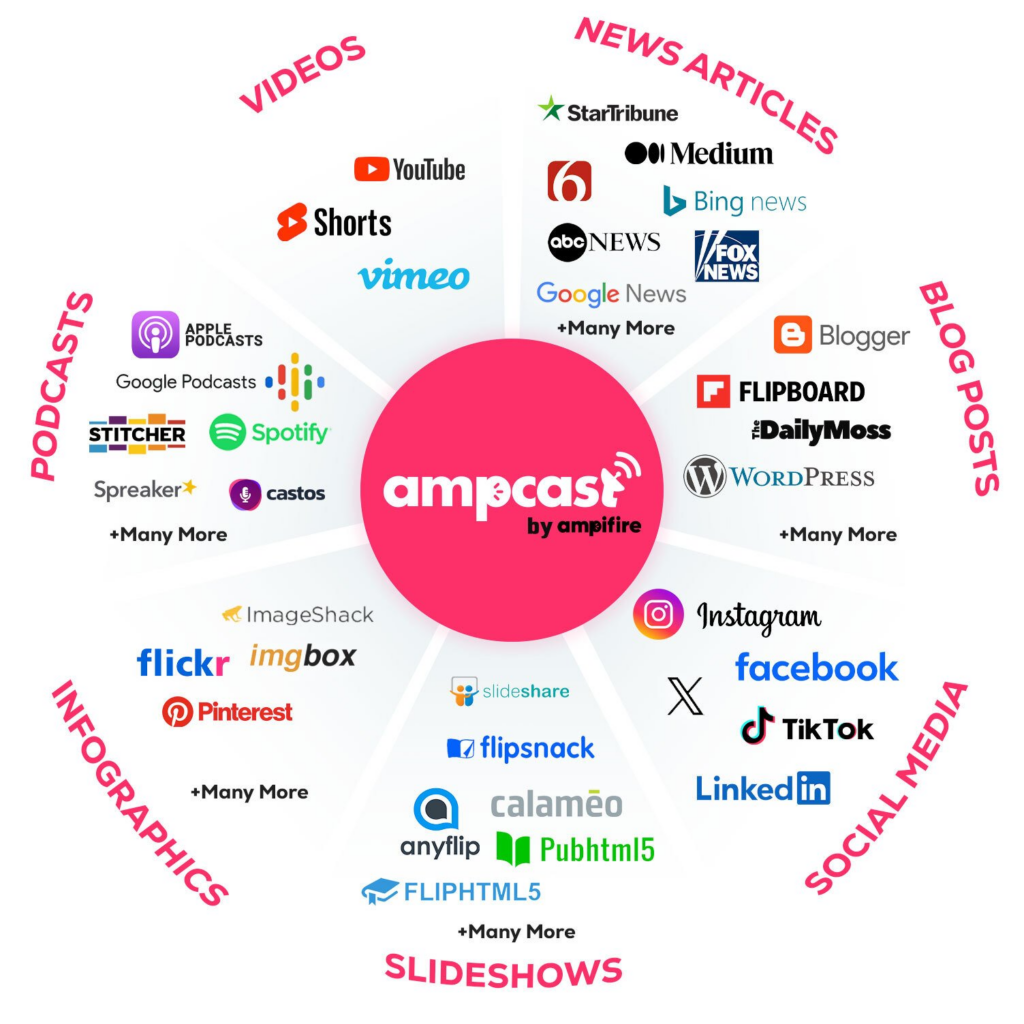
AmpiFire eliminates the limitations of traditional PR. Its AI-powered AmpCast technology transforms your press release into eight different content formats—news articles, blog posts, podcasts, videos, slideshows, infographics, and social media content—and distributes them across 300+ high-authority sites, including Fox affiliates and major news outlets.
Unlike press releases that fade within days, AmpiFire creates permanent digital assets that remain searchable and discoverable on Google for months or years, building cumulative value over time.
A home robot store launched 30 AmpiFire campaigns over 21 months, achieving a 195% increase in organic traffic, 210+ high-quality backlinks, and first-page Google rankings for multiple competitive keywords.
This case study reflects the experience of one AmpiFire customer, and results may vary based on implementation and market. However, the value proposition remains clear: AmpiFire’s multi-channel distribution far outperforms press releases and other traditional content distribution methods, resulting in sustained visibility.
Ready to Replace Press Releases? Try the AmpiFire Method →
Frequently Asked Questions (FAQs)
Do I need to include all information from a press release in my news story?
Include the most newsworthy elements that support your chosen angle, and leave out company background information, technical details, or promotional language that doesn’t directly contribute to the narrative. If necessary, you can always provide the full press release as supplementary material for journalists who want additional information.
What’s the best way to measure if my transformation from a press release to a news story was successful?
The most direct measure of success is an increase in media pickup compared to your previous press release distribution efforts. Track not just the quantity but also the quality of coverage. Beyond simple publication metrics, measure engagement with the resulting stories. High read times, social shares, and comments indicate that your story resonated not just with journalists but also with their audiences.
Can I use the same news story transformed from a press release for different media outlets?
While your core story can remain consistent, the most successful approach is to tailor it to different media outlets. Business publications might need more industry context and financial details, while local news might prioritize community impact and regional connections.
How can AmpiFire amplify the reach of my news story?
AmpiFire uses its AI-powered AmpCast technology to transform your news story and create multiple content formats, including articles, videos, podcasts, and slideshows, to distribute across its network of high-authority platforms.
This multi-format approach ensures your story reaches audiences regardless of their preferred content consumption methods.
*Disclaimer:Results may vary based on individual circumstances, business type, and content strategy. The time savings and outcomes mentioned are based on typical user experiences and are not guaranteed. For specific pricing and service details, please visit AmpiFire.