Key Takeaways
- A well-crafted press release ending significantly increases your chances of media coverage by providing journalists with essential context and next steps.
- The three critical components of any press release conclusion are a strong boilerplate, comprehensive contact information, and a clear call to action.
- Press release endings should be tailored to your announcement type (product launch, event, corporate news, or crisis communication).
- Including both traditional contact methods and digital channels maximizes your accessibility to journalists working on tight deadlines.
- AmpiFire outperforms traditional press release methods. It helps brands amplify their content reach by creating eight different content formats and strategically distributing them across 300+ high-traffic platforms.
Perfect Your Press Release Ending For Maximum Media Impact
The ending of a press release often determines whether journalists take action or move on to the next story in their inbox. While most writers focus heavily on crafting attention-grabbing headlines and compelling lead paragraphs, they neglect the closing section, thereby missing a critical opportunity to drive the response they want.
The final elements of your press release, including your call to action, boilerplate, and contact information, serve as the bridge between generating interest and securing coverage. Get these elements right, and you increase the likelihood of journalist inquiries, interview requests, and published stories.
This guide walks you through how to end a press release effectively, with real-world examples, proven tips, and ready-to-use templates that ensure your closing is as strong as your opening.
Why Press Releases Don’t Work Anymore
Smart Businesses Are Moving Beyond Traditional PR
• The Problem: Press releases reach one audience through one channel while your customers are everywhere online. Most get buried within days with poor ROI.
• The Solution: AmpiFire’s AmpCast creates 8 different content formats from one topic and distributes across 300+ high-authority sites including Fox affiliates, Spotify, and YouTube.
What You’ll Learn on PR Zen:
✓ Why multi-channel content delivers 10x better results than press releases
✓ How to amplify your PR efforts across multiple platforms
✓ Real case studies of businesses dominating search, social, video, and podcasts
✓ Cost-effective alternative to expensive PR agencies
Ready to Replace Press Releases? Learn the AmpiFire Method →
3 Essential Components of Effective Press Release Endings
The Boilerplate: Your Company’s Mini-Biography

Your boilerplate serves as the definitive snapshot of your organization for journalists unfamiliar with your brand. This standardized paragraph typically appears after the main body of your release and before contact information, providing critical context about your company’s purpose, scope, achievements, and market position.
An effective boilerplate transforms from mere background information into a credibility-building tool that helps reporters understand why your organization matters.
The most effective boilerplates typically range from 100 to 150 words. They include your founding date, mission statement, geographic reach, key products/services, notable achievements, and unique market position.
Many organizations develop a standard boilerplate that remains consistent across all press releases with only minor updates to reflect significant milestones or changes in company direction.
Contact Information That Actually Gets Responses
The contact section of your press release may seem straightforward, but strategic decisions about who to list and what details to include can significantly impact your media pickup rate. This critical component should appear after your boilerplate and include multiple contact methods for the spokesperson best positioned to address journalist questions about your specific announcement.
Consider adding availability details, time zone information for international releases, and alternative contacts for after-hours inquiries. Many successful organizations now include both traditional contact methods and digital touchpoints, such as professional social media handles, where appropriate, creating multiple pathways for journalist engagement.
Call-to-Action Strategies That Prompt Journalist Follow-Up
While traditional marketing CTAs directly promote products or services, press release calls-to-action use subtle guidance to prompt journalists’ next steps. Effective press release CTAs appear in the final paragraph of your main content, before the boilerplate, and direct readers toward specific resources or actions that facilitate deeper reporting.
Successful CTAs avoid promotional language while clearly indicating available resources such as interview opportunities, downloadable assets, event registration information, or additional background materials.
The most effective approach varies based on your announcement type and goals. For example, product launches might emphasize demonstration availability, while corporate announcements could highlight opportunities for executive interviews.
Tips for Ending Your Press Release

Now, here are some tips to help you write press release endings that generate more media coverage:
- Use direct, action-oriented language like “Contact us today” or “Register now.”
- Update your boilerplate regularly to reflect current positioning and recent accomplishments.
- Include a named media contact rather than a generic department or email address.
- List at least 3 contact options: phone number, email, and website.
- Consider including social media handles for journalists who prefer to connect there.
- Include “###” centered below your content to signal the end of the release.
- Avoid repeating information already covered in the body of your release.
- Skip the sales pitch—your boilerplate should inform, not advertise.
- Proofread contact details carefully; a wrong phone number or misspelled email undermines your entire effort.
- Include links to relevant resources, such as press kits, high-resolution images, or product pages.
- Provide time zone information if your contact is available for calls during specific hours.
Real-World Example of a Press Release Concluding Section
Press Release Announcing Liberty Media Corporation’s Fourth Quarter Earnings Conference Call
[Concluding Paragraph]: In addition, a webcast of the conference call will be hosted on Liberty Media’s investor relations site. Please visit https://www.libertymedia.com/investors/news-events/ir-calendar to register for the webcast. Links to the press release and replay of the call will also be available on the Liberty Media website. The conference call will be archived on the website after appropriate filings have been made with the SEC.
[Boilerplate]: About Liberty Media Corporation
Liberty Media Corporation (Nasdaq: FWONA, FWONK) operates and owns interests in media, sports and entertainment businesses. The portfolio of assets includes Liberty Media’s subsidiaries Formula 1, MotoGP and other minority investments.
[Contact Information]
Liberty Media Corporation
Hooper Stevens,
+1 720-875-5406
###
End-of-Press-Release Templates That Work
Now, here are some templates you can use to end your press releases.
Product Launch Ending Template
[Concluding Paragraph]: [Product Name] will be available starting [date] at [locations/website]. For media demos, additional product specifications, or interview requests with [Product Developer/Company Executive], please contact the media relations team below.
[Boilerplate]: About [Company Name]
[Boilerplate: 100–200 words about your company, including founding date, mission, achievements, and market position]
Media Contact:
[Name], [Title]
Phone: [direct line]
Email: [professional email]
Website: [company website]
Event Announcement Closing Template
[Concluding Paragraph]: Media representatives are invited to attend [Event Name]. Press credentials will be available at the registration desk. To schedule interviews with speakers or [Company] executives, please contact [Media Contact] to make arrangements before [date].
[Boilerplate]: About [Company/Organization Name]
[Boilerplate: 100–200 words about your organization, including founding date, mission, achievements, and relevance to this event]
Media Contact:
[Name], [Title]
Phone: [direct line]
Email: [professional email]
Website: [company website]
Crisis Communication Conclusion Template
[Concluding Paragraph]: [Company Name] is committed to maintaining transparent communication throughout this process. Regular updates will be provided via [company website/social media channels]. Media representatives seeking further details should contact our dedicated response team using the information below.
[Boilerplate]: About [Company Name]
[Boilerplate: 100–200 words, potentially modified to address the crisis context while maintaining key company information]
Media Contact:
[Name], [Crisis Response Coordinator]
Phone: [direct line – ideally 24/7 availability]
Email: [professional email]
Website: [company website/crisis information page]
Beyond the Perfect Ending: The Limits of Traditional Press Releases
Even the most perfectly crafted press release with a strong ending faces a fundamental limitation: it reaches one audience through one channel. Journalists receive hundreds of pitches daily, and even successful placements fade from visibility within days as the news cycle moves on.
Your carefully written announcement generates a brief spike in attention, then disappears while your competitors capture the audience you worked to reach. The reality is that mastering press release structure is only part of the equation—strategic distribution across multiple platforms and creating content that remains searchable and discoverable over time determine whether your message actually reaches your target audience.
The brands that succeed are those that extend their announcements beyond traditional press release channels, creating multiple content formats that work across platforms where their target audience already spends time.
Amplify Your Content Reach with AmpiFire
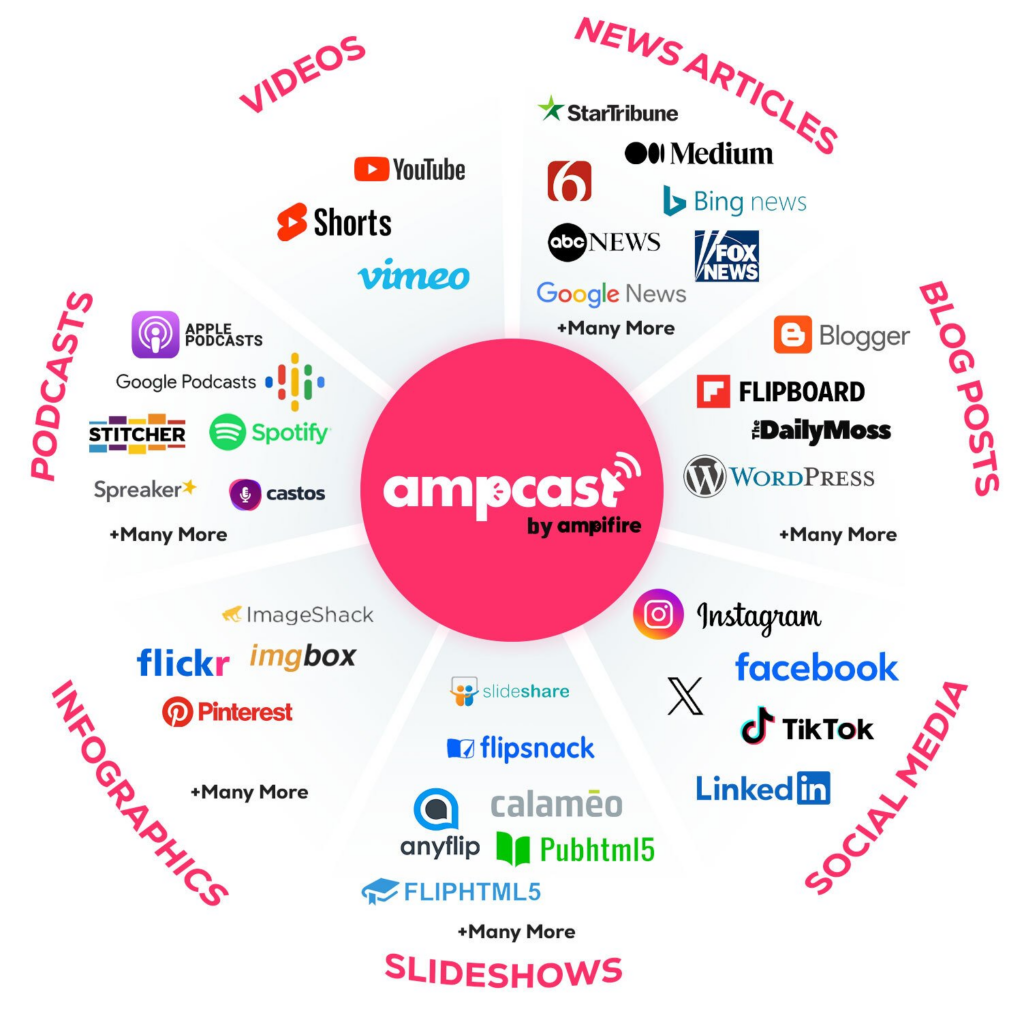
AmpiFire eliminates the limitations of traditional press releases. Instead of relying on journalists to pick up your story, its proprietary AI-powered AmpCast technology transforms your announcement into eight different content formats: news articles, blogs, slideshows, infographics, long-form videos, short-form videos (for shorts and reels), podcasts, social posts, and distributes them across 300+ high-authority sites, including Fox affiliates, Spotify, YouTube, and major news outlets.
Unlike traditional press releases that fade within days, AmpiFire creates permanent digital assets that remain indexed by search engines and discoverable for months or years. Each placement builds domain authority that benefits all your online properties.
An Oklahoma auto dealer implemented AmpiFire’s multi-format distribution and saw organic visitors grow from 1,449 per month to 2,559 within 18 months—a 76.7% increase. This 18-month growth trajectory demonstrates exactly what happens when you move beyond traditional press releases: instead of brief visibility spikes, you build compounding momentum that strengthens month after month.
However, note that this case study reflects the experience of one AmpiFire customer, and results may vary based on implementation, market, and other factors.
Ready to Replace Press Releases? Try the AmpiFire Method →
Frequently Asked Questions (FAQs)
What’s the difference between a press release ending and a boilerplate?
The press release ending includes several elements: your final paragraph, a call to action, boilerplate, and contact information. The boilerplate is just one component of your ending. It is the standardized paragraph that provides background about your organization.
How long should my press release ending be?
Your entire press release ending (final paragraph, boilerplate, and contact information combined) should typically comprise about 25–30% of your total release length. The final paragraph should be 2–4 sentences, the boilerplate should be 100–150 words, and contact information should be as comprehensive as necessary to facilitate easy journalist follow-up.
Can I include social media handles in my press release contact information?
Yes, including professional social media handles in your contact information can significantly enhance journalist response rates, particularly for announcements targeting digital publications or younger media professionals.
How often should I update my company boilerplate in press releases?
Review your boilerplate quarterly and update it whenever significant organizational changes occur. Most organizations find they need substantial boilerplate revisions approximately once a year, with minor updates occurring 2–3 times a year.
How can AmpiFire amplify the reach of my press releases?
AmpiFire’s AmpCast technology transforms your press release into eight different content formats, including articles, videos, podcasts, etc, and distributes them across 300+ high-authority platforms, including Fox affiliates, Spotify, and YouTube. These formats become lasting digital assets that continue to drive traffic and build brand awareness long after traditional press release coverage fades.
*Disclaimer: Results may vary based on individual circumstances, business type, and content strategy. The time savings and outcomes mentioned are based on typical user experiences and are not guaranteed. For specific pricing and service details, please visit AmpiFire.